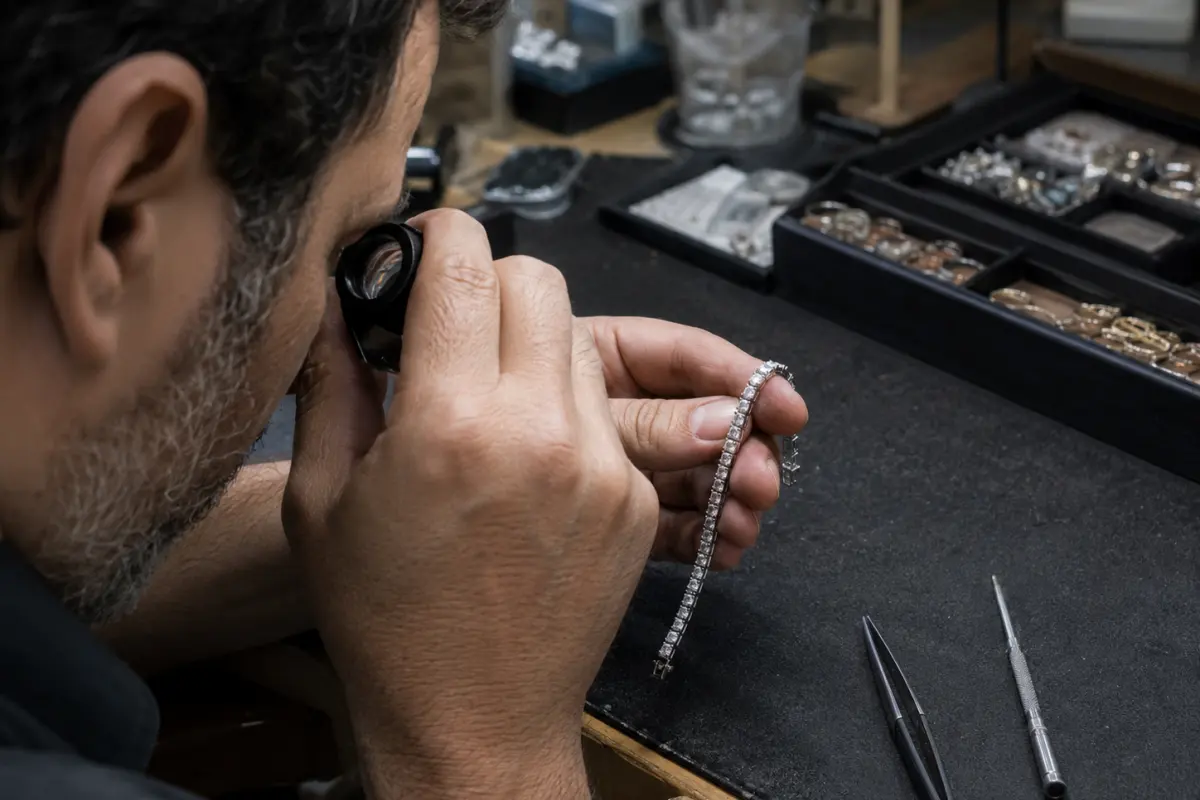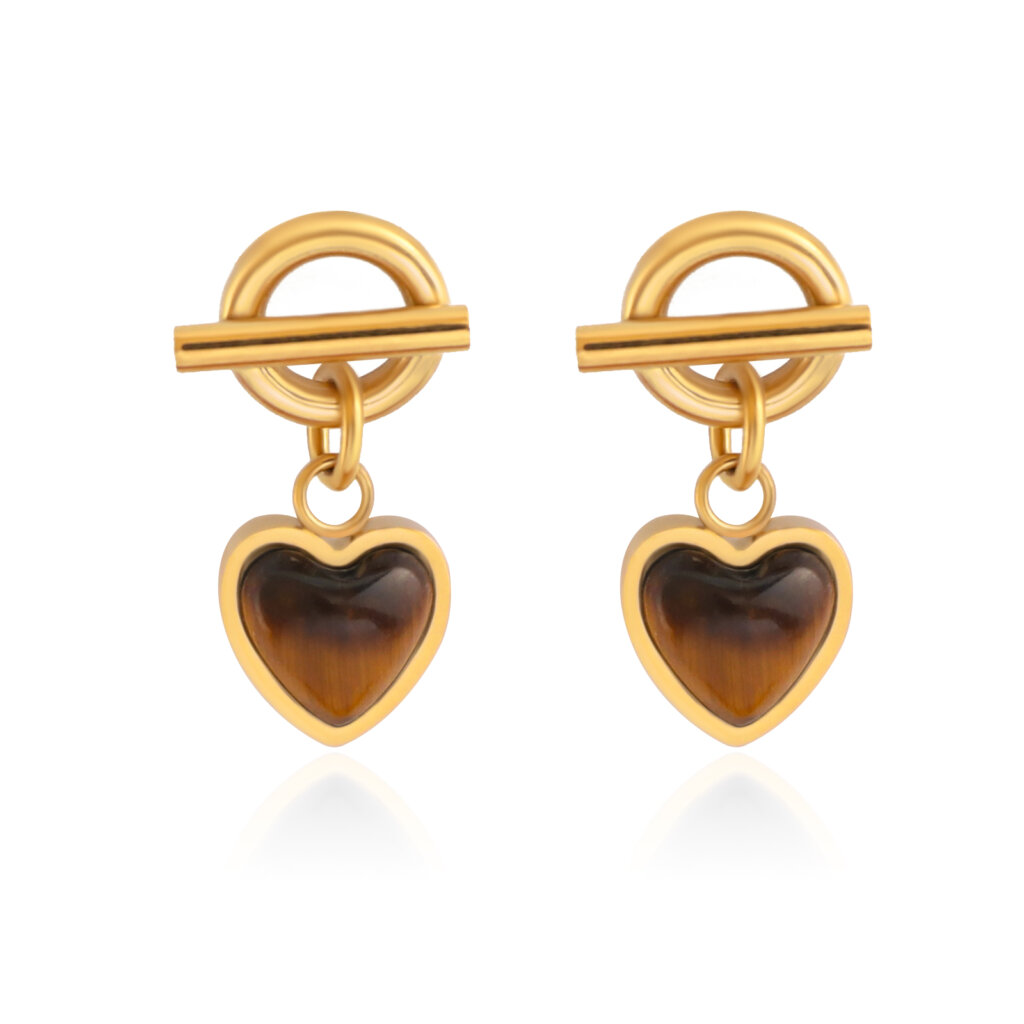

High-quality fashion jewelry is usually identifiable through clear material information, even finishing, smooth polishing, secure construction, reliable clasps and connections, well-set stones, appropriate structural balance, and transparent product specifications.For a jewelry brand, there is one additional question: can the same quality be reproduced consistently across a bulk order?
- Material matters, but the material name alone does not determine quality.
- Plating and PVD finishes should look even and consistent, not just shiny in photos.
- Clasps, links, edges, solder points, and stone settings usually reveal the real workmanship.
- Heavier does not automatically mean better; weight should match the design.
- Clear, specific product specifications are themselves a quality signal.
- For brands, production consistency across a bulk order matters more than one perfect sample.
What Makes Fashion Jewelry Good Quality?
Quality fashion jewelry is not defined by whether it uses precious metals. Fine jewelry and fashion jewelry follow different rules, and judging fashion jewelry by fine-jewelry standards misses the point.
Instead, quality comes down to whether the material, finish, construction, functional details, stone setting, and overall execution are appropriate for the product and consistently made. A stainless steel stud earring and a moissanite tennis bracelet can both be "high quality" if each is built to the right standard for what it is.
Fashion jewelry is typically made from a base metal — most commonly stainless steel, brass, or another alloy — finished with conventional plating or PVD (physical vapor deposition) coating, and set with cubic zirconia (CZ), moissanite, glass, or other decorative stones. None of these materials are inherently low quality. What determines quality is the specification behind them and how carefully they're executed.
8 Things to Check When Choosing Quality Fashion Jewelry
1. Check the Base Material
Before looking at the finish, ask what's underneath it. A listing or product tag should clearly identify the base metal — stainless steel, brass, zinc alloy, or something else. Vague language like "premium alloy" or "quality metal" with no further detail is a soft warning sign, not a hard rule-breaker, but it tells you the seller isn't being specific.
If a piece is sold as stainless steel, the grade can matter depending on the product and how it's worn. This isn't something every buyer needs to dig into, but for daily-wear pieces like rings and everyday earrings, it's worth knowing.
2. Inspect the Plating or PVD Finish
The finish is what most people notice first, and it's also one of the fastest ways to spot poor manufacturing. Look at color evenness across the whole piece, not just the front-facing surfaces.
Check for:
- Patchy or thin-looking areas, especially on curved surfaces
- Exposed base metal at edges, joints, or high-contact points
- Inconsistent coating around clasps, hinges, and hard-to-reach corners
The core question is simple: does the finish look consistent across the entire piece, not just the parts a product photo shows?
3. Look at Polishing, Edges and Surface Details
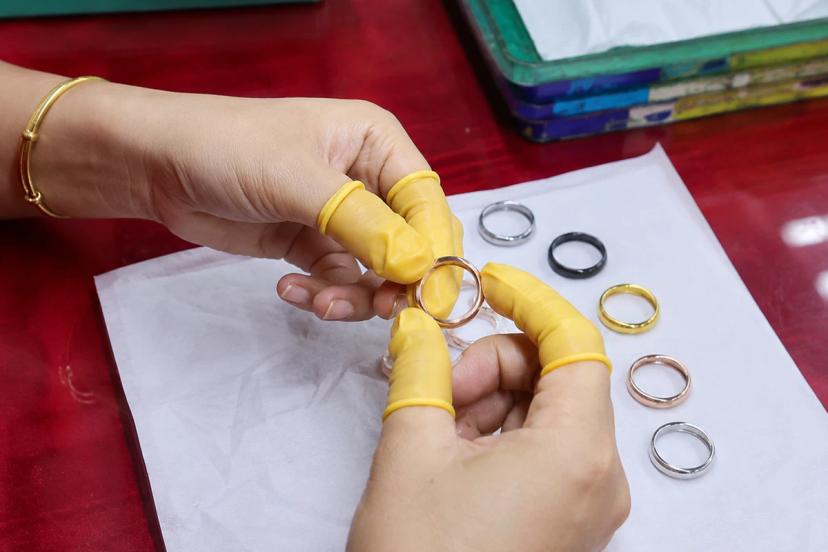
Run a finger along the edges.Smooth, well-finished jewelry shouldn't have burrs, sharp seams, or tool marks. Look for scratches, pits, or uneven polishing under normal light, not just studio lighting.
Symmetry matters too. Two earrings from the same pair, or repeating links in a chain, should look and feel the same. These details reveal how much care went into finishing — rushed production almost always shows up here first, before it shows up anywhere else.
4. Check Clasps, Links and Connection Points
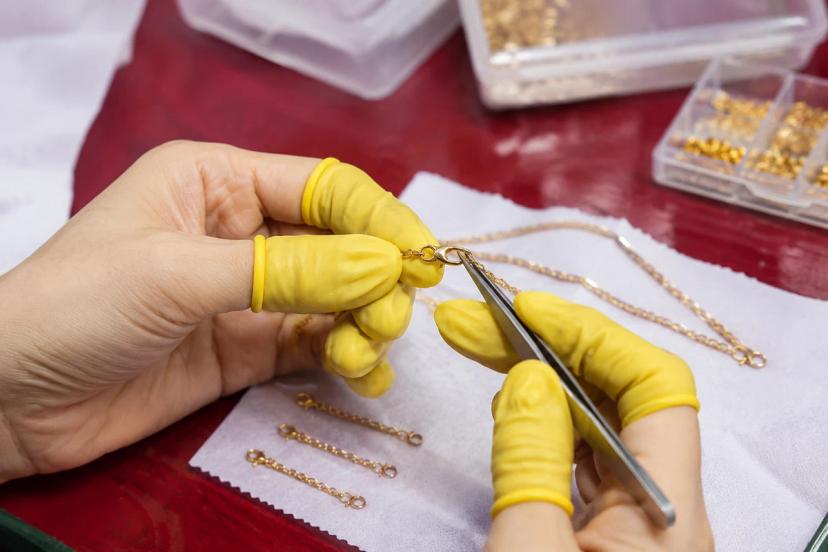
A beautiful surface finish cannot compensate for a weak mechanical connection. Clasps, jump rings, chain links, welded or soldered points, and hinges are where fashion jewelry actually fails in daily use.
For necklaces and bracelets, check that jump rings are fully closed, not gapped. For earrings, check that posts and backs sit securely. For chains, check that links are soldered rather than simply pinched shut where that's expected for the product type. A piece can look flawless and still fall apart at the first weak connection point.
5. Inspect Stone Setting Quality
Stone setting is a fast quality tell. Look at stone alignment, visible gaps between the stone and the setting, loose or wobbly stones, uneven prongs, and inconsistent bezels.
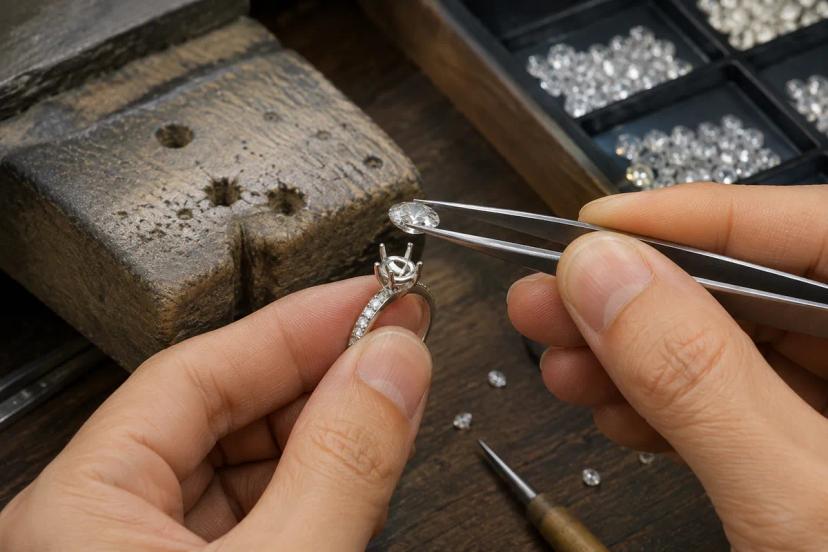
Also check for visible glue residue around the stone edge — a small amount can be normal in some construction methods, but excessive or messy glue usually points to rushed setting work. Symmetry across matching stones or repeated patterns is another quick check. (For a deeper look at why stones loosen or fall out over time, that's a separate topic worth its own read.)
6. Check Weight, Balance and Structure
Heavier does not mean better. Weight should be appropriate to the design, not used as a shortcut for judging quality.
What matters is whether the structure feels right for the piece: a pendant should hang correctly rather than tilt awkwardly, earrings should feel balanced rather than lopsided, and structural points that are meant to be rigid shouldn't flex excessively. Chains and connecting components should feel proportionate to the piece as a whole. A well-engineered lightweight piece can easily outperform a heavy, poorly balanced one.
7. Check Branding and Small Details
Engraving depth, logo placement, tag attachment, and color-matching across multiple pieces all say something about how controlled the production process is. If you're comparing several units of the same product, check whether the finish color, stone color, and proportions match across the batch.
Small inconsistencies here — a slightly different plating tone on one unit, a logo stamped off-center on another — often reveal more about production discipline than any single piece does on its own. This is also where a normal buyer's checklist starts to overlap with what a jewelry brand needs to evaluate before placing a bulk order.
8. Check Product Information and Seller Transparency
For online purchases especially, product information does a lot of the evaluation work for you.A seller who clearly states base material, finish type, stone type, dimensions, and care instructions is giving you what you need to judge quality before the item arrives.
Vague descriptions make quality harder to evaluate, full stop. That doesn't mean every good product needs a certificate or lab report — most fashion jewelry doesn't — but it does mean the basic specifications should be stated clearly rather than implied through marketing language.
Quick Fashion Jewelry Quality Checklist
| Check | Good Sign | Red Flag |
|---|---|---|
| Base material | Clearly stated (e.g., stainless steel, brass) | Vague or unstated ("quality alloy") |
| Finish | Even color, consistent across the piece | Patchy, thin, or exposed base metal |
| Polishing | Smooth edges, no visible tool marks | Burrs, scratches, rough seams |
| Construction | Solid joints, matched symmetry | Uneven welds, mismatched pairs |
| Clasp | Secure, fully closed jump rings | Gapped rings, loose posts, weak hinges |
| Stone setting | Aligned, secure, even prongs | Loose stones, visible gaps, excess glue |
| Structure | Weight and balance match the design | Overly thin structural points, awkward hang |
| Product information | Clear material, finish, dimensions | Vague, marketing-only descriptions |
Common Red Flags of Low-Quality Fashion Jewelry
Some warning signs are easy to spot before you even touch the piece. A "mystery metal" listing with no named alloy is one of the clearest signs the seller either doesn't know or isn't saying. Uneven plating and exposed base metal at edges or joints point to a rushed or under-controlled finishing process.
On the construction side, watch for rough or unfinished edges, weak clasps, and open (unclosed) jump rings — these are functional failures, not just cosmetic ones. Loose stones and excessive visible glue suggest the stone-setting step wasn't done carefully or wasn't checked before shipping.
Mismatched pairs, inconsistent color across a batch, and poor symmetry all point to the same underlying issue: a lack of process control during production. And on the information side, vague product descriptions combined with unrealistic marketing claims — "premium quality," "luxury grade" — with no supporting detail are a pattern worth being skeptical of. None of these signs alone is disqualifying, but a few of them together usually mean the piece, or the batch it came from, wasn't well controlled.
If You're Sourcing for a Brand, One Good Sample Is Not Enough
A consumer only needs one good piece. A jewelry brand needs hundreds of pieces to meet the same standard.
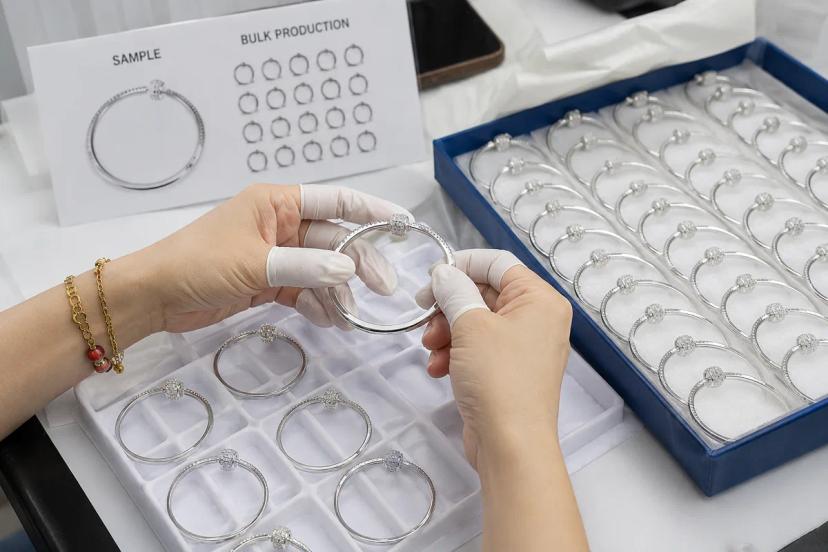
This is where product quality and production consistency stop being the same question. A good sample shows that a product can be made well. It does not automatically prove that a factory can reproduce the same standard in bulk, or hold that standard on a repeat order three months later. Brands that only evaluate the sample — and never define how bulk production will be checked against it — are the ones most likely to be surprised by their second shipment.
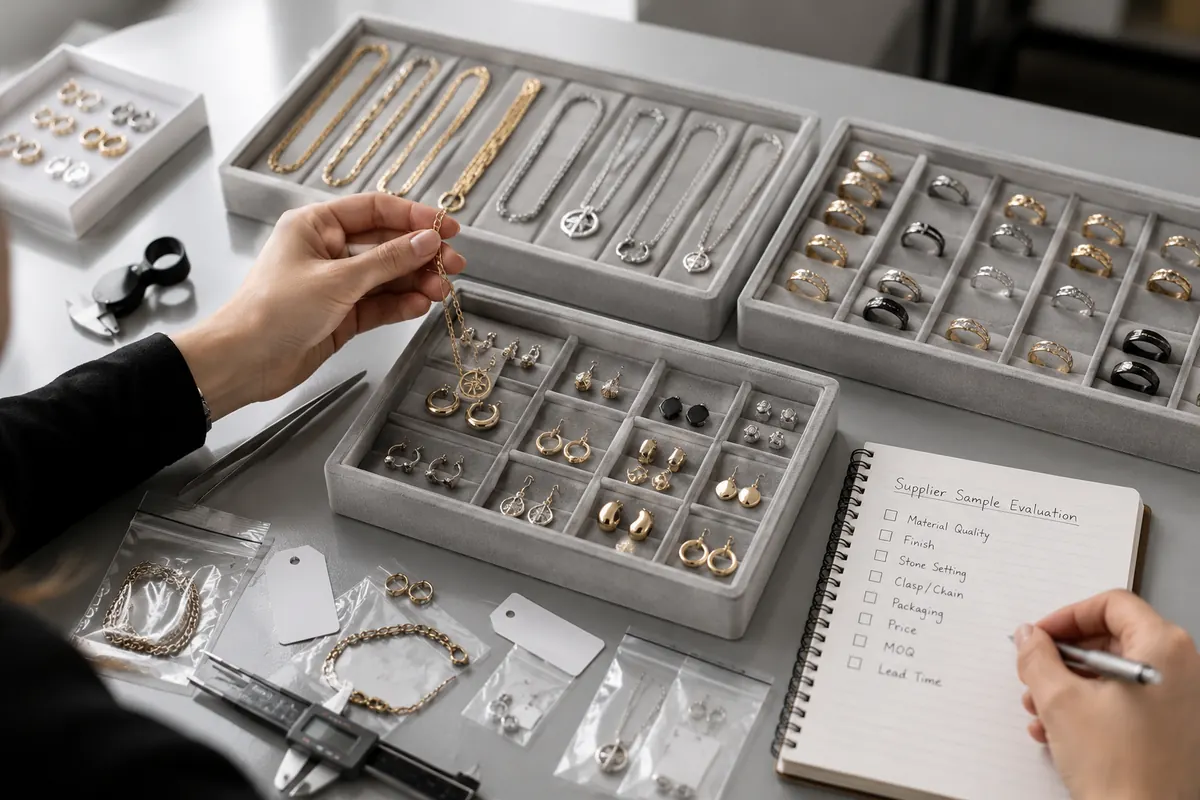
Turn the Approved Sample Into a Production Standard
The logic is simple: the sample becomes the standard, and the standard becomes repeatable production. But that only works if the standard is actually written down.
Before moving from sample to bulk, a brand should lock down:
- Base material
- Material grade, where relevant
- Finish and color
- Dimensions
- Stone specification
- Construction details (clasps, links, connection type)
- Logo placement and execution
- Packaging
- The approved physical sample itself, kept as a physical reference
Every bulk production run should be compared against this agreed reference — not against a general description of the product, and not against memory of what the sample looked like.
What Brands Should Check Before Bulk Production
Material and Finish Match
Does the bulk production batch match the approved material and finish specification, not just visually but in the details — grade, coating type, and color consistency across the run?
Dimensions and Construction
Check dimensions, clasps, chain links, connectors, and other structural details against the approved sample. Small drifts in dimension or hardware substitutions are common ways bulk orders quietly diverge from the sample.
Stone and Visual Consistency
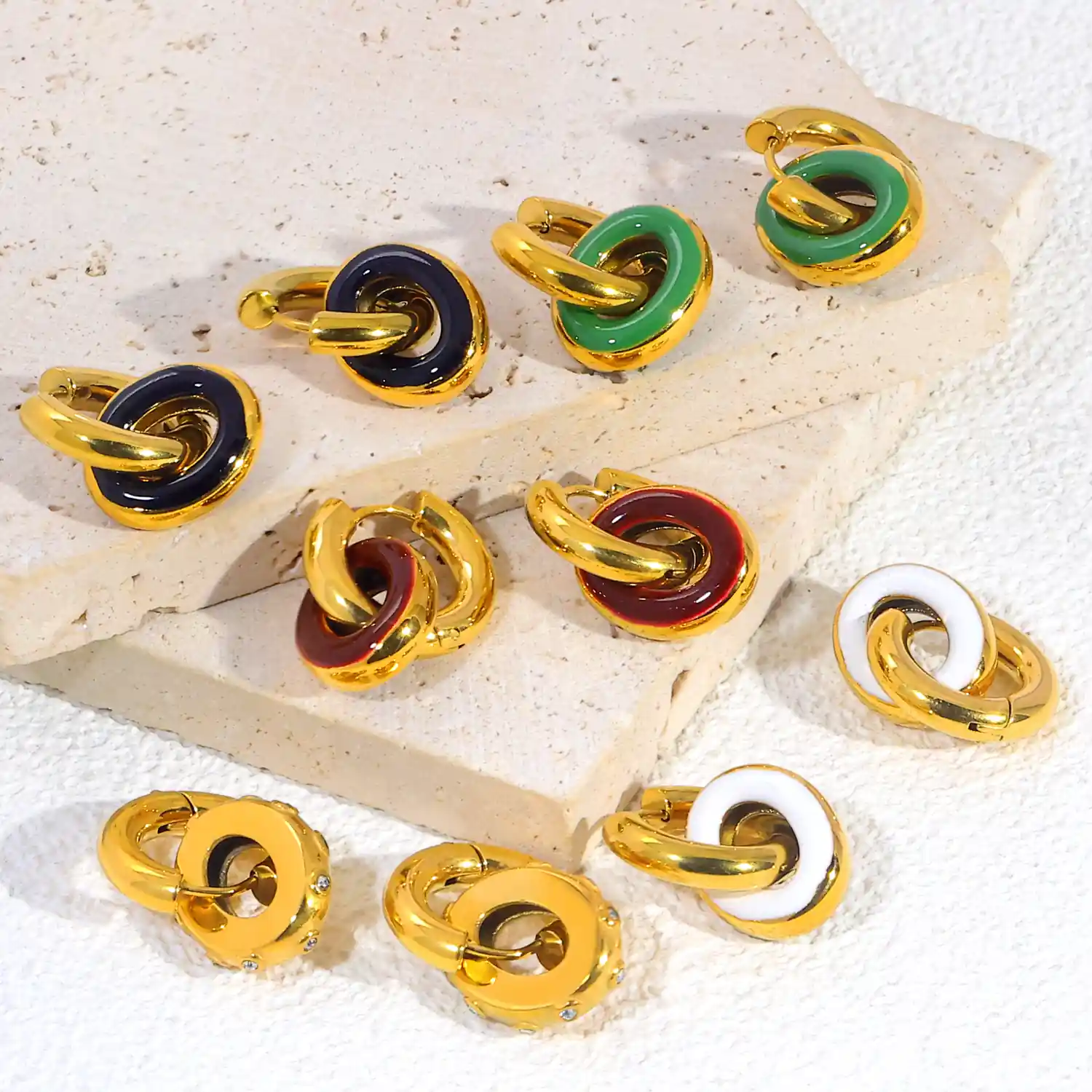
Check stone alignment, color, and finish across multiple units, not just a handful pulled from the top of a box. Visual consistency across the full order is what separates a controlled production run from an inconsistent one.
In-Process and Final QC
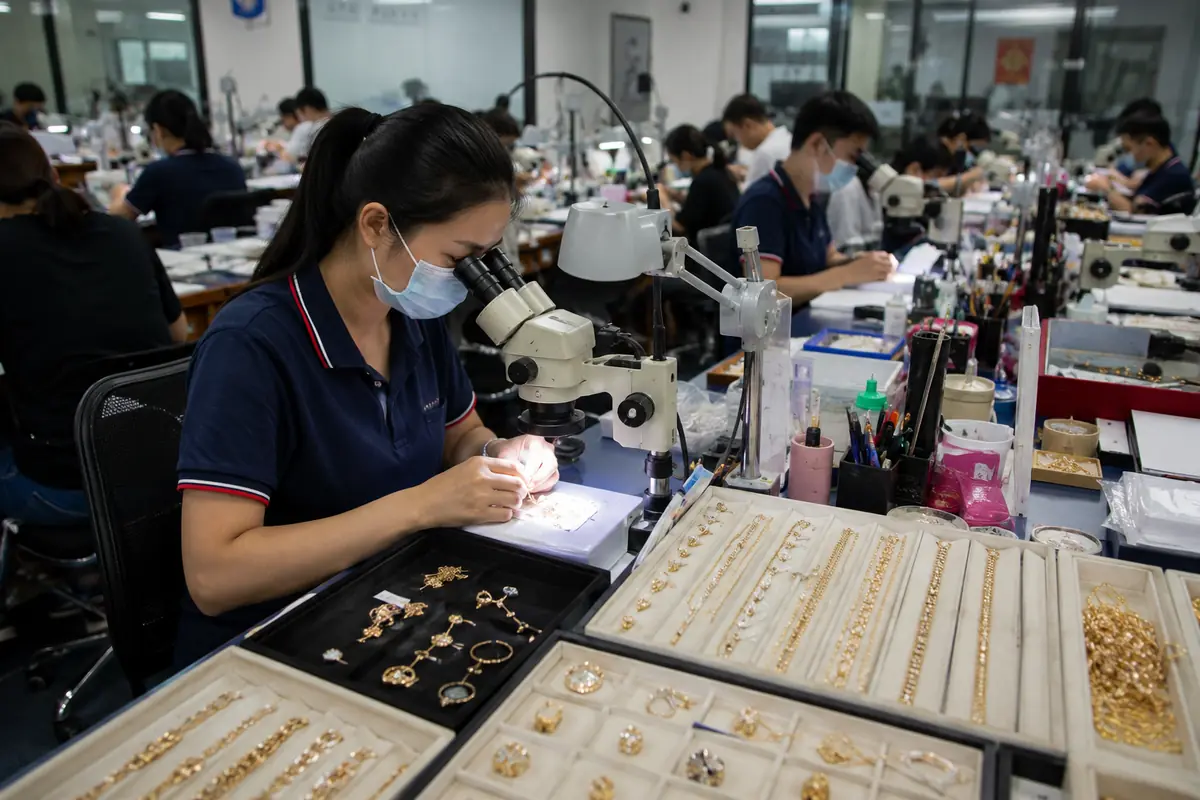
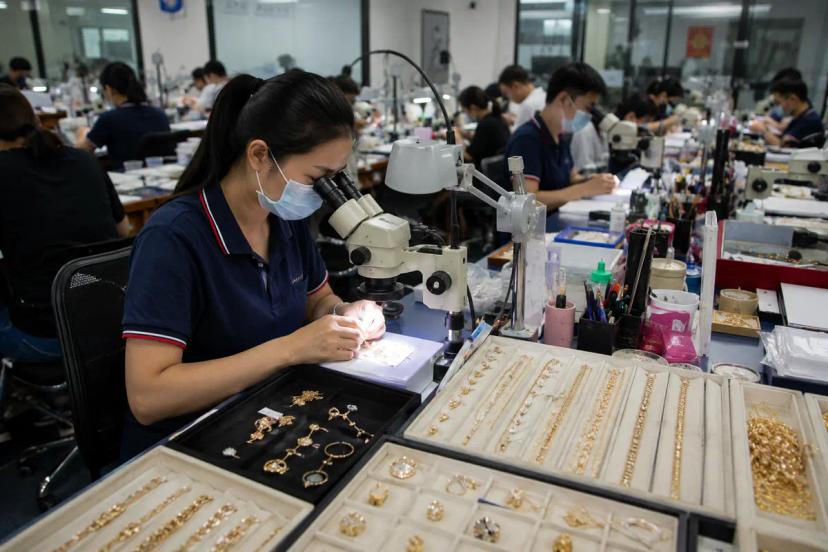
QC should not only happen at shipment. Meaningful checkpoints run through the whole process: raw material, semi-finished product, stone setting, polishing, PVD or plating, finished product, and pre-shipment. Catching a finish or setting issue mid-process is far less costly than catching it after the full order is packed.
Repeat-Order Reference
The second and third production runs matter just as much as the first. They should be compared against retained specifications and the original approved sample — not re-approved from scratch each time based on a new sample. This is what keeps a product consistent across a brand's ongoing supply chain, not just its first order.
How Jewins Supports Quality Fashion Jewelry Production
| Buyer Concern | Jewins Support |
|---|---|
| Material choice | Stainless steel material guidance |
| Finish quality | PVD / finish confirmation |
| Sample approval | Approved reference sample |
| Stone setting | In-process inspection |
| Bulk consistency | QC against agreed specifications |
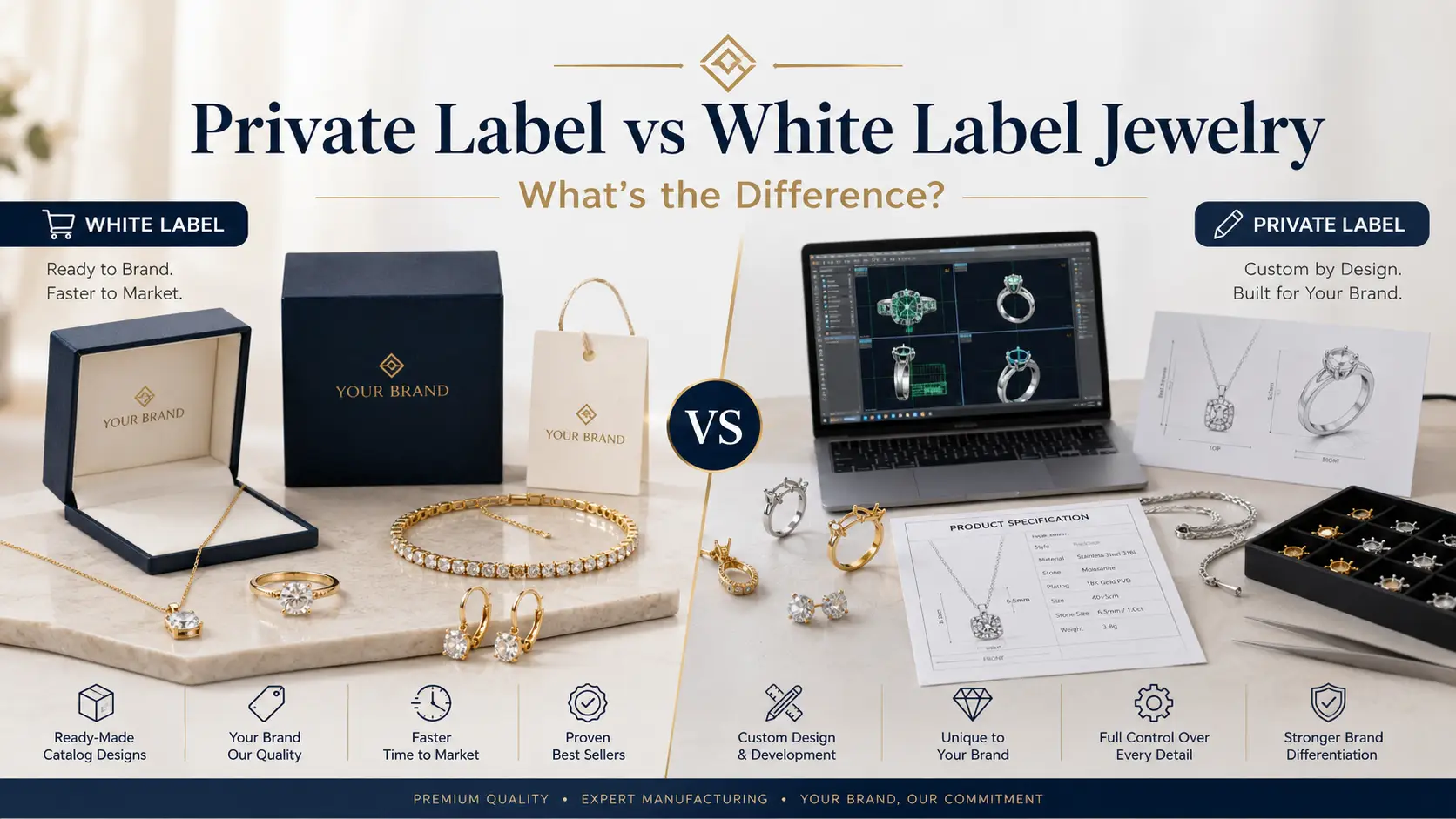
| Branding | Private label / packaging support |
| Repeat production | Retained production standards and reorder support |
Jewins works with fashion jewelry brands on stainless steel products, PVD finishes, CZ, moissanite, sample development, private label, OEM/ODM, quality control, packaging, and repeat production. This positioning matters most for brands moving from a first test order, to a validated SKU, to repeat production at scale — the stage where sample-to-bulk consistency stops being optional and starts being the whole relationship.
Frequently Asked Questions
How can I tell if fashion jewelry is good quality?
Check the base material, finish evenness, construction (clasps, links, connection points), stone setting, and how clearly the product specifications are stated. Consistency across these areas — not any single feature — is what indicates quality.
What materials are used in high-quality fashion jewelry?
Stainless steel, brass, and other base metals can all be used to make good jewelry. Quality depends on specification, finish, and manufacturing execution — not on the material name alone.
Does heavier jewelry mean better quality?
No. Weight should be appropriate to the design and structure. A well-engineered lightweight piece can be higher quality than a heavy one with poor balance or thin structural points.
How can I tell if costume jewelry is of good quality?
Look at the same signals as any fashion jewelry: even plating with no exposed base metal, smooth polishing with no burrs, secure clasps and closed jump rings, well-aligned stones, and clear product information from the seller.
What should jewelry brands check before bulk production?
An approved sample, a written specification, confirmed material and finish, construction details, an in-process QC plan, and a plan for comparing sample-to-bulk consistency — plus a retained reference for repeat orders.
Building a Higher-Quality Fashion Jewelry Collection?
If you're developing or sourcing a fashion jewelry collection, Jewins can help you move from an idea to a controlled production standard. Share your product reference, preferred material, finish, stone, target quantity, logo, packaging, and sample requirements, and the Jewins team can walk through material selection, sample development, quality standard-setting, QC planning, bulk production, and repeat-order support together.