
Adhesion Layer
The initial layer is selected for the material and approved coating specification.
Jewins provides PVD coating solutions for stainless steel jewelry brands, helping achieve consistent gold tones and repeatable quality from approved samples to bulk production.
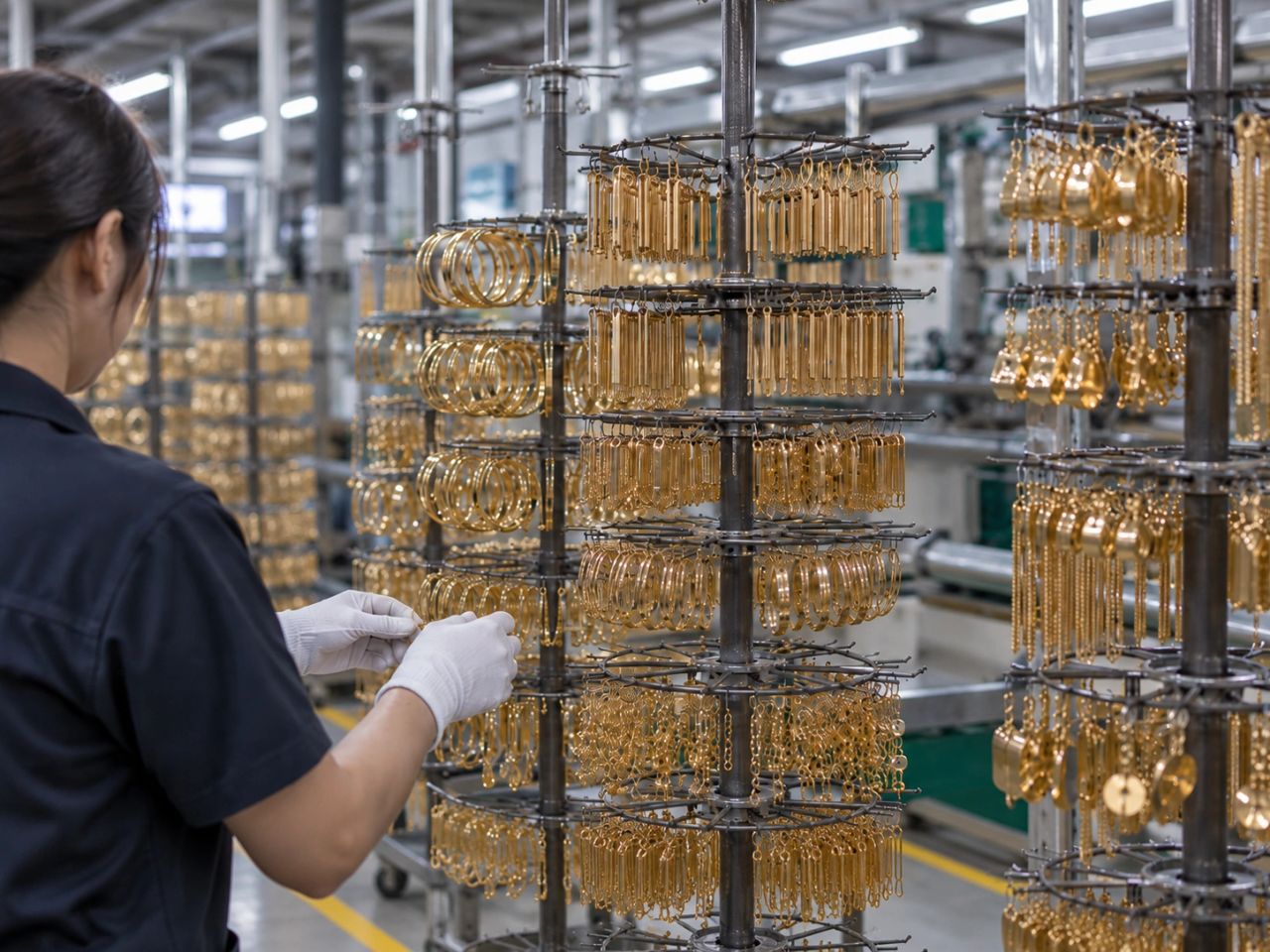
Physical Vapor Deposition (PVD) is a vacuum coating process used to create decorative finishes on prepared stainless steel jewelry. Surface preparation, layer structure, color control, and inspection are specified for each project.
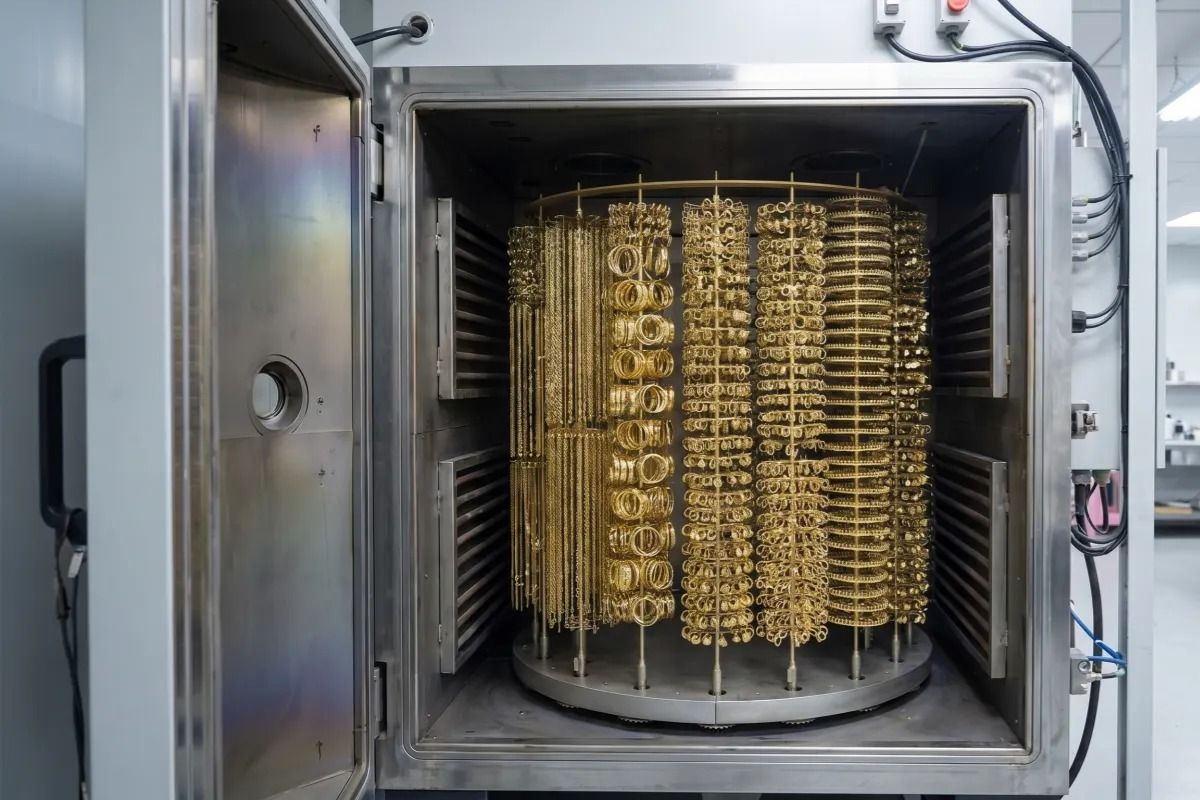
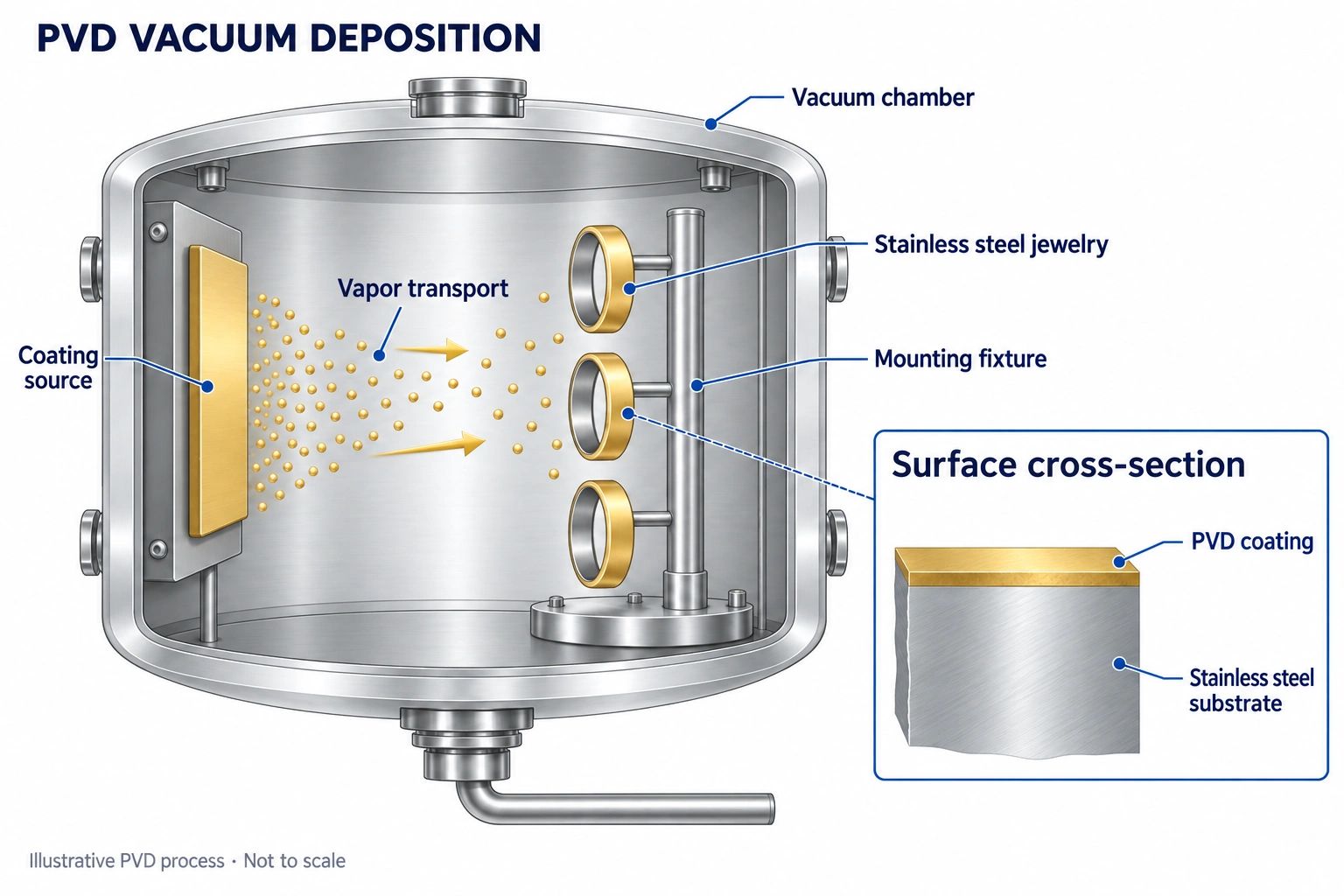
The initial layer is selected for the material and approved coating specification.
A functional layer contributes to the desired finish and project-defined performance.
The top layer fine-tunes the approved appearance; exact structure depends on the product.

Align samples and repeat orders with the approved color reference.

Select a coating specification for the intended product use.

Discuss suitable protection and testing for the target environment.

Recorded specifications support repeat production checks.

A consistent approved finish supports product presentation.
Stainless steel provides a stable base for a project-approved PVD finish.
316L stainless steel is the default material; each product follows its approved specification.
Discuss finish requirements for rings, bracelets, chains, pendants, and earrings.
Approved color samples and batch inspection support visual consistency.
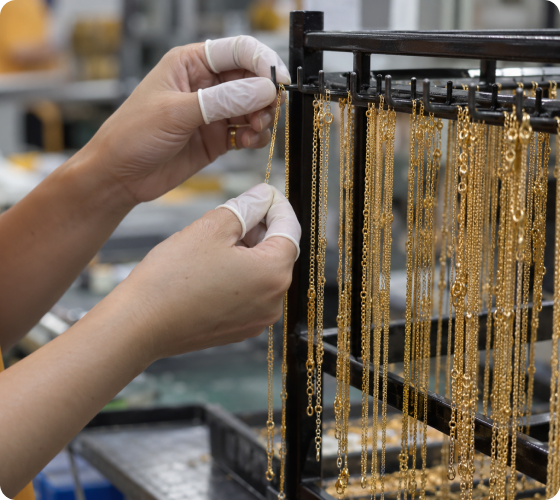
Choose the finish, coating specification, and approval method according to product positioning, expected use, and budget.






Thickness figures are reference ranges. Color names describe appearance; the approved sample and project specification remain the production standard.
0.1–0.5 μm
Common reference range. Final coating thickness is confirmed for each product and color.
PROJECT-BASED
Define layers by color, product type, wear, and budget.
3 METHODS
Calotest, XRF, or cross-section analysis may be selected according to the layer structure and measurement requirement.
Sample-Led
Approve a physical sample under consistent lighting before bulk production. Keep the reference for repeat orders.
Fit for Use
Balance coating structure, thickness, product geometry, expected wear, and target cost instead of selecting thickness alone.

 01
Inspect and prepare the stainless steel surface.
 02
Clean each piece before coating.
 03
A specialist coating partner deposits the agreed layers.
 04
Compare finished batches with the approved color sample.
 05
Inspect coating coverage and overall appearance before packing.
Checks follow the approved product specification and project test plan. Methods and acceptance criteria vary by item.

Compare measurements with the approved target.

Use an agreed adhesion test and acceptance level.

Compare against the approved reference under consistent lighting.

Arrange relevant testing when the project requires it.

Inspect moving parts and batch appearance to the agreed plan.
Relevant documents can be discussed for the specific product and project. Each report applies only to its stated issuer, sample, date and scope.
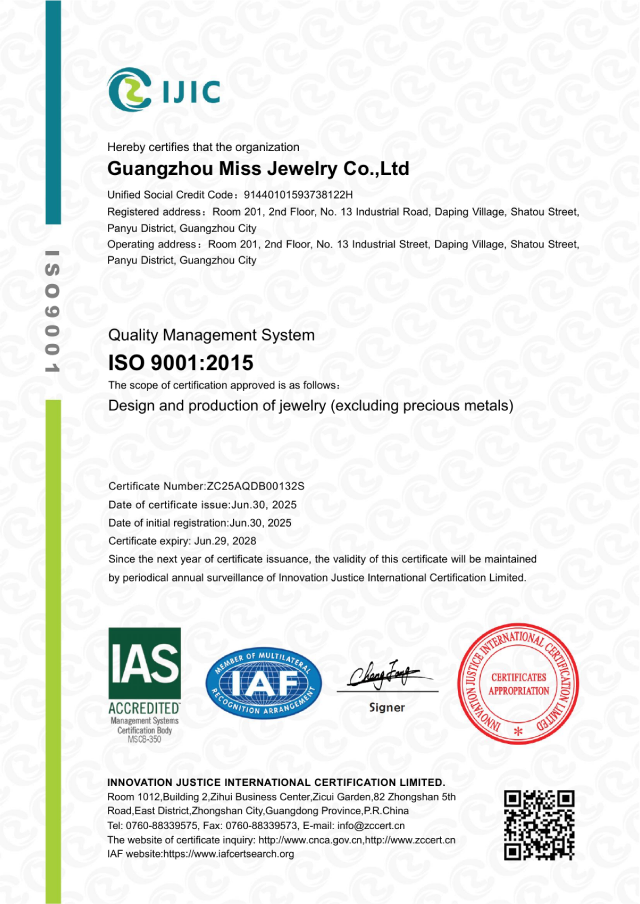
Design and production of jewelry, excluding precious metals.
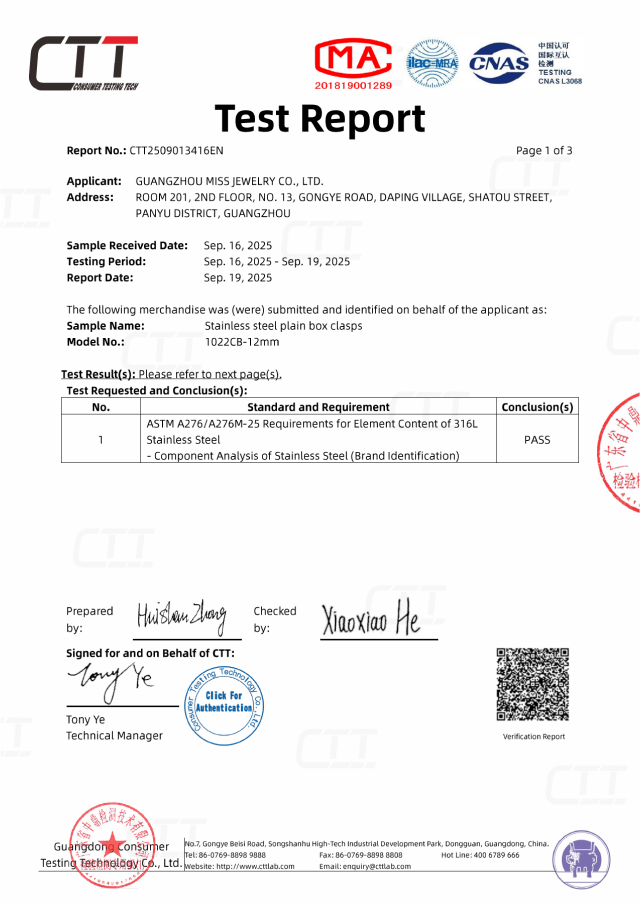
Element-content verification for the submitted 1022CB-12mm box buckle body.
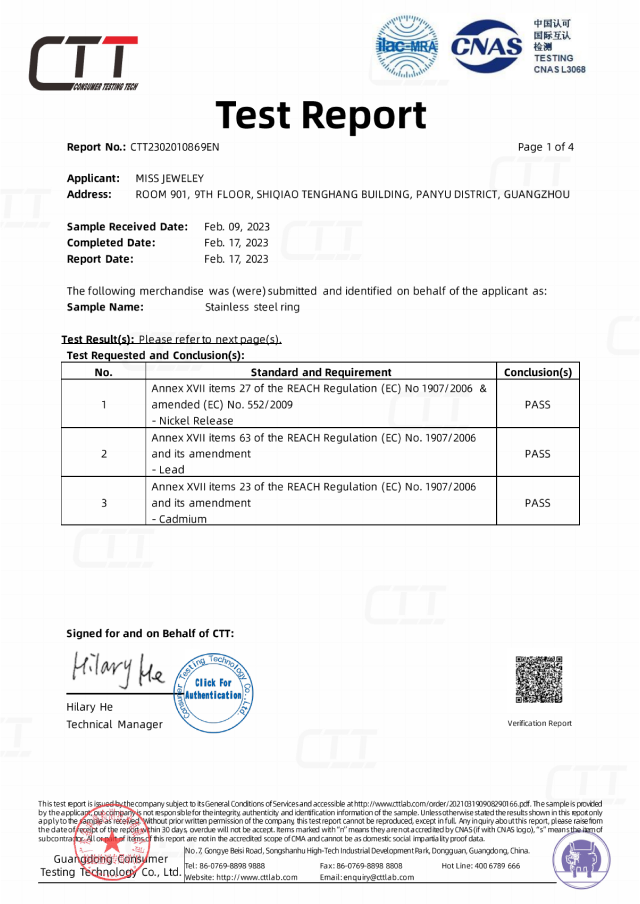
Nickel release, lead and cadmium testing for the submitted stainless steel ring sample.
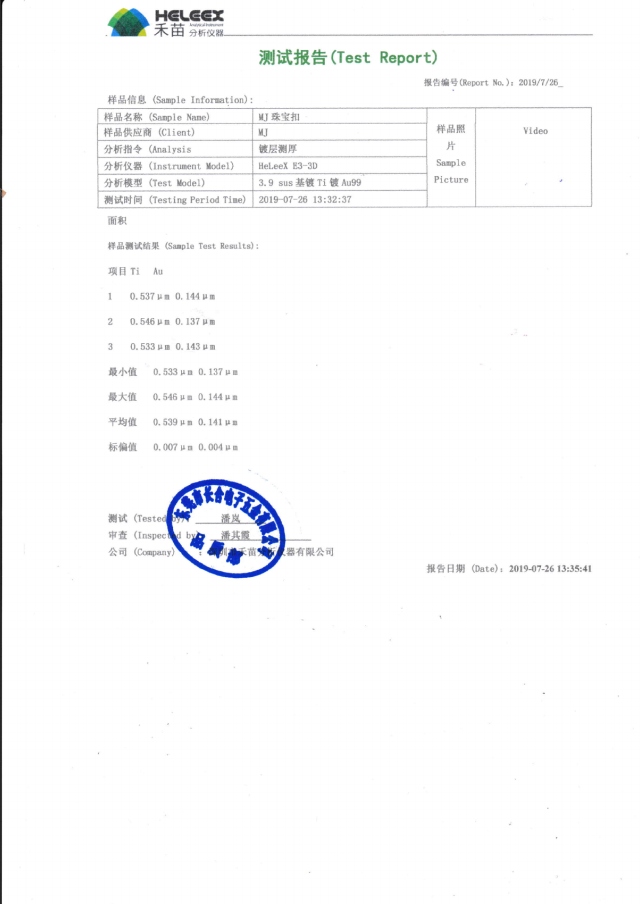
Three coating-thickness measurements for Ti and Au on the submitted clasp sample.
Thickness is set by the approved product specification and tested scope; ask us to review your target.
PVD can be considered for everyday-wear products; performance depends on material, finish, use and care.
Options include gold tones, rose gold, dark finishes and project-based shades, subject to sample approval.
A coating target may be agreed for the product and intended use; any technical value requires project evidence.
We can discuss OEM/ODM projects and supplier-coordinated PVD finishes from sampling to production.
Confirm the approved color sample, steel grade, coating specification, quantity, testing, packaging and delivery plan.

Tell us your target color, product type, order quantity and testing requirements. We can review the project specification with you.
Your browser time zone provides an approximate regional signal. EEA, UK, Swiss and unknown or unmapped zones require acceptance for each optional purpose. Other mapped zones default to enabled without a consent receipt. Saved choices for each purpose, including refusal, take priority. You can change these choices here; inquiries remain available. Advertising stays off. Privacy Policy