
Stainless Steel vs Titanium Jewelry: Which Is Best for You?
This guide helps jewelry brands, wholesalers, and private label buyers understand stainless steel vs titanium jewelry from a practical factory and sourcing perspective. Jewins focuses on 316L stainless steel jewelry, realistic material advice, sample support, quality checks, and stable OEM/ODM production — so buyers can make sourcing decisions with more confidence.
Stainless steel vs titanium jewelry means choosing between value-driven variety and specialized performance. For jewelry brands and wholesale buyers, the key is not only understanding the definition, but also checking the material, process, supplier capability, sample quality, and bulk-order consistency before production.
If you're trying to decide between stainless steel vs titanium jewelry, here's the short answer: **both are excellent choices**, but they serve different needs. Stainless steel is the better pick if you want affordable, stylish, and durable jewelry that's easy to find in many designs. Titanium is the winner if you have sensitive skin, want the lightest possible metal, or need maximum corrosion resistance. For most everyday buyers, stainless steel offers the best combination of value and durability. For people with metal allergies or active lifestyles, titanium is hard to beat. Read on to find out which one is right for you.
What Is Stainless Steel Jewelry?
Stainless steel is a type of metal alloy made mostly from iron, with added chromium (at least 10.5%) and sometimes nickel. The chromium creates a thin, invisible protective layer on the surface that prevents rusting — that's why it's called "stainless."
In jewelry, the most common grade is 316L stainless steel (also called surgical steel). It is low in carbon and contains a small amount of molybdenum, making it highly resistant to rust and everyday wear. Another popular grade is 304 stainless steel, which is slightly less corrosion-resistant but still very durable.
Stainless steel jewelry is widely used for:
- Rings and bands
- Necklaces and chains
- Bracelets and bangles
- Earrings and studs
- Body jewelry and piercings
It's one of the most popular metals in the fashion and fine jewelry world because it's strong, shiny, affordable, and easy to style in many designs.
What Is Titanium Jewelry?
Titanium is a natural metal element — not an alloy — that is known for being incredibly lightweight yet extremely strong. It has a silver-grey color in its natural state and is one of the most biocompatible metals on Earth, meaning the human body rarely reacts to it.
In jewelry, the most common grades are:
- Grade 1–4 (Commercially Pure Titanium): Softer and more hypoallergenic; ideal for body jewelry and sensitive skin.
- Grade 5 (Ti-6Al-4V, Aircraft-Grade Titanium): Stronger and harder; used in high-performance jewelry and wedding bands.
Titanium is loved by:
- People with metal allergies or sensitive skin
- Athletes and active individuals
- Those who prefer lightweight jewelry
- Medical patients with metal implants (it's used in surgery too)
Stainless Steel vs Titanium Jewelry: Key Differences at a Glance
| Feature | Stainless Steel | Titanium |
|---|---|---|
| Weight | Heavier (feels substantial) | Very lightweight |
| Hardness | Hard (Brinell ~200) | Harder (Brinell ~320) |
| Hypoallergenic | Mostly (316L is nickel-safe) | Fully (100% nickel-free) |
| Rust Resistance | Excellent | Outstanding |
| Scratch Resistance | Good | Very Good |
| Appearance | Bright, silver-chrome finish | Matte, grey-silver finish |
| Finishes Available | Many (PVD, gold, rose gold, black) | Fewer (anodizing only) |
| Price | Low to moderate | Moderate to slightly higher |
| Resizable | Difficult | Very difficult |
| Repairability | Easier | More difficult |
| Best For | Everyday fashion, OEM/ODM, value | Sensitive skin, active wear |
Durability and Scratch Resistance
Both metals are tough, but they differ in important ways.
Stainless steel rates around 5.5–6.3 on the Mohs hardness scale. It's very resistant to daily wear but can show minor surface scratches over time — especially on polished finishes. The good news? It can be re-polished quite easily to restore its shine.
Titanium rates around 6 on the Mohs scale but is stronger in terms of tensile strength. It resists scratches slightly better than stainless steel, and it doesn't dent as easily. However, deep scratches in titanium are harder to buff out.
Bottom line on durability: Both metals will last for many years with normal use. Titanium is slightly harder and more scratch-resistant, but stainless steel is easier to repair and refinish when scratches do appear.
Weight and Comfort
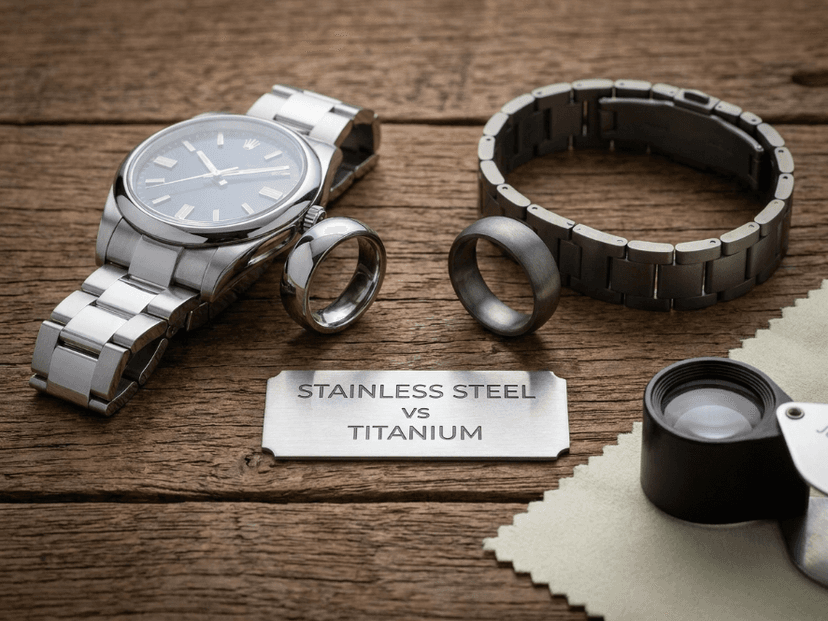
This is one of the biggest differences between the two metals, and it's very noticeable when you wear them.
Stainless steel is approximately 3x heavier than titanium by volume. This gives stainless steel jewelry a "premium" feel that many people enjoy — it feels solid and substantial on the wrist or finger.
Titanium is exceptionally light. It is about 45% lighter than stainless steel. This makes titanium jewelry almost unnoticeable to wear, which is a huge advantage for:
- Large rings and wide bands
- Long-wear pieces (worn all day or during sleep)
- Earrings — heavy earrings can stretch piercing holes over time
- People who find heavy jewelry uncomfortable
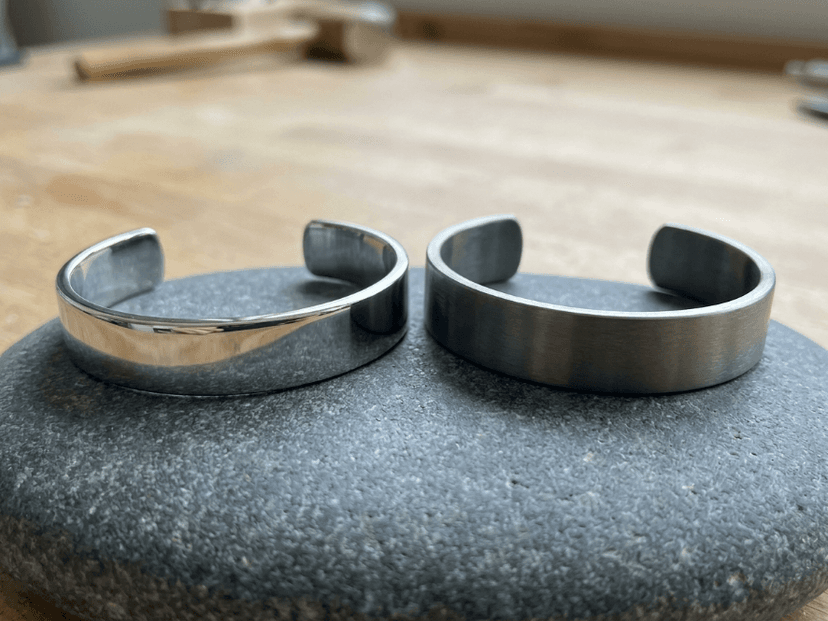
Who wins on comfort? Titanium, by a wide margin — especially for large pieces, long wearing times, and people who dislike heavy jewelry. Stainless steel's weight, however, is preferred by those who like jewelry that "feels real."
Hypoallergenic Properties and Skin Sensitivity
Skin reactions to jewelry are more common than you might think. The most frequent culprit is nickel, a metal found in many alloys.
Stainless steel:
- Grade 316L contains about 10–14% nickel — but it is bound tightly within the alloy, so very little nickel leaches out.
- Most people, even those with mild nickel sensitivity, can wear 316L stainless steel without a reaction.
- However, people with severe nickel allergies may still react to 316L.
Titanium:
- Pure titanium contains zero nickel and zero other common allergens.
- It is considered one of the most biocompatible metals in the world.
- Dentists and surgeons use titanium for implants precisely because the body does not reject it.
- Grade 23 (Ti-6Al-4V ELI) titanium is the gold standard for body-safe jewelry.
Who wins on hypoallergenic rating? Titanium wins — it's the safest option for anyone with metal allergies, sensitive skin, or piercing sites that need to heal.
 Rust and Corrosion Resistance
Both metals are extremely rust-resistant, making them far superior to regular iron or plated metals.
Stainless steel (316L):
- The chromium in stainless steel forms a self-healing protective oxide layer.
- It can withstand sweat, water, and most household chemicals.
- Prolonged exposure to salt water (ocean swimming) or harsh chemicals (bleach, chlorine) can eventually cause pitting or discoloration.
- Recommended to rinse and dry after swimming in chlorinated pools or the ocean.
Titanium:
- Titanium naturally forms an incredibly stable oxide layer ($TiO_2$) that is even more resistant than stainless steel's.
- It can be submerged in salt water for long periods without corroding.
- Resists almost all acids, chlorine, and saltwater conditions.
- Used in marine engineering for this very reason.
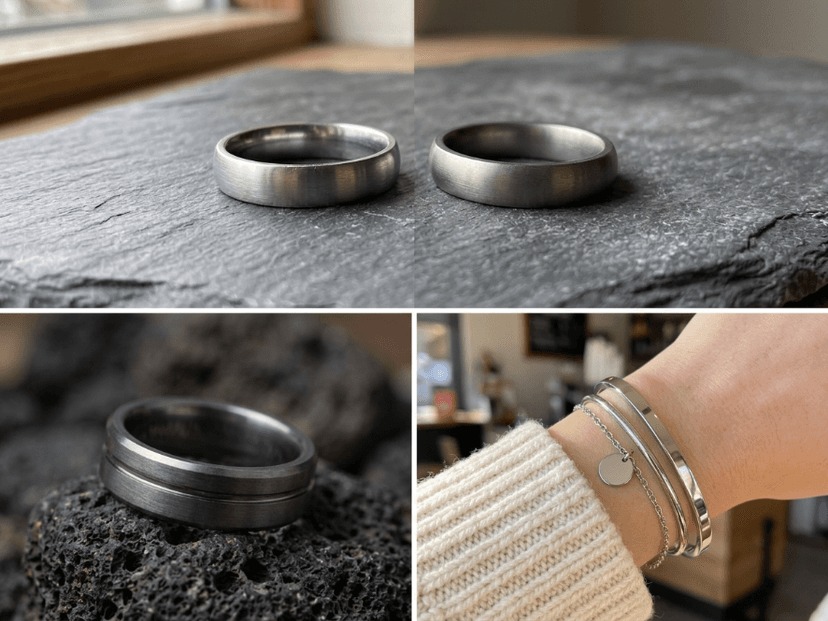
Who wins on corrosion resistance? Titanium wins — it is essentially corrosion-proof in nearly all environments. Both metals are excellent for everyday wear, but titanium performs better in extreme conditions.
Appearance and Available Finishes
Stainless Steel Jewelry Finishes
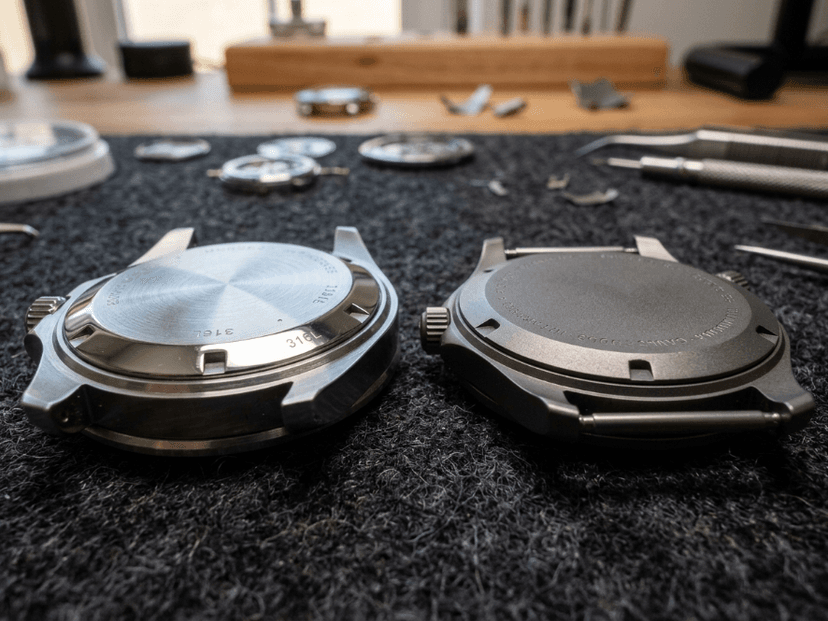
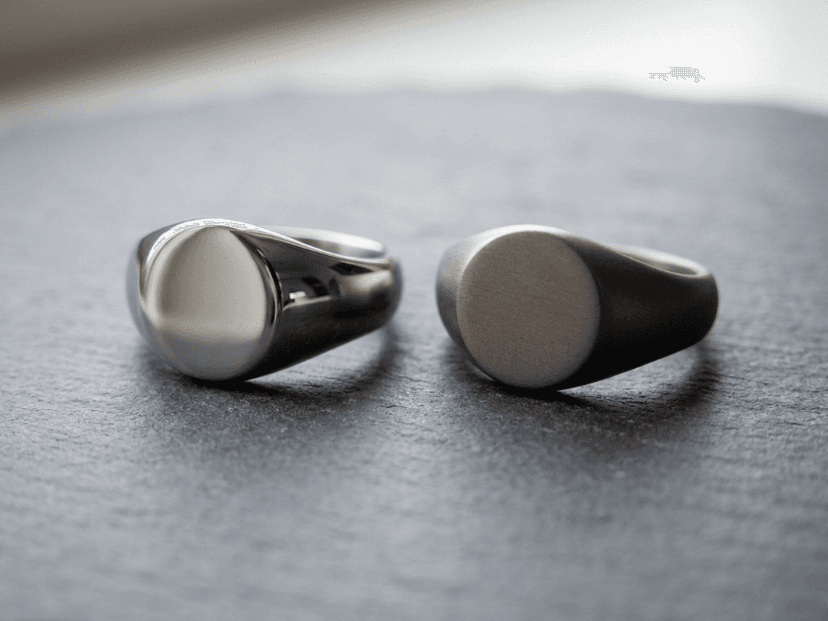
Stainless steel has a bright, chrome-like shine that closely resembles white gold or silver. It accepts a wide variety of finishes and surface treatments:
- Mirror polish – ultra-shiny, high-gloss look
- Brushed/satin – matted, textured appearance
- PVD coating – durable color coatings (gold, rose gold, black, gunmetal, rainbow)
- IP plating – another color-coating method
- Engraving – clean and crisp results
- Laser etching – precise patterns and text
PVD-coated stainless steel is one of the most popular choices in fashion jewelry because it mimics gold or rose gold at a fraction of the cost, and the coating lasts significantly longer than traditional electroplating.
Titanium Jewelry Finishes
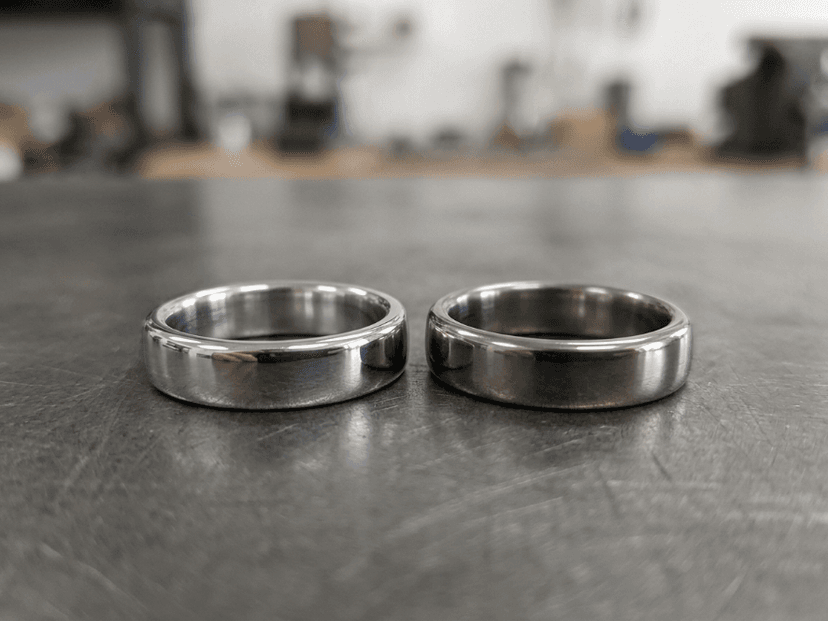
Titanium's natural color is a muted silver-grey — not as bright as stainless steel. It can be finished as:
- Polished – shinier, but not as brilliant as stainless steel
- Brushed – popular for wedding bands
- Anodized – titanium's unique trick: by applying voltage, it produces vivid colors (blue, purple, gold, green) without paint or coating. These colors are created by light refraction through the oxide layer.
Who wins on appearance options? Stainless steel wins — it has more versatile finish options, brighter shine, and better compatibility with color coatings. Titanium's anodized colors are unique and beautiful, but fade over time.
Maintenance and Cleaning
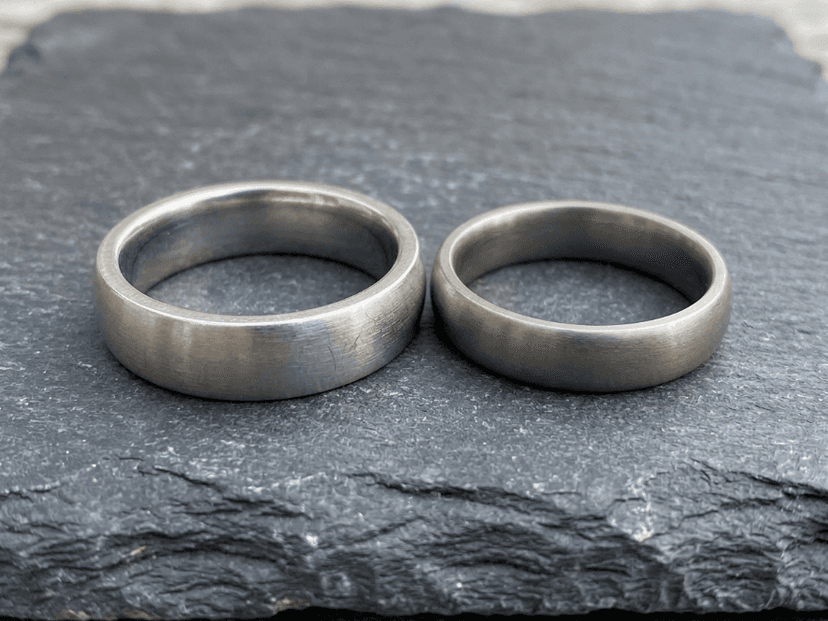
Neither metal requires much maintenance — one of their best qualities.
How to Clean Stainless Steel Jewelry
- Mix warm water with a small drop of mild dish soap.
- Dip a soft cloth or soft-bristle toothbrush into the solution.
- Gently scrub the jewelry.
- Rinse thoroughly with clean water.
- Dry immediately with a soft, lint-free cloth.
Avoid: Bleach, chlorine-based cleaners, abrasive scrubs, steel wool.
Storage tip: Keep stainless steel jewelry in a soft pouch or lined jewelry box to prevent scratching against other pieces.
How to Clean Titanium Jewelry
- Use warm water and a drop of mild soap — same as stainless steel.
- Gently rub with a soft cloth.
- Rinse and pat dry.
Titanium is even more forgiving: it won't rust or tarnish if you forget to dry it immediately.
Maintenance verdict: Both are very low-maintenance. Titanium is slightly more forgiving in wet conditions. PVD-coated stainless steel should be kept away from harsh chemicals to protect the coating.
Price and Value
Price is one of the clearest differences between the two metals.
| Item Type | Stainless Steel (Average Price) | Titanium (Average Price) |
|---|---|---|
| Plain band ring | $5 – $30 | $20 – $80 |
| Fashion necklace | $8 – $40 | $25 – $100 |
| Bracelet | $10 – $50 | $25 – $120 |
| Earrings (pair) | $5 – $25 | $20 – $60 |
| Wedding band | $20 – $100 | $50 – $300 |
*Prices vary based on brand, design complexity, and coatings.*
Stainless steel is one of the most affordable durable metals available. It offers excellent value for everyday fashion jewelry, gift items, and bulk orders (OEM/ODM manufacturing).
Titanium costs more because it is harder to machine and work with. The price difference is justified for those who specifically need hypoallergenic or lightweight properties.
Value verdict: Stainless steel offers the best bang for your buck. Titanium is worth the premium for people who truly need its unique properties.
Resizing and Repair
This is a practical concern that many buyers overlook.
Stainless steel:
- Resizing is difficult but possible at some specialized jewelers using cutting and welding.
- Surface repairs (polishing out scratches) are relatively easy and affordable.
- Broken components can often be re-soldered or replaced.
Titanium:
- Resizing titanium rings is extremely difficult — most jewelers do not offer this service.
- Titanium's hardness makes it very hard to cut, solder, or re-weld without specialized equipment.
- If you gain or lose weight, replacing a titanium ring is often easier than resizing it.
Resizing verdict: Stainless steel has a clear advantage here. If you're unsure about your ring size or anticipate size changes, stainless steel is the safer choice.
Best Uses for Rings, Necklaces, Bracelets, and Earrings
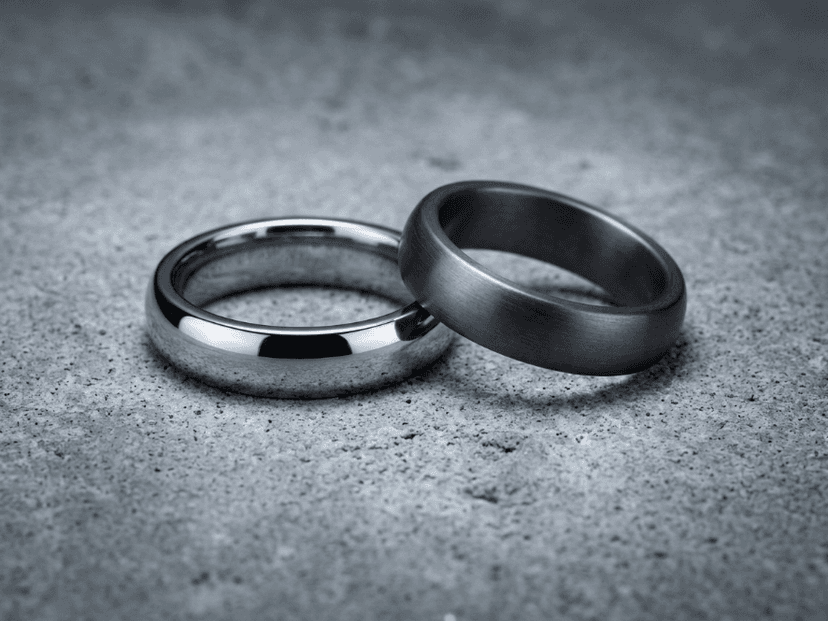
Stainless Steel Ring vs Titanium Ring
| Use Case | Best Choice |
|---|---|
| Fashion ring (everyday wear) | Stainless Steel |
| Wedding band (sensitive skin) | Titanium |
| Men's statement ring | Stainless Steel |
| Medical/allergy concerns | Titanium |
| Budget-friendly ring | Stainless Steel |
| Lightweight comfort band | Titanium |
Stainless Steel vs Titanium Necklace
Stainless steel wins for necklaces in most cases:
- More finish and design options
- Easier to add PVD gold or rose gold coating
- Lighter chains available at low cost
- Better for pendants (especially heavier ones)
Titanium necklaces are great for minimalists or those with nickel allergies.
Bracelets
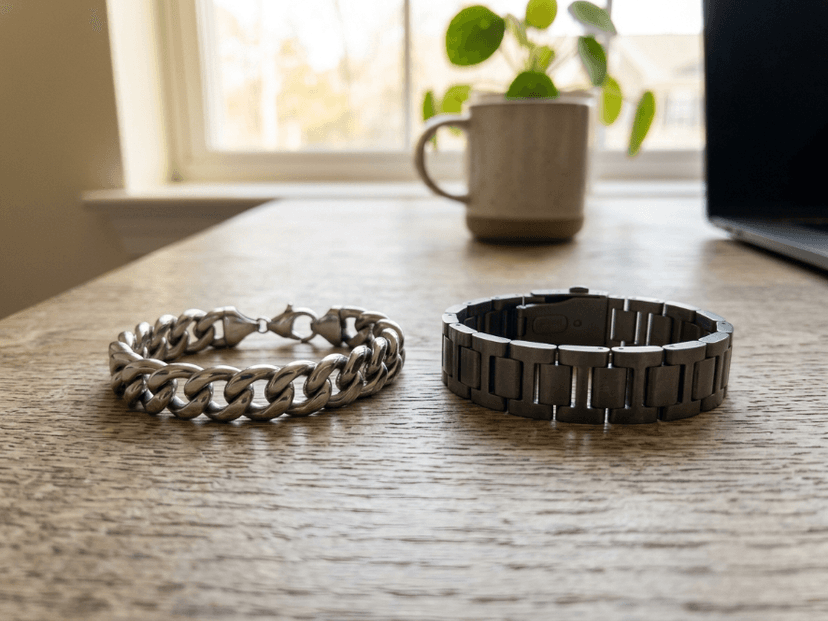
- Stainless steel bracelets are heavier, giving them a satisfying, premium feel on the wrist.
- Titanium bracelets are ideal for those who dislike heavy wrist jewelry or wear bracelets for long periods.
Earrings
Titanium earrings are the clear winner, especially for:
- New piercings that are still healing
- Sensitive earlobes
- Lightweight earrings that don't pull on the piercing
- Children's earrings
316L stainless steel earrings are fine for healed piercings, but titanium is the gold standard for post and stud earrings.
Which Is Better for Everyday Wear?
For everyday wear, the answer depends on your priorities:
- Choose stainless steel if you want affordable, stylish jewelry that looks great and lasts long. It holds up to daily use, sweat, and occasional water exposure with minimal care.
- Choose titanium if you want featherlight jewelry you can forget you're wearing, or if your skin is easily irritated.
For most people, 316L stainless steel is the best everyday metal — it balances cost, style variety, durability, and hypoallergenic performance for the majority of wearers.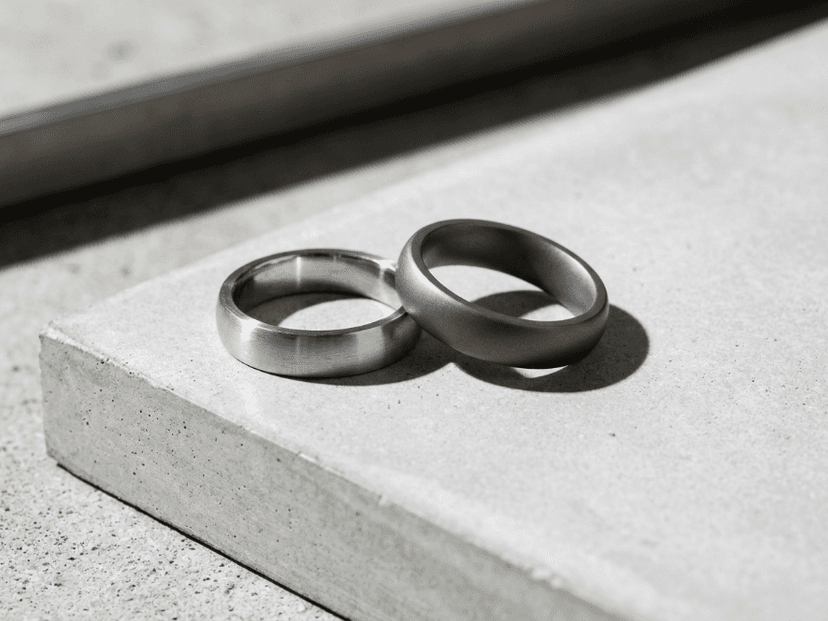
Pros and Cons of Each Material
Stainless Steel Jewelry: Pros and Cons
| ✅ Pros | ❌ Cons |
|---|---|
| Very affordable | Contains trace nickel (may irritate severe allergies) |
| Wide variety of styles and finishes | Heavier than titanium |
| Accepts PVD/IP color coatings | Difficult to resize |
| Easy to polish and refinish | Can scratch with heavy wear |
| Very rust and corrosion resistant | Not ideal for new piercings |
| Widely available | |
| Great for OEM/ODM production |
Titanium Jewelry: Pros and Cons
| ✅ Pros | ❌ Cons |
|---|---|
| Fully hypoallergenic (nickel-free) | More expensive than stainless steel |
| Extremely lightweight | Fewer design and finish options |
| Strongest metal for its weight | Very difficult to resize |
| Exceptional corrosion resistance | Harder to engrave or work with |
| Biocompatible (safe for body jewelry) | Anodized colors can fade |
| Ideal for new piercings | Less widely available |
Who Should Choose Stainless Steel? Who Should Choose Titanium?
Choose Stainless Steel Jewelry if you:
- Want stylish, affordable jewelry that looks great every day
- Love the look of gold, rose gold, or black finishes (via PVD coating)
- Are shopping on a budget or buying in bulk
- Want more design options and customization
- Have no known metal allergies
- Need jewelry that can be polished and repaired
- Are a retailer or brand looking for OEM/ODM jewelry manufacturing
Choose Titanium Jewelry if you:
- Have a nickel allergy or sensitive skin
- Prefer featherlight jewelry for long wearing comfort
- Need jewelry for fresh or healing piercings
- Live an active lifestyle (sports, swimming in the ocean)
- Want a ring or bracelet that won't irritate your skin in hot, sweaty conditions
- Are looking for a hypoallergenic wedding band
- Have previously had reactions to "hypoallergenic" metal jewelry
Common Myths and Mistakes to Avoid
Myth 1: "Stainless Steel Is Always Safe for Allergies"
Not fully true. While 316L stainless steel is safe for most people, it does contain nickel. People with severe nickel allergies can still react to it. If you have a confirmed nickel allergy, choose titanium or implant-grade titanium.
Myth 2: "Titanium Will Never Scratch"
False. Titanium is harder than stainless steel, but it is not scratch-proof. All metals scratch over time. The difference is that titanium is slightly better at resisting scratches — not immune to them.
Myth 3: "All Stainless Steel Jewelry Is the Same"
Wrong. The grade matters enormously. Grade 316L is far superior to grades 201 or 304 for jewelry. Always ask about the steel grade before buying. Low-quality stainless steel (like 201) contains higher nickel content and is less corrosion-resistant.
Myth 4: "PVD Coating on Stainless Steel Wears Off Quickly"
Mostly false. High-quality PVD (Physical Vapor Deposition) coatings are much more durable than traditional gold plating. A well-applied PVD coating can last years with proper care. Low-quality IP plating, however, may fade faster — so always ask about the coating method.
Myth 5: "Titanium Jewelry Can Be Resized Like Gold"
False. This is a common and expensive mistake. Titanium is extremely difficult to resize. Always confirm your exact ring size before ordering a titanium ring. If unsure, stainless steel is a safer option.
Myth 6: "Stainless Steel Jewelry Looks Cheap"
False. High-quality stainless steel jewelry — especially with PVD gold or rose gold finishes — can be almost indistinguishable from fine gold jewelry at a glance. Many luxury-looking pieces in fashion jewelry are made from premium 316L stainless steel.
Mistake: Buying Without Checking the Grade
Always verify the steel grade (look for 316L or S316L) or titanium grade (look for ASTM F136 or Grade 23 for body jewelry). Unverified "stainless steel" or "titanium" jewelry may be low-quality alloys.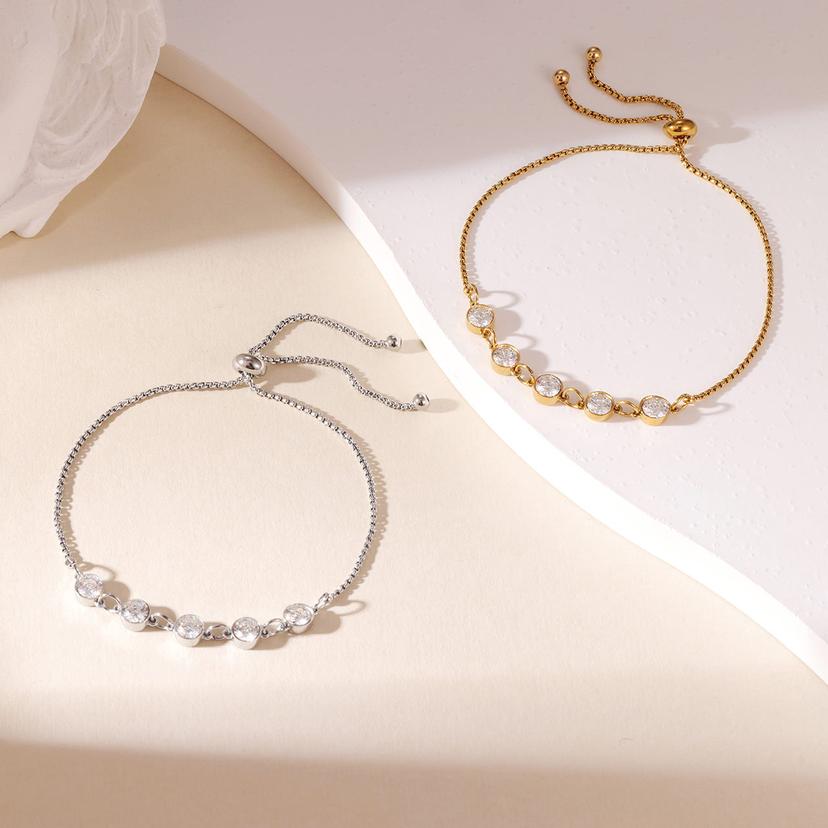
Conclusion
Stainless steel vs titanium jewelry — both are outstanding metals that outperform traditional silver, gold-plated, or brass jewelry in durability, rust resistance, and long-term value. The right choice comes down to your personal needs: stainless steel is the winner for style variety, affordability, and ease of manufacture, while titanium excels for hypoallergenic performance, lightweight comfort, and extreme corrosion resistance. For most buyers, 316L stainless steel is the smartest everyday choice; for those with sensitive skin or specific comfort needs, titanium is worth every extra penny.
If you're looking for a trusted manufacturing partner, Jewins is a leading custom stainless steel jewelry manufacturer offering full OEM/ODM services with flexible MOQs, strict quality control, and reliable global shipping. Whether you're a brand, retailer, or wholesaler, Jewins delivers premium 316L stainless steel jewelry crafted to your exact specifications — helping you build a jewelry line that your customers will love.
Frequently Asked Questions
1. Is stainless steel or titanium better for jewelry?
Both are excellent, but the best choice depends on your needs. Stainless steel is better for affordability, style variety, and everyday fashion wear. Titanium is better for hypoallergenic properties, lightweight comfort, and maximum corrosion resistance. For most buyers, stainless steel offers the best overall value.
2. Is titanium jewelry truly hypoallergenic?
Yes. Pure titanium contains no nickel, no cobalt, and no other common allergens. It is one of the most biocompatible metals available and is safe for virtually everyone, including people with severe metal allergies. It is the top choice for piercing jewelry and sensitive skin.
3. Which is more durable — stainless steel or titanium?
Titanium is slightly harder and more scratch-resistant, and it has a higher tensile strength. However, stainless steel is easier to polish and repair when scratches occur. For practical everyday durability, both metals perform extremely well and will last many years with minimal care.
4. Can you wear stainless steel or titanium jewelry in the shower or pool?
Yes, both metals are highly water-resistant. However, prolonged exposure to chlorine (swimming pools) or salt water (ocean) can gradually affect stainless steel — especially lower-grade alloys. Titanium is essentially immune to these conditions. For shower use, both are perfectly fine; just rinse and dry afterward.
5. Why is titanium jewelry more expensive than stainless steel?
Titanium is more expensive to machine and work with. It requires specialized cutting tools, cannot be easily soldered, and is harder to shape into complex designs. Stainless steel is much easier and cheaper to manufacture, which is why it dominates the fashion jewelry and OEM/ODM market.
6. Can stainless steel or titanium rings be resized?
Stainless steel rings can be resized by a skilled jeweler using cutting and welding, though it is more difficult than resizing gold. Titanium rings are extremely difficult to resize — most jewelers do not offer this service. Always confirm your exact size before purchasing either metal, especially titanium.
7. Is stainless steel jewelry safe for people with nickel allergies?
Grade 316L stainless steel is safe for most people, including those with mild nickel sensitivity, because the nickel is bound within the alloy and does not easily leach out. However, individuals with severe confirmed nickel allergies should choose titanium instead, as even trace amounts of nickel can cause a reaction in highly sensitive people.
8. What is the best metal for earrings — stainless steel or titanium?
Titanium is the best metal for earrings, especially for new piercings, sensitive earlobes, or children's jewelry. It is lightweight (reducing the risk of stretched piercing holes), fully hypoallergenic, and biocompatible. For healed piercings without allergy concerns, 316L stainless steel earrings are a cost-effective and stylish alternative.
Build Your Jewelry Collection with a Reliable OEM/ODM Supplier
Jewins helps jewelry brands, wholesalers, and private label buyers develop 316L stainless steel jewelry with practical sample support, stable production, quality checks, and packaging options. From material selection to bulk-order delivery, we focus on clear communication, realistic claims, and consistent quality.