

Ladies Stainless Steel Rings for Everyday Wear and Bulk Jewelry Supply
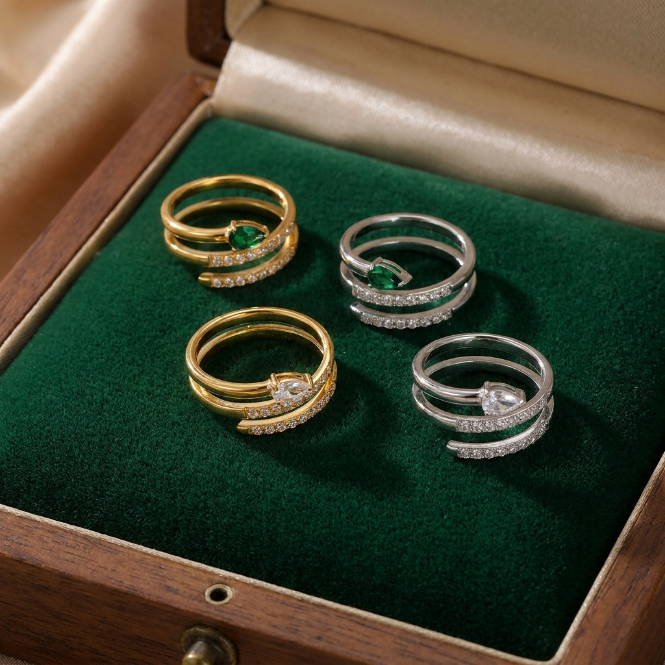
Ladies stainless steel rings are a practical choice for buyers who need jewelry that balances appearance, durability, and consistent production. For retailers, brands, and gift suppliers, the main problem is often finding rings that look polished on the shelf while standing up to daily wear, handling, and repeated inventory turnover. Stainless steel helps address that need with a stable metal base that can support a range of styles, from simple bands to decorative fashion rings.
Product Overview
This product category covers women’s rings made from stainless steel, a material valued for its strength, clean surface finish, and resistance to routine wear. It is commonly used in fashion jewelry because it can be shaped into slim profiles, broader bands, or design-focused forms without requiring delicate care from the end user. For B2B buyers, that makes it suitable for collections intended for general retail, promotional gifting, and seasonal assortment planning.
Because the supplied image is heavily obscured, only limited visual information can be confirmed. The visible portion suggests a reflective silver-toned metal surface, but the exact ring style, dimensions, and structure cannot be verified from the image alone. Any purchasing decision should therefore rely on confirmed sample specifications rather than assumptions from the photo.
Key Characteristics Buyers Commonly Evaluate
Material Stability
Stainless steel is widely selected for ring production because it offers a firm, durable base that holds shape well in regular use. This helps reduce bending or deformation in styles that are worn frequently.
Finish Appearance
Depending on the design direction, ladies stainless steel rings may be supplied with polished, brushed, satin, or mixed surface finishes. A bright silver look works well for minimalist collections, while matte or textured finishes can support more contemporary styling.
Wearability
Comfort matters in women’s rings, especially for retail products intended for long wear. Buyers usually look for smooth inner edges, balanced proportions, and surface treatments that feel comfortable on the hand.
Materials and Finish Options
Stainless steel jewelry can be produced in different visual and functional finishes, depending on the target market. Common options include mirror polish, brushed metal, satin silver, and decorative surface patterns. Some styles may also include plating, coloring, or inlaid design elements, but these should be confirmed by sample and order specification.
For buyers comparing product lines, the material finish affects both the look and the maintenance requirements. A smoother surface can present a more formal appearance, while a softer satin finish may better suit everyday fashion assortments.
Manufacturing Process and Product Development
Stainless steel rings are typically manufactured through processes such as forming, casting, machining, polishing, and surface finishing. The exact route depends on ring geometry and design complexity. Simple bands may be formed and finished efficiently, while more detailed styles may require additional machining or decorative processing.
For OEM or private label projects, the development stage usually includes confirmation of ring width, thickness, finish direction, size range, and packaging format. Clear technical drawings and approved samples help avoid variation across production batches.
Application Scenarios
Ladies stainless steel rings are used in a wide range of market channels. Retail jewelry stores may stock them as entry-level or mid-range fashion items. Online sellers often prefer stainless steel because it supports visually consistent product photography and practical consumer messaging. Gift suppliers, event distributors, and promotional buyers may also choose this category for collections that need dependable appearance and manageable replenishment.
These rings can work in casualwear assortments, minimalist accessories, coordinated jewelry sets, and gift-ready packaging programs. Their neutral silver tone also makes them easy to pair with other metals or accessory items in a broader line.
Quality Control Considerations
When sourcing this category, buyers usually check surface uniformity, edge smoothness, color consistency, and dimensional repeatability. A ring may look simple, but small defects in polishing, symmetry, or finishing can affect customer perception immediately.
Useful inspection points include:
- Surface finish consistency across the visible faces
- Absence of sharp edges or uncomfortable seams
- Size accuracy against agreed samples
- Stable color tone across the batch
- Packaging integrity for retail shipment
Customization Guidance
Customization for ladies stainless steel rings can include ring size range, band width, surface finish, engraving, logo placement, and packaging style. Buyers should decide early whether the product is aimed at fashion retail, gifting, or branded resale, because those channels often require different visual and packaging priorities.
When requesting customization, share reference images, target audience, preferred finish, and any must-match sample details. If the order requires special styling, it is better to confirm a pre-production sample before mass production.
Buyer Decision Factors
Before placing an order, consider the target price position, expected wear conditions, finish preference, and the level of design detail required. For fast-moving retail programs, consistency and supply stability are often more important than complex ornamentation. For gift or branded lines, presentation and surface quality may carry greater weight.
Because the visible product image does not confirm the exact ring structure, buyers should request full specifications, material confirmation, and an approved sample. That reduces the risk of mismatch between expectation and delivered product.
Request Samples and Confirm Specifications
If you are sourcing ladies stainless steel rings for retail or custom jewelry programs, send your required size range, finish preference, and packaging needs. A clear specification sheet helps align production with your market position and lowers the chance of revision during ordering.