
Turn Supply Chain Pressure Into a More Reliable Growth System
A practical guide for growing jewelry brands that need more predictable production, clearer supplier communication, stronger QC checkpoints, reorder planning, and delivery readiness.
Growing jewelry brands face supply chain crises because sales growth increases SKU complexity, reorder pressure, production coordination needs, QC risk, and delivery uncertainty at the same time. The solution is not simply finding a cheaper factory. B2B jewelry buyers need a more visible production system that connects sample approval, material planning, quality checkpoints, packaging readiness, and repeat-order support.
Why do growing jewelry brands face supply chain crises?
Growing jewelry brands face supply chain crises when fast sales growth creates more SKUs, faster reorders, tighter launch schedules, and higher quality expectations than their current supplier system can handle.
The issue is not always product demand itself. The real risk often comes from unclear production planning, factory self-inspection, weak sample-to-bulk control, poor material preparation, and late delivery communication.
For B2B jewelry buyers, the practical solution is to check whether a manufacturer can support OEM/ODM development, material and finish standards, QC checkpoints, safety stock planning, private label packaging, and repeat-order visibility before scaling.
Why Growing Brands Must Treat Supply Chain as a Strategic Priority
A growing jewelry brand must treat its supply chain as a strategic priority because every marketing win finally depends on whether products can be sampled, produced, checked, packaged, and delivered on time. When growth accelerates, weak production planning can turn customer demand into complaints, returns, and lost trust.
Have you ever faced this situation?
Your sales suddenly grow by 50%. Before you even have time to celebrate, customer complaints start to double. New product return rates go up. Store ratings begin to drop. The problem is not always that your product is bad. In many cases, your supply chain simply cannot handle the sudden increase in orders.
What makes it worse is that your current supplier may not give you a clear answer. They cannot promise a stable delivery time. They cannot provide quality control records. They cannot explain where the problem happened. In the end, the money you spent on marketing, ads, product launches, and brand building may be wasted because the supply chain fails to support your growth.
This article will not give you general advice like “optimize your supply chain.” Instead, we will look at why growing jewelry brands often face supply chain problems, and how a more reliable production and quality control system can help brands turn their supply chain from a guessing game into a more predictable, measurable, and supportive growth foundation.
Many growing jewelry brands see themselves as product companies or marketing companies. But in the jewelry business, growth finally depends on delivery.
When a brand enters a fast-growth stage, the order structure becomes much more complicated. More SKUs, small-batch orders, fast reorders, new product launches, seasonal campaigns, and sudden e-commerce promotions all become normal.
At this stage, the traditional “take order, produce, ship” factory model can quickly show its weaknesses. Delivery times become unstable. Product consistency becomes harder to control. Communication costs become higher. Small problems in different parts of the supply chain may add up and become a serious business risk.
For a growing jewelry brand, supply chain problems are not always random accidents. In many cases, they are the result of a supply chain system that is not ready for the brand’s next growth stage.
The damage is also not limited to refunds or customer complaints. It can affect platform ratings, channel confidence, customer trust, and the brand’s long-term pricing power. In other words, when a jewelry brand moves from 1 to 10, supply chain capability can become the ceiling of brand growth.
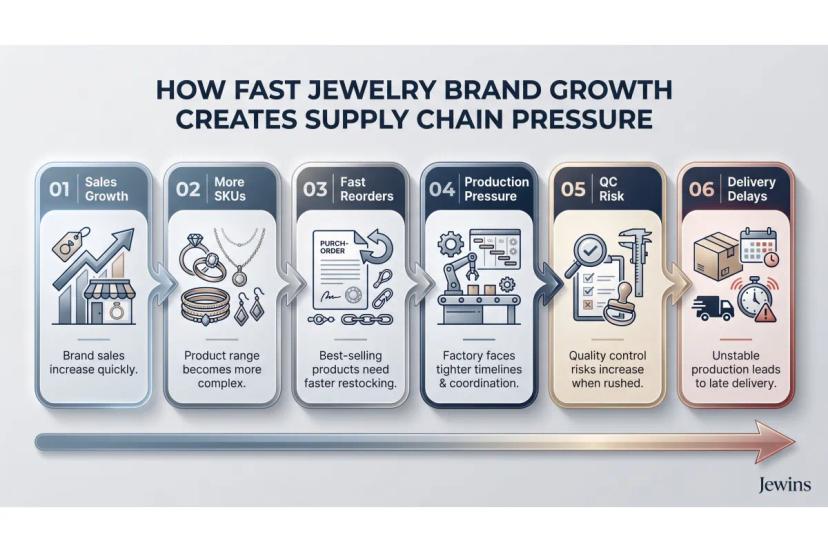
For B2B jewelry buyers, supplier capability should be evaluated before a sales spike happens. A factory that can handle small trial orders may not automatically be ready for urgent reorders, more SKUs, tighter packaging requirements, or stable bulk quality.
Three Weaknesses of Traditional Supply Chain Solutions
Traditional supply chain solutions often fail growing jewelry brands because they rely too much on factory self-inspection, verbal production promises, and extreme inventory thinking. These weaknesses make quality, delivery, and reorder response harder to control when demand increases.
Many brands have already tried to manage their supply chain. The real issue is that traditional methods are often not enough for today’s market speed.
Weakness 1: Relying Completely on Factory Self-Inspection
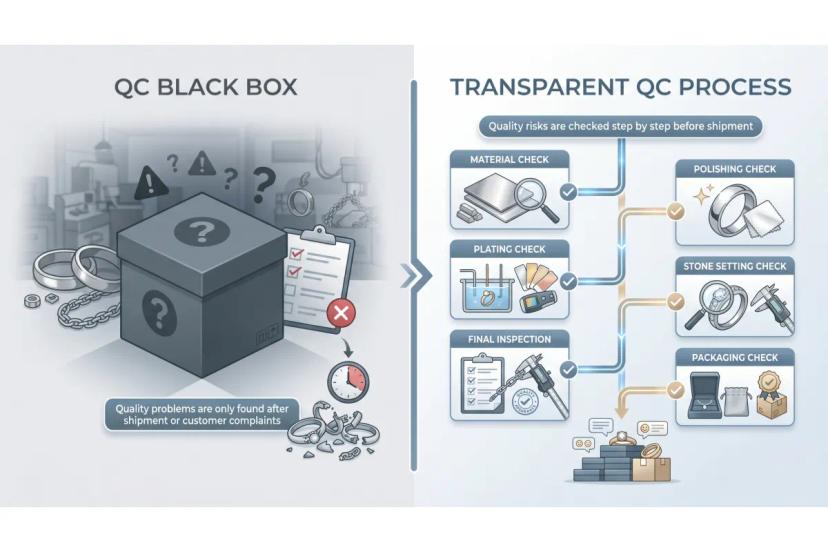
Some brands leave all quality control work to the factory. At the beginning, this may seem efficient and simple. But when the order volume grows, quality control can easily become a black box.
For example, if the plating thickness is not stable, the color may fade faster than expected. If stone setting is not checked carefully, products may look fine during sampling but show problems after bulk production. If polishing, welding, or surface finishing is not controlled, the customer may receive products that do not match the approved sample.
The biggest problem is that the brand may only discover the issue after customer complaints happen. By that time, the goods have already been shipped, sold, or returned. The cost of solving the problem becomes much higher than preventing it during production.
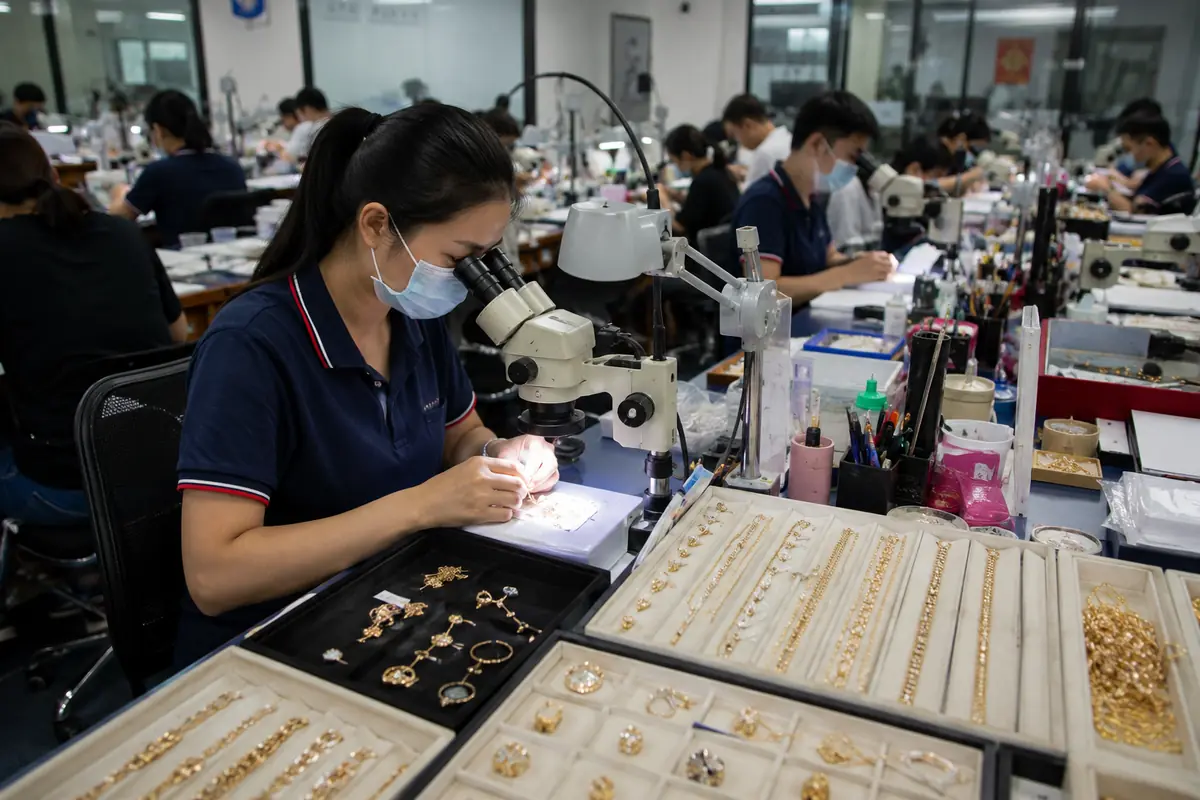
A reliable jewelry supply chain should not depend only on a final “pass” or “fail” result. It should have quality control checkpoints during material preparation, sample approval, production, polishing, plating, stone setting, packaging, and final inspection.
Weakness 2: Using Personal Relationships Instead of Data-Based Capacity Planning
Some brands believe that if they have a good relationship with the factory owner, they will get production priority. But in real production, when several customers are chasing delivery at the same time, factories usually give priority to customers with larger order volumes, more stable cooperation, or clearer production planning.
For growing brands, relying only on verbal promises is risky.
A supplier may say “no problem” during communication, but when production is full, the brand may still face delays. This is especially dangerous before big sales seasons, product launches, influencer campaigns, or e-commerce promotions.
If delivery is delayed, the brand does not only lose time. It may also face platform penalties, late shipments, canceled orders, customer complaints, and lost marketing opportunities.
That is why growing jewelry brands need more than a friendly supplier relationship. They need production schedules, capacity planning, clear delivery commitments, and a supplier who can support repeat orders and urgent production needs.
Weakness 3: Extreme Thinking Around Inventory
Some brands want zero inventory. They hope the factory can prepare everything only after orders come in. This looks safe because the brand does not need to hold stock. But in reality, it pushes too much risk to the factory.
When the factory has no preparation time, it may try to reduce hidden costs, change materials, shorten processes, or rush inspection. This can increase the risk of quality problems.
Other brands go to the opposite extreme. They prepare too much stock by themselves. This may solve the delivery problem for a short time, but it also creates pressure on cash flow, warehouse space, and dead inventory.
Neither extreme is ideal for growing jewelry brands.
A better solution is dynamic stock planning. For example, brands can prepare key materials, semi-finished components, popular stone sizes, standard chain styles, or best-selling parts based on previous sales data and launch schedules. This allows the brand to respond faster without holding too much finished inventory.
A supplier problem becomes more expensive after products reach customers. Growing brands should confirm sample standards, material choices, finish requirements, packaging details, and inspection checkpoints before scaling bulk production.
Jewins’ Brand Support Action Plan
Jewins’ brand support action plan focuses on four practical areas: strategic customer support, full-process risk control, safety stock and demand forecasting, and production visibility. The goal is to help growing jewelry brands reduce uncertainty across OEM/ODM development, bulk production, QC, packaging, and delivery preparation.
Based on our experience in jewelry manufacturing, OEM/ODM production, quality control, and supply chain support, Jewins has built a more practical support system for growing jewelry brands.
This system is not only about producing one order. It is about helping brands improve production certainty, reduce quality risks, and build a more stable supply chain for long-term growth.
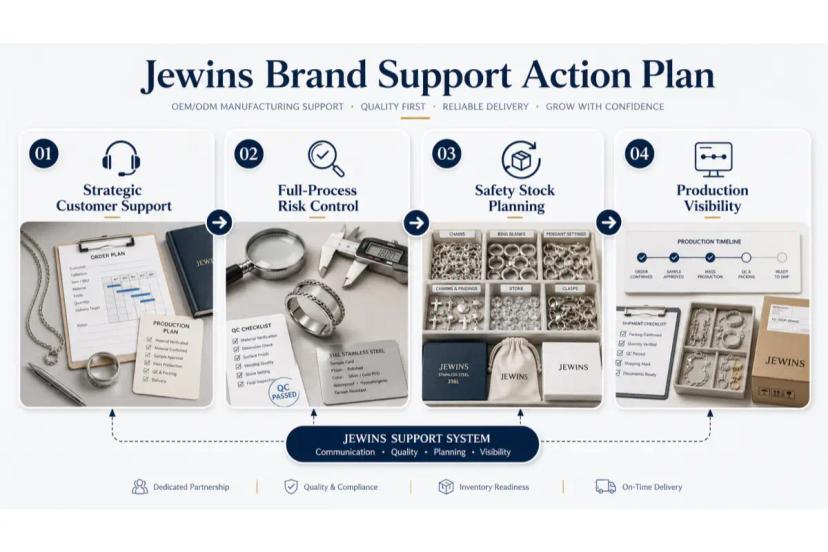
Step 1: Strategic Customer Support Mechanism
For growing jewelry brands, the biggest fear is not only price. It is uncertainty.
Can the supplier help when the brand needs urgent samples? Can the supplier support repeat orders when a product becomes popular? Can the factory arrange production when the brand suddenly needs to launch a new style? Can someone follow the order closely instead of only replying with general updates?
At Jewins, growing brand projects can be supported by a dedicated sales and production coordination process. This helps improve communication between the brand, the sampling team, the production team, and the quality control team.
Instead of waiting for unclear updates, the brand can get more direct information about sample progress, material preparation, production status, and delivery planning.
For jewelry brands that are launching seasonal collections, testing new products, or preparing for reorder demand, this type of support can make the supply chain feel less like a gamble and more like a planned system.
Step 2: Full-Process Risk Control and Traceability
Jewelry production has many steps. A small problem in one step can affect the final product.
- Material quality may affect durability and color performance.
- Stone setting may affect product appearance and return rate.
- Polishing may affect the final shine and hand feel.
- Plating may affect color consistency and wear performance.
- Packaging may affect the customer’s first impression.
That is why risk control should not only happen at the end of production.
A better system should include checkpoints from material preparation, mold development, sample confirmation, polishing, plating, stone setting, final inspection, and packaging.
When quality problems happen, the brand and supplier should be able to review where the risk appeared and which batch may be affected. This can help reduce repeated mistakes and improve future production consistency.
For growing brands, this is very important. When orders are small, a quality issue may only affect a few customers. But when the brand grows, the same issue may affect hundreds or thousands of products. The earlier the problem is found, the lower the cost will be.
Step 3: Safety Stock and Demand Forecasting
Growing jewelry brands often face a difficult question: which products should we prepare in advance, which products should we only produce after orders come in, and how do we avoid stockouts without creating dead inventory?
Jewins does not suggest that brands blindly keep zero inventory or overstock finished products. A more balanced method is to build a dynamic safety stock plan.
- Common stainless steel jewelry components
- Popular chain styles
- Standard ring sizes
- Frequently used stones
- Core PVD color options
- Semi-finished products for best-selling designs
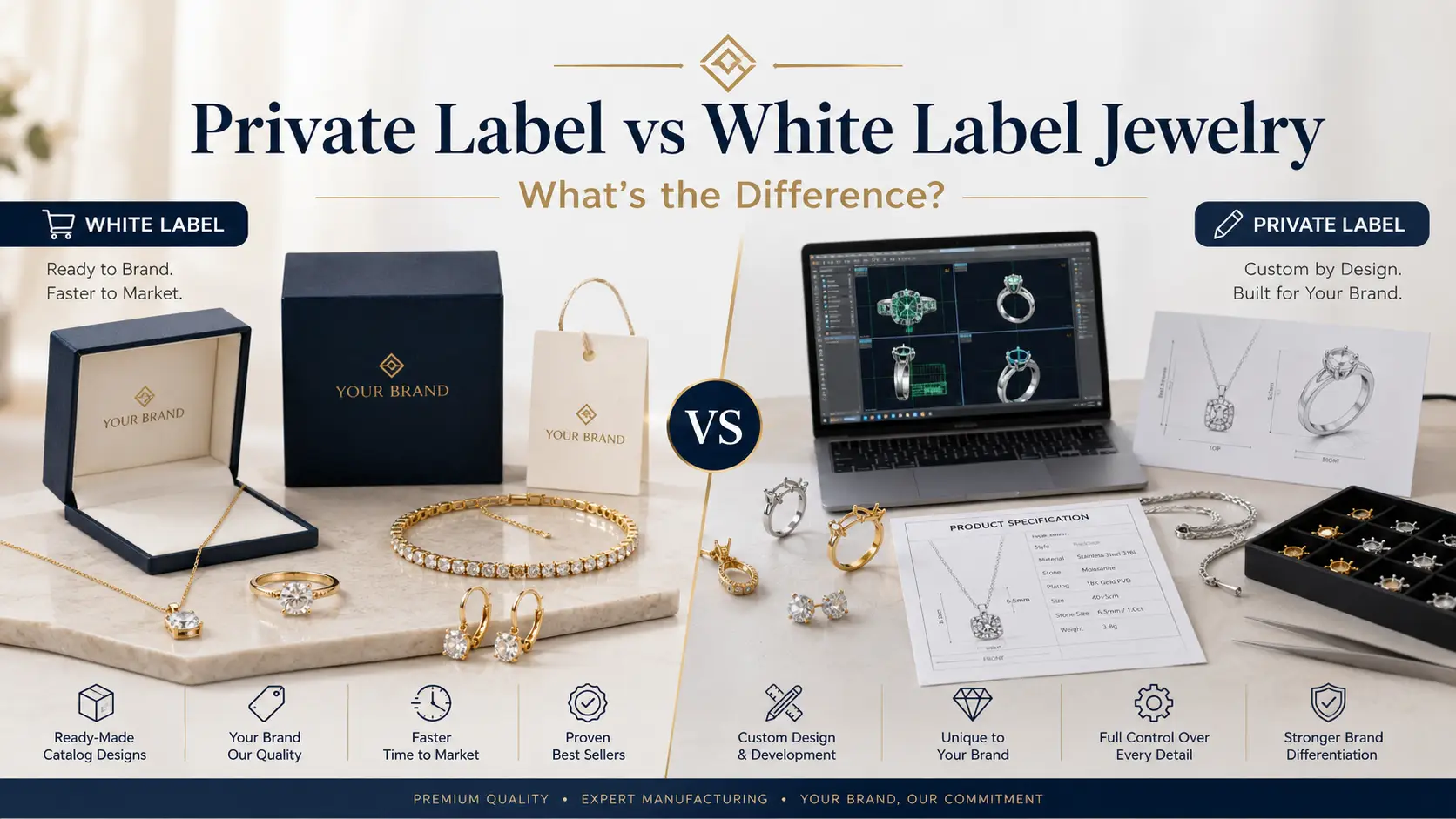
- Packaging materials for private label orders
By preparing key materials and semi-finished parts in a more planned way, brands can respond faster when sales increase. At the same time, they do not need to hold too much finished inventory.
This is especially useful for growing brands with fast product launches, seasonal campaigns, influencer promotions, or repeated best-selling styles.
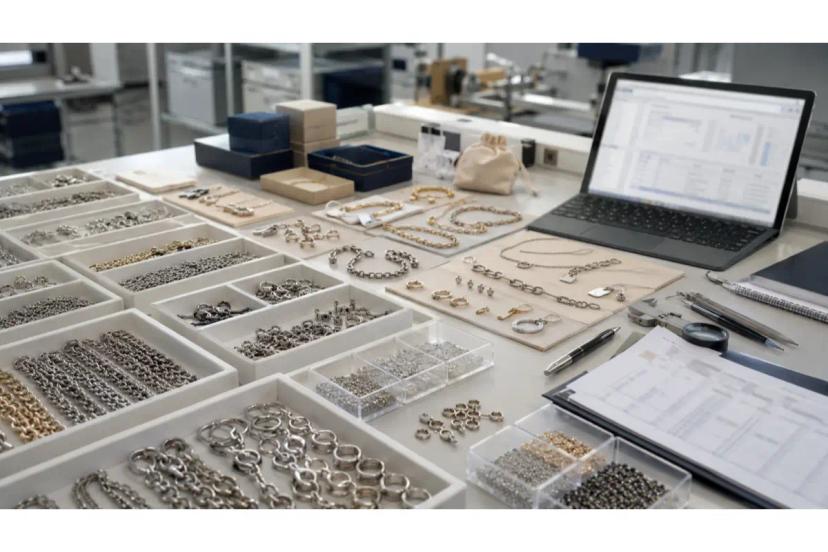
Step 4: Production Visibility and Delivery Support
Many supply chain problems come from poor visibility.
The brand does not know whether the order is still waiting for material, already in production, under polishing, waiting for plating, under inspection, or ready for shipment. When communication is unclear, the brand cannot make good decisions on marketing, inventory, customer service, or launch timing.
A more reliable production process should make key production stages more visible.
- Sample development
- Material preparation
- Mold or CAD progress
- Bulk production status
- Polishing and surface finishing
- Plating or PVD coating
- Quality inspection
- Packaging
- Shipment preparation
This type of communication helps the brand reduce uncertainty. If there is a possible delay or production risk, the brand can know earlier and prepare a backup plan.
For growing jewelry brands, this is not just operational support. It is part of brand protection.
A growing brand does not only need a supplier that can produce one order. It needs a manufacturing partner that can coordinate samples, materials, finish requirements, packaging, and repeat orders as the business becomes more complex.
A Before-and-After View of Supply Chain Improvement
Supply chain improvement is visible when delivery timelines become clearer, quality risks are checked earlier, reorders can be planned sooner, and the brand spends less time reacting to complaints. For growing jewelry brands, this means operational stability can support marketing and product growth instead of blocking it.
For many growing jewelry brands, the difference between an unstable supplier and a reliable manufacturing partner can be seen clearly in daily operations.
Before improving supply chain management, a brand may often face:
| Area | Before Supply Chain Improvement | After Better Supply Chain Support |
|---|---|---|
| Delivery | Delivery dates often change | Production timeline becomes clearer |
| Quality | Problems are found after customer complaints | More risks are checked during production |
| Reorders | Best-selling products are hard to restock quickly | Key materials and repeat orders can be planned earlier |
| Communication | Updates are unclear or delayed | Production stages are easier to follow |
| Customer Service | The team spends more time solving complaints | The team can focus more on sales and product planning |
| Brand Growth | Marketing plans are limited by supply uncertainty | Product launches and reorders become more predictable |
The real value of supply chain certainty is not that every problem disappears. The value is that when problems happen, there is a team, a process, and a system that can respond quickly and take responsibility.
Common Mistakes Growing Jewelry Brands Should Avoid
Growing jewelry brands should avoid choosing suppliers only by the lowest unit price, treating the factory only as an executor, and splitting too many orders across suppliers just to create price pressure. These habits may reduce short-term cost, but they can increase quality, delivery, and communication risks as the brand scales.
Mistake 1: Only Chasing the Lowest Unit Price
Many brands compare suppliers only by unit price. But in jewelry production, the lowest price is not always the lowest total cost.
If a supplier cuts costs on material, plating, polishing, stone setting, or inspection, the brand may pay more later through returns, customer complaints, replacement orders, bad reviews, and lost customer trust.
A better way is to look at the total cost of ownership. This means considering not only the product price, but also quality risk, delivery stability, after-sales cost, and brand reputation.
Sometimes a slightly higher unit price from a more reliable supplier can actually reduce the total cost for the brand.
Mistake 2: Treating the Factory Only as an Executor
Some brands only send product drawings or reference images to the factory and expect the factory to produce exactly what they imagine. But if the brand does not confirm structure, tolerance, plating requirements, surface finish, stone setting details, or inspection standards, misunderstandings can happen easily.
A better method is to involve the factory earlier in product development.
The factory can help review whether the design is suitable for production, whether the structure needs adjustment, whether the plating process is suitable, and whether the final product can stay close to the approved sample during bulk production.
For OEM/ODM jewelry production, early technical communication can reduce many problems before mass production starts. Jewins supports custom stainless steel jewelry development through OEM/ODM service, CAD support, sample development, and production coordination.
Mistake 3: Using Too Many Suppliers Only to Create Price Pressure
Some brands ask five or more small suppliers to quote at the same time. On the surface, this seems to create competition and lower prices. But in reality, each supplier may treat the brand as a small or unstable customer.
When raw material prices change or production capacity becomes tight, the brand may be one of the first to face delays.
For growing brands, a better strategy is to build deeper cooperation with one or two reliable strategic suppliers, while keeping a small backup supplier network for risk control.
A stable supplier relationship can help the brand gain better communication, better production priority, clearer sample development, and more consistent product quality.
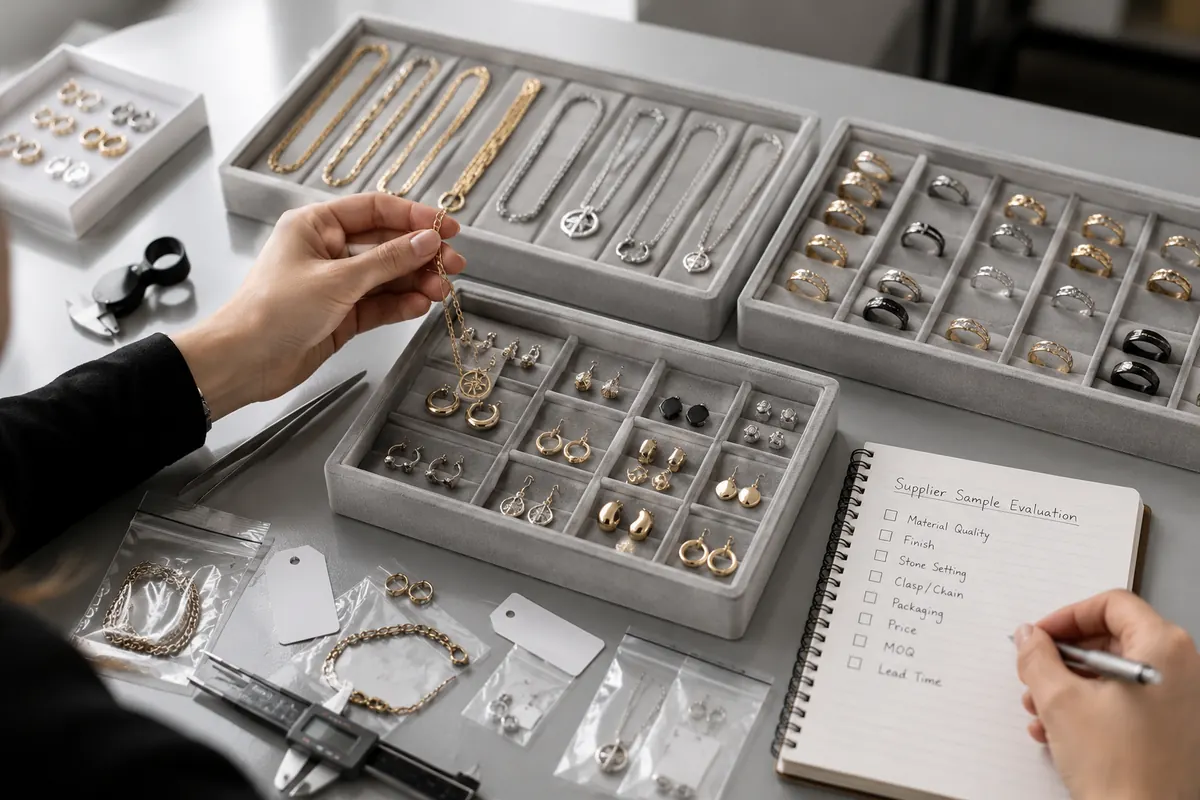
Before scaling a jewelry collection, ask suppliers how they handle sample approval, bulk-order standards, repeat-order lead time, packaging preparation, and production updates. The answers often show whether they are only quoting a price or actually supporting brand growth.
When This Plan May Not Be Enough
Factory-side supply chain support can reduce many production, QC, communication, and reorder risks, but it cannot solve every external shock. If the market faces sudden sanctions, tariff changes, raw material restrictions, or major logistics disruption, brands may need broader supply chain risk planning beyond one factory.
This kind of supply chain support is mainly designed to solve factory-side and production-side problems, such as quality control, production coordination, delivery planning, sample development, and reorder support.
However, if the market faces major external shocks, such as international sanctions, sudden tariff changes, raw material export restrictions, or other large-scale supply chain disruptions, factory-side optimization alone may not be enough.
In that case, brands may need a higher-level supply chain risk strategy, including multi-region sourcing, alternative material planning, and broader logistics preparation.
Final Thoughts: Brand Growth Needs Supply Chain Certainty
Growing jewelry brands do not only need a factory that says yes. They need a supply chain partner that can support growth with clearer process visibility, better production planning, and practical preparation for samples, materials, packaging, and repeat orders.
Growing jewelry brands do not only need a factory that says “yes.” They need a supply chain partner that can support growth, reduce uncertainty, and help take responsibility when problems appear.
There are three key takeaways:
1. Use process visibility to reduce result uncertainty.
From material to finished product, every key risk point should be visible and traceable.
2. Use clear production planning instead of verbal promises.
Delivery time, quality standards, reorder planning, and production support should be clear before the brand scales.
3. Use strategic preparation to support fast growth.
A brand may not know which product will become the next bestseller, but it can prepare key materials, sample plans, and reorder systems before demand suddenly increases.
If your jewelry brand is entering a fast-growth stage and you do not want supply chain uncertainty to decide your brand’s future, Jewins can help you review your current sourcing and production risks.
Jewins supports growing jewelry brands with OEM/ODM stainless steel jewelry manufacturing, flexible MOQ, sample development, PVD coating, quality control support, private label packaging, and repeat-order planning.
We do not only provide production. We aim to become a more reliable long-term manufacturing partner for brands that need stable quality, better communication, and stronger supply chain support.
Data reference period: based on internal production and customer service experience.
Review roles: production operation and customer support team.
This article is intended to explain common supply chain problems and practical improvement directions for growing jewelry brands.
Frequently Asked Questions
These FAQs answer common B2B buyer questions about growing jewelry brand supply chain risk, supplier reliability, cost control, and Jewins’ manufacturing support.
How can growing jewelry brands know if their current supplier is reliable?
A growing jewelry brand should check whether the supplier has a clear production process, stable quality control checkpoints, sample approval standards, delivery planning, and transparent communication. If the supplier cannot explain production progress, quality records, or reorder planning clearly, the brand may face higher supply chain risk during growth.
How should jewelry brands balance cost and delivery certainty?
Jewelry brands should not compare suppliers only by unit price. They should also consider total cost, including returns, customer complaints, delayed shipments, replacement costs, and brand reputation. A supplier with a slightly higher price but better quality control and delivery support may offer a lower total cost in the long run.
How can a jewelry brand get real production priority from a supplier?
A brand can get better priority by building a more stable supplier relationship, giving clearer order forecasts, planning repeat orders earlier, and working with a manufacturer that understands long-term OEM/ODM cooperation. Verbal promises alone are not enough when factory capacity becomes tight.
Why do supply chain problems often appear when a jewelry brand grows?
When a jewelry brand grows, order volume, SKU count, reorder speed, and customer expectations all increase. A supplier that can support small test orders may not always be able to support fast growth, bulk production, urgent restocking, or stable quality control.
How can Jewins support growing jewelry brands?
Jewins supports growing jewelry brands with stainless steel jewelry OEM/ODM manufacturing, flexible MOQ, CAD and sample development, PVD coating, quality control support, private label packaging, and repeat-order planning. This helps brands reduce production risk and build a more stable supply chain for long-term growth.
Need a More Reliable Jewelry Manufacturing Partner?
If your brand is facing production delays, quality inconsistency, slow reorders, or unclear supplier communication, Jewins can help you discuss stainless steel jewelry OEM/ODM production, flexible MOQ, sample development, PVD finishes, QC support, private label packaging, and repeat-order planning.
Send Your Jewelry Project Inquiry →