
Table of Contents
- 1. What Are Jewelry Findings?
- 2. Common Metals Used in Jewelry Findings
- 3. Categories of Jewelry Findings
- 4. Common Jewelry Clasps Types
- 5. Common Earrings Findings Types
- 6. Jewelry Connectors and Fasteners
- 7. Special Jewelry Findings
- 8. How Jewelry Findings Affect Jewelry Quality?
- 9. What Defines High-Quality Jewelry Findings?
- 10. How to Ensure Hypoallergenic Earrings While Balancing Cost?
- 11. How to Keep a Tennis Necklace From Flipping Over?
- 12. How to Choose the Right Jewelry Findings For Your Jewelry?
- 13. What to Notice When Designing With Jewelry Findings in Mind?
- 14. Conclusion
Jewelry findings are small but vital components used in jewelry making, including types of jewelry clasps, jewelry connectors, and functional findings that help assemble and secure different pieces. No matter what you make—necklaces, bracelets, or earrings—understanding jewelry findings types and clasp systems is essential for durability and design quality.
This guide covers all the essential types of jewelry clasps, jewelry findings types, and connector components, including their functions, uses, and practical applications for both beginners and professional jewelry makers.
What Are Jewelry Findings?
Jewelry findings are the tiny parts that keep a jewelry item assembled and functional. Typical jewelry findings include clasps, jump rings, earring wires, bails, connectors, and more. Though they’re small, they’re essential for fastening and elevating jewelry designs.
Jewelry findings types include functional, ornamental, and mixed components such as clasps, connectors, and jewelry fasteners types used across necklaces and bracelets.
By understanding jewelry findings, artisans can select the right components to create polished, professional pieces that combine aesthetic appeal with long-lasting wearability across necklaces, bracelets, earrings, and more.
Popular Metals Found in Jewelry Findings
The type of metal selected influences strength, visual appeal, and allergy-friendliness. Listed below are several of the most commonly used metals for jewelry findings.
Stainless Steel
Composition: 304 or 316L surgical-grade stainless steel
Advantages: Highly durable, tarnish-resistant, and hypoallergenic. For premium designs that require maximum skin safety, 316L stainless steel jewelry findings are the industry gold standard.
Sterling Silver
Composition: 92.5% silver and 7.5% copper
Advantages: Offers an affordable yet classic appearance, and is well-suited for creating detailed and intricate jewelry findings.
Brass
Composition: Copper and zinc alloy
Advantages: Highly malleable and cost-effective, with a warm gold-like appearance, commonly used in fashion and decorative jewelry components.
Gold (14K/18K)
Composition: Gold alloyed with copper, silver, or zinc
Best Use / Advantages: Provides a luxurious finish with excellent tarnish resistance and hypoallergenic properties, making it suitable for premium jewelry designs.
These materials are commonly used in metal jewelry findings and stainless steel jewelry clasps designed for durability and hypoallergenic performance.
For jewelry brands, wholesalers and manufacturers, selecting the right jewelry findings types is essential for maintaining product quality across bulk production. Many suppliers prefer stainless steel jewelry clasps and hypoallergenic jewelry findings due to their durability, cost efficiency, and market demand.
Categories of Jewelry Findings
Understanding different jewelry findings types and closure systems helps improve both functionality and aesthetics in jewelry design. Jewelry findings can generally be divided into three main types:
Functional Findings
Functional findings are essential components that provide structure, support, and secure connections in jewelry pieces. Their primary role is practical—they ensure the jewelry can be properly assembled and worn with stability and reliability.
Common examples include clasps, jump rings, earring hooks, bails, and connectors.
Ornamental Findings
Decorative findings are designed to enhance the visual appeal of jewelry by adding detail, texture, or artistic elements. While they may also have minor structural roles, their main purpose is aesthetic enhancement.
Typical examples include bead caps, chandelier parts, filigree accents, and ornamental bails.
Mixed Findings
Hybrid findings combine both functionality and decorative value. They not only support the structure of jewelry pieces but also contribute to the overall design and visual style.
Examples include toggle clasps, ornate bails, and decorative connectors, which provide secure fastening while enhancing the overall aesthetic of the jewelry.
Common Jewelry Clasp Types
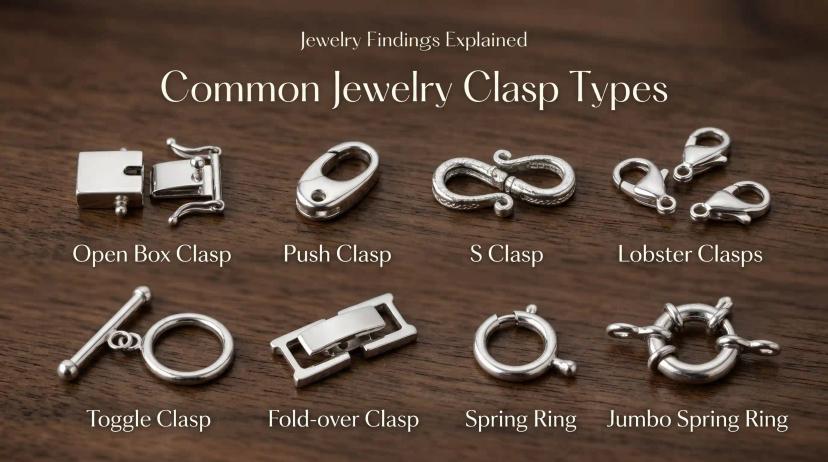
Jewelry clasps are essential jewelry fasteners types used in bracelets and necklaces, and understanding types of jewelry clasps helps improve both design and functionality.
A jewelry clasp is a compact component that secures necklaces, bracelets, or anklets, adding both safety and everyday practicality. These necklace clasp styles and jewelry fastening options are fundamental to virtually every jewelry item:
Lobster Clasp
Lobster claw clasps are among the most widely used jewelry findings. Valued for their spring-action design, they’re commonly seen on necklaces and bracelets. The “claw” opens when you press a small lever and snaps shut as soon as you release it, helping prevent accidental opening and keeping the piece securely fastened.
Spring Ring
Spring ring clasps function much like lobster claw clasps. They feature round closures with an internal spring-driven mechanism. These jewelry findings are lightweight and commonly chosen for dainty designs where a compact clasp is essential. Although spring rings are secure, they can be somewhat tricky to use and often take a bit of practice to open and shut smoothly.
Jumbo Spring Ring
A jumbo spring ring clasp operates the same way as a standard spring ring, but it’s bigger, which makes it more comfortable to grip and manage. These clasps are frequently used on bulkier or heavier jewelry, since the wider size adds added security and helps keep the item firmly closed. Jumbo spring rings are a smart option for anyone who wants a blend of refined style and everyday practicality.
Open Box Clasp
An open box clasp is made up of a compact box and a metal tongue that snaps in with a satisfying click. It offers a dependable, secure closure and is frequently found on high-end or vintage jewelry designs. Many box clasps feature embellishments such as gemstones, etched patterns, or engraved details, allowing the fastener to complement the overall look and feel of the piece.
S Clasp
S clasps are jewelry fasteners formed like the letter “S” and designed for quick opening and closing. They function by catching one side onto a jump ring or chain loop, keeping the connection steady while remaining simple to release. These connectors are common on bracelets and necklaces, especially for fans of creative, handmade styles.
Toggle Clasp
A toggle clasp is made up of a T-shaped bar that slides into a round or ornamental loop. To fasten the jewelry, you pass the bar through the ring so the piece stays connected. These types of jewelry clasps perform best on heavier designs because the added weight helps keep the closure from shifting. They’re a favorite for statement pieces and bring an extra decorative touch to your overall design.
Fold-over Clasp
A fold-over clasp is a hinged closure that adds a polished, fashionable finish. It includes a small metal tab that folds open and shut, then snaps into place for a neat, secure hold. This clasp works especially well for beaded strands and link-chain styles since it’s simple to operate and comfortable to use.
Push Clasp
Push clasps are often referred to as “slide” or “snap” clasps. They’re made up of two components that glide or press into each other, using a straightforward spring-and-friction system that separates when you pull to open. These jewelry findings create a clean, seamless finish while still offering reliable security, which makes them ideal for multi-strand necklaces and bracelets.
Common Earrings Findings Types
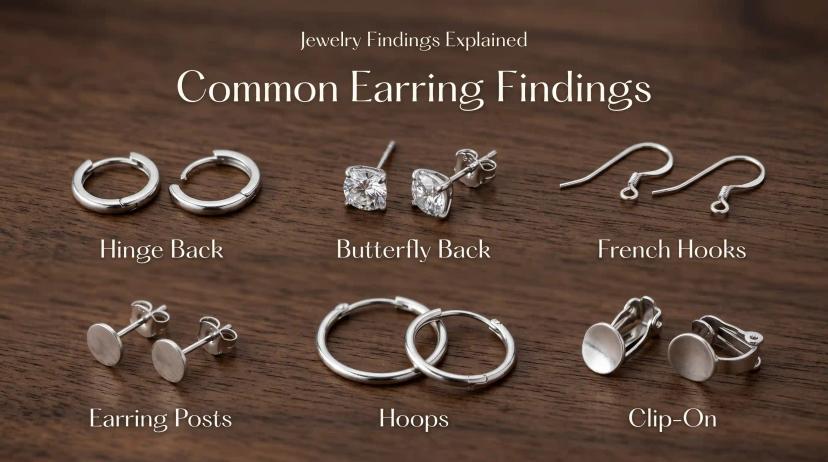
Earring findings connect earrings to the ear and help carry the piece’s style and weight. Below are several earring clasp styles and popular earring finding options:
French Hooks (Ear Wires)
French hooks—often called ear wires—are gently curved earring components that thread through the pierced earlobe and typically don’t use a separate back. These widely used findings are a favorite for drop and dangling earrings because they’re simple to wear and highly adaptable. Their open-ended shape makes putting them on quick, though some wearers add small rubber stoppers for added peace of mind and stability.
Hinge Back
Hinge back earrings use a built-in hinged clasp that clicks shut, holding the earring snugly against the earlobe. This option is frequently seen in hoops and huggie styles, offering reliable security without needing extra backs. They’re commonly made as part of sturdy metals such as gold, silver, or 316L stainless steel jewelry.
Butterfly Back
Resembling a butterfly, these earring findings are small metal components that slip onto earring posts to keep earrings securely in place. Butterfly backs offer a snug, comfortable hold while still making removal quick and simple. Their clean, practical design makes them a common favorite, although they may gradually loosen over time with repeated wear and frequent handling.
Earring Posts
Earring posts are straight metal pins made to pass through the earlobe and fasten with earring backs. Common earring back types include butterfly backs, hinge backs, latch backs, and screw backs. This jewelry part is widely used for stud earrings and delivers an easy, dependable way to attach and secure earrings.
Hoops
Hoop earrings showcase a round or slightly arched shape that passes through the earlobe, typically fastened with hinged backs, latch-style closures, or curved wire hooks. They come in many sizes and design options, from petite everyday hoops to oversized, eye-catching statement styles. Known for their timeless appeal, hoop earrings remain a go-to accessory and suit both relaxed, casual outfits and more polished, formal looks.
Clip-On
Clip-on earrings are made for people who don’t have pierced ears, relying on a spring clip or screw-back setting to hold the piece securely. They offer a comfortable, adjustable grip and are available in a wide range of designs, from simple studs to intricate, dangling styles. Newer clip-ons often include cushioned pads for added comfort while still providing a firm, dependable fit.
Jewelry Connectors and Fasteners
Connectors are key jewelry connector types and findings used to link different jewelry components securely.Connectors join jewelry components to maintain structural integrity and versatility. These jewelry connector types are commonly used:
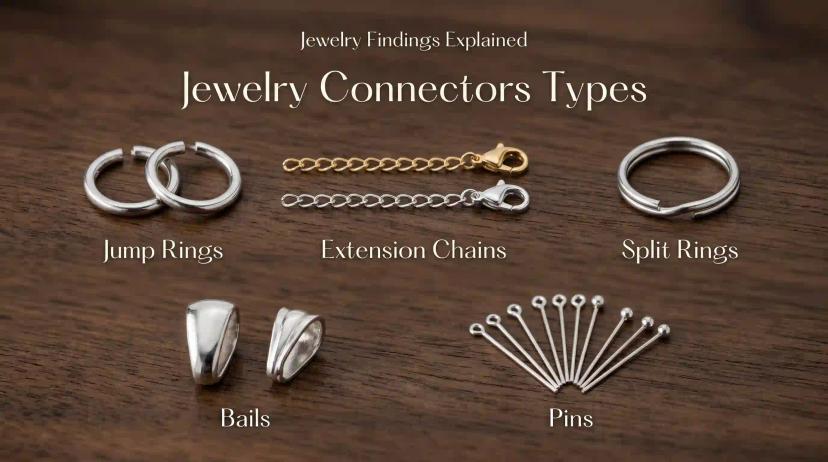
Jump Rings
Jump rings are among the simplest and most common findings in jewelry design. These tiny metal loops are used to join parts like clasps, pendants, earring drops, and other elements. Available in many diameters and wire gauges, they can be opened with tools or permanently closed by soldering.
Split Rings
Split rings have a doubled, coiled structure that offers greater security than standard jump rings. They work well for keychains, charms, and heavier jewelry that needs extra durability. When attaching, you pry and slide the coil so it holds a section open as it moves onto the connected item.
Extension Chains
Chain segments also act as connectors in jewelry, making it easy to build adjustable sizing and layered, multi-strand designs. Produced from dependable materials by a custom jewelry manufacturer, extension chains deliver secure links while fitting a wide range of styles.
Pins
Pins play an essential role in jewelry design, working as connectors and as decorative accents. Popular pin types include head pins, eye pins, and ball pins. Head pins feature a flat or ornamental end, making them great for forming dangles and pendants, whereas eye pins come with a finished loop that’s ideal for joining beads or attaching charms. Ball pins, on the other hand, have a small rounded tip that adds a refined, fashionable detail to many styles.
Bails
Bails are fittings that connect pendants or charms to chains and necklaces. Pendant bails provide a secure, attractive hold, while glue-on bails include a flat pad designed for adhesive bonding. Pinch bails rely on a hinged clasp to grip pendants tightly. Overall, bails elevate the look of jewelry while maintaining dependable performance.
Special Jewelry Findings
Certain findings bring added flair, brand identity, or improved security.These are important jewelry findings types and jewelry components used in both decorative and functional jewelry design:
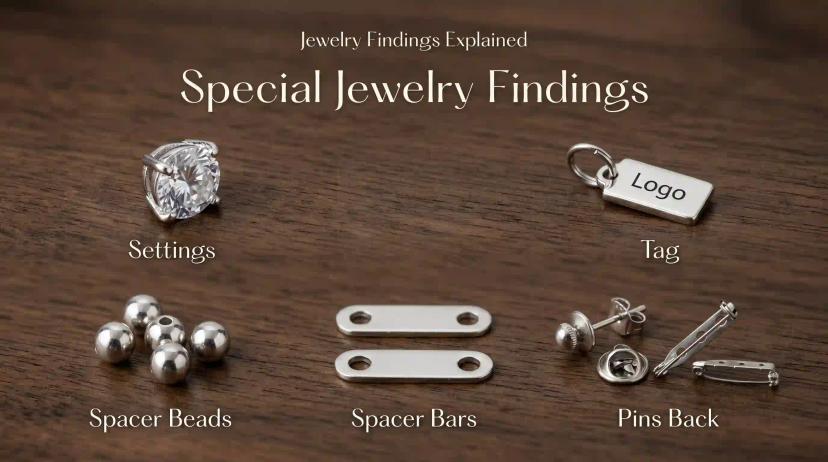
Tag
Tags are distinctive jewelry findings designed for branding, customization, and identification, and are commonly used in different jewelry components systems to enhance brand value.
These compact metal plaques are frequently etched with logos or initials, giving pieces a polished, professional finish. They strengthen brand recognition, confirm material genuineness, and enhance the overall style and perceived value of premium jewelry items.
Settings
Settings secure gemstones, crystals, or other decorative accents in position. Bezel settings encircle the stone with a metal edge to improve protection and support daily use. Prong settings rely on small metal claws to grip the stone, increasing light exposure and sparkle. Channel settings lock stones between metal rails, creating a smooth, contemporary look.
Spacer Beads
Spacer beads are specialized jewelry findings used to divide larger beads and elements. They also help emphasize individual beads, bringing symmetry and visual appeal to the design. These findings come in many materials, such as metal, glass, acrylic, and other plastics.
Spacer Bars
Spacer bars help keep your beads properly spaced in multi-strand beading projects. They can disappear neatly within your overall beaded pattern, or you can let them shine as a decorative accent that adds extra visual interest and style to your finished piece.
Pin Backs
Pin backs are specialized jewelry findings made to secure brooches, badges, and ornamental pins in place. Offered in options such as butterfly clutches, rubber stoppers, and locking clasps, they add support and make attaching items simple, delivering a reliable, comfortable hold across many jewelry and accessory applications.
How Jewelry Findings Affect Jewelry Quality?
Choosing premium-quality findings leads to stronger construction, longer wear, and improved customer experience, especially when selecting metal jewelry findings and stainless steel jewelry clasps.
- Durability & Security
Premium jewelry findings crafted from sterling silver, gold, or stainless steel resist warping, snapping, and everyday abrasion, helping jewelry last for years. Reliable clasps and jump rings hold designs together, while flimsy or inexpensive findings can weaken the build and cause parts to fall off.These metal jewelry findings ensure long-term durability and reduce failure risk in daily wear jewelry.
- Comfort & Wearability
Any findings that rest against the skin—such as earring hooks and necklace closures—should feature polished edges and ergonomic shapes. Hypoallergenic options like stainless steel and sterling silver help minimize sensitivity, supporting longer, more comfortable wear.
- Material Matters
Is stainless steel a smart choice for jewelry? Absolutely. Stainless steel is widely used in stainless steel jewelry clasps and hypoallergenic jewelry findings, making it a top choice for B2B jewelry manufacturing
- Aesthetic Consistency
Crafted well, jewelry findings have polished surfaces, consistent proportions, and crisp details that integrate naturally with the overall piece. In contrast, cheaply made findings with jagged edges or uneven sizing can reduce both the aesthetic appeal and the impression of craftsmanship.
What Defines High-Quality Jewelry Findings?
- Functionality
Premium jewelry findings should feel intuitive and be engineered for effortless handling. Clasps need to latch and release smoothly without too much pressure, and earring posts or hooks should sit securely while remaining comfortable to wear.
- Strength of Materials
Long-wearing, skin-safe materials such as 316L stainless steel are key for reliable, hypoallergenic findings. This higher-grade steel resists tarnishing, corrosion, and irritation, making it well suited for posts and other components that touch the skin.
- Strength & Reinforced Construction
High-quality jewelry findings should endure everyday use without snapping or failing. Reliable clasps, strengthened links, and solder-closed jump rings, along with using quality control checklists for every jewelry category, help maximize longevity and reduce the risk of pieces coming loose unexpectedly.
How to Ensure Hypoallergenic Earrings While Balancing Cost?
Hypoallergenic earrings are designed to limit skin sensitivity, and 316L stainless steel is the top choice, though it typically costs more than 304 stainless steel. To maintain both budget and safety, use 304 stainless steel jewelry findings for the main earring structure and 316L for the posts. This approach supports strength, reasonable pricing, and fewer allergic reactions while keeping manufacturing expenses low.
How to Stop a Tennis Necklace From Turning Over?
- Use Powder Metallurgy Forming Techniques
Necklaces produced with off-the-shelf molds often run into flipping issues due to fragile frameworks. To solve this, we rely on bespoke molds and accurate workmanship. As a leading manufacturer, our B2B jewelry solutions are specifically engineered to ensure jewelry is safer, more refined, and far less likely to flip or snap.
- Refine the Structure & Angle
When alignment is off, stability suffers and the necklace can turn over repeatedly. To avoid this, we set the stones at an exact 45-degree angle so each stone consistently points upward. This deliberate orientation improves balance, helping the necklace sit firmly on the neck without flipping.
- Choose Suitable Clasp Types and Placement
Choosing the appropriate clasp style can greatly impact how to stop a tennis necklace from turning or flipping. A durable, expertly made clasp improves weight distribution and supports overall balance, reducing the chance of rotation. Options such as lobster clasps or secure box clasps are particularly well-suited for necklaces with more weight.
- Chain and Pendant Balance
Getting the proper proportion between the chain’s width and the pendant plays a key role in the necklace’s stability. When that ratio is incorrect, the piece may feel uneven and prone to shifting. By contrast, a thoughtfully balanced setup creates consistent weight placement, helping the necklace rest neatly in position without frequent readjustment.
How to Pick the Best Jewelry Findings for Your Piece?
When selecting the right jewelry findings for your design, consider these important points when choosing jewelry findings types, jewelry components, and jewelry fasteners types:
Type of Jewelry
The kind of jewelry you’re making influences which findings are the best fit. For instance, earrings typically call for ear wires or stud posts, whereas necklaces and bracelets depend on secure, strong clasps to stay in place. Before deciding, be sure to choose findings that properly match the specific piece.
Durability and Strength
Choosing strong clasps, durable fasteners, and dependable connectors helps protect both the lifespan and safety of your jewelry. When findings are crafted from hard-wearing materials, they support overall structure and keep pieces working smoothly without sacrificing design, comfort, or quality.These jewelry components and fasteners types directly affect product safety and lifespan.
Design and Aesthetics
Jewelry findings should blend seamlessly with the style and look of your piece. Selecting the right clasps, hooks, and connectors with intention creates a cohesive finish that enhances the complete design and strengthens its visual appeal.Proper selection of jewelry findings types ensures better visual consistency and design balance.
Allergies and Skin Sensitivities
Choosing hypoallergenic findings crafted from materials such as 316L stainless steel, titanium, or sterling silver helps minimize irritation and soreness. It’s important to put skin-safe metals first to maintain day-to-day comfort for anyone dealing with allergies or heightened sensitivities.
What to Keep in Mind When Creating Designs That Include Jewelry Findings?
Several details deserve attention when selecting and making jewelry findings. Below, we outline how these factors influence both the finished design and the wearer’s overall experience.
Considering the Weight
Even weight distribution in jewelry findings keeps a piece comfortable to wear and built to last. A necklace clasp should be secure enough to carry a pendant’s weight while balancing durability with comfort. Earring findings should be lightweight to avoid strain, yet strong enough to keep the earrings safely in place.
Ease of Use
Jewelry findings should be simple and comfortable to handle, delivering a smooth, frustration-free experience for wearers. Clasps need to be quick to open and fasten, and earring backs should stay firmly in place without being overly hard to take off. In addition, intuitive findings add convenience, help minimize customer complaints, and boost overall satisfaction with the finished jewelry piece.
Compatibility
Jewelry components and findings should be chosen to work well together while helping protect delicate details such as gemstones and cabochons. In gemstone styles, prong settings help secure diamonds, whereas bezel settings better guard cabochons against chips and wear.
Jewelry findings are widely used in professional jewelry manufacturing, especially in stainless steel and gold jewelry production. At the industrial level, suppliers and manufacturers carefully select different jewelry findings types to ensure product consistency, durability, and mass production stability.
Conclusion
Jewelry findings are the quiet workhorses behind every design, combining practicality, strength, and visual appeal. By learning clasp styles, earring finding options, and connector choices—and weighing the jewelry type, materials, and design needs—makers and fans can select ideal findings that keep pieces secure, attractive, and made to last.