
A Practical 316L Jewelry Sourcing Guide for Brands
316L stainless steel jewelry is generally a solid material choice for brands that want durability, corrosion resistance, and a reasonable basis for skin-contact positioning. The real decision is whether the supplier can confirm the material declaration, support relevant testing where it matters, and keep sample-to-bulk quality consistent across production runs.
316L stainless steel jewelry is generally a solid material choice for brands that want durability, corrosion resistance, and skin-contact positioning, but the grade name alone is not a guarantee.Brands should verify material declaration, testing needs, samples, QC, and claim wording before bulk orders.
Is 316L Stainless Steel Jewelry Good for Brands?
Yes, with context. 316L stainless steel jewelry is widely used by brands because it can offer corrosion resistance, finish quality, and everyday-wear durability at a practical price point.Brands should still compare 304 vs 316L by product use case, verify material declarations, approve samples, confirm QC, and avoid unsupported claims such as nickel-free, 100% waterproof, or never tarnishes.
What Is 316L Stainless Steel Jewelry?
316L stainless steel jewelry is jewelry made from the low-carbon version of 316 stainless steel. For brands, grade clarity matters because "stainless steel" by itself is not a specification.
316L stainless steel jewelry is jewelry made from the low-carbon version of 316 stainless steel. The "L" stands for low carbon, which generally helps with weldability and reduces the risk of carbide precipitation during manufacturing, a detail that matters more to producers than to end buyers.
316L contains molybdenum, which is one of the main reasons it's positioned as having stronger pitting and crevice corrosion resistance than 304 in more demanding or chloride-containing conditions, such as exposure to sweat, humidity, or salt air. 316L normally contains nickel as well, which is relevant later when brands consider sensitive-skin or hypoallergenic claims.
For brands, grade clarity matters because "stainless steel" by itself is not a specification. Different grades behave differently in terms of corrosion resistance, finish quality, and how confidently a brand can talk about durability or skin-contact suitability. Knowing exactly which grade a supplier is using and getting that confirmed in writing is the starting point for any other claim built on top of it. Brands that want to check composition ranges directly can refer to published grade reference data such as theWorldstainless stainless steel grade datasheets, which cover molybdenum and nickel content across common grades.
For a broader look at how different stainless steel grades compare for jewelry use, seewhich stainless steel is best for jewelry.
Is 316L Stainless Steel Good for Jewelry Brands?
Yes, with context. 316L stainless steel jewelry is widely used by brands because it can offer corrosion resistance, finish quality, and everyday-wear durability at a practical price point for many brand programs.
This makes 316L a practical fit for DTC labels, marketplace sellers, and private-label programs that need jewelry to hold up to daily wear, repeated handling, and shipping, while still supporting a reasonably strong material story compared to generic or unspecified "stainless steel" listings.
316L is usually a good fit when brands need:
- Everyday wear positioning
- PVD gold or silver-tone stainless steel lines
- Skin-contact product positioning, with documentation caveats
- Repeat production consistency across reorders
- A stronger material story than generic, unspecified stainless steel
It's not automatically the right choice for every product. Some fashion-forward, lower-cost, or shorter product-cycle lines may still get acceptable results from 304. The right call depends on positioning, target market, and how the brand plans to talk about the material, covered in the next section.
316L vs 304 Stainless Steel Jewelry: What Should Brands Choose?
There isn't a single right answer for every brand. 304 is not unsafe, and 316L is not always necessary. The better choice depends on product positioning, target market, finish, claim wording, and sourcing risk.
This is one of the most common questions in stainless steel jewelry sourcing, and there isn't a single right answer for every brand. 304 is not unsafe, and 316L is not always necessary. The better choice depends on product positioning, target market, finish, the claims a brand wants to make, and how much sourcing risk it's willing to manage.
| Decision Point | 304 Stainless Steel | 316L Stainless Steel | What Brands Should Check |
|---|---|---|---|
| Grade positioning | Common and widely used in fashion jewelry, including cost-sensitive lines | Often positioned as a stronger, more "premium" grade for everyday and skin-contact wear | Ask the supplier to confirm grade in writing, not just verbally |
| Corrosion resistance | Generally adequate for normal, lower-exposure conditions | Generally better pitting and crevice resistance in chloride-heavy or demanding conditions | Consider your customers' actual use case (sweat, swimming, humidity) |
| Nickel / skin-contact claim handling | Still requires the same caution around hypoallergenic wording | Often chosen for skin-contact positioning, but still contains nickel | Don't assume either grade allows "nickel-free" claims |
| PVD / gold finish suitability | Can support PVD finishes, performance depends on base prep | Frequently used as a base for PVD gold, rose gold, and black finishes | Ask about base surface prep, not just the top coating |
| Cost / practical use | Often used for more cost-sensitive fashion lines, depending on supplier, finish, MOQ, and order volume | May cost more than 304 in some sourcing contexts, but pricing depends on supplier, design, finish, MOQ, and order volume | Compare cost against expected returns, complaints, and reorder rate |
| Best use cases | Fashion-forward, shorter product cycles, price-sensitive lines | Everyday-wear lines, private label, repeat production, stronger material claims | Match the grade to the product's actual lifecycle, not just trend appeal |
| Buyer verification needs | Material declaration still recommended | Material declaration plus documentation if skin-contact claims are made | Request the same baseline documentation regardless of grade chosen |
For brands building around a 304 vs 316 stainless steel jewelry comparison in their own marketing, the safest approach is to describe the trade-offs honestly rather than implying one grade is universally superior.
Is 316L Stainless Steel Jewelry Hypoallergenic or Safe for Sensitive Skin?
Many brands use 316L for skin-contact jewelry positioning, but 316L normally contains nickel. Sensitive-skin or hypoallergenic claims should be backed by relevant documentation or testing where applicable.
This is an area where brands need to be careful with wording. Many brands do use 316L for skin-contact jewelry positioning, partly because of its corrosion resistance and partly because of general market perception. But 316L normally contains nickel, and nickel content is not the same thing as nickel release, the amount of nickel that can actually transfer to skin under contact and moisture.
Sensitive-skin or hypoallergenic claims should be backed by relevant documentation or testing where applicable, particularly for markets with specific nickel-release requirements. Testing standards such as EN 1811, recently updated under the EU's harmonized nickel-restriction framework as covered in thisSGS update on EN 1811:2023, are the kind of documentation brands should ask suppliers about rather than relying on general claims alone. For EU-facing brands, nickel release sits within the broaderREACH restrictions framework, which is also relevant to the lead and cadmium checks covered later in this guide. Brands should avoid wording like "nickel-free," "100% hypoallergenic," or "zero allergy risk" when describing 316L stainless steel jewelry, since none of those claims can be supported by the material alone.
For more detail on how to think through hypoallergenic positioning, seehypoallergenic stainless steel jewelry.
Does 316L Stainless Steel Jewelry Tarnish, Rust, or Handle Water?
316L is corrosion-resistant and tends to be tarnish-resistant under many normal jewelry-use conditions, but it is not immune to every environment.
That resistance is one reason 316L is often chosen for everyday-wear lines. However, the finished jewelry piece still needs realistic claim wording because performance depends on both material and use environment.
Factors like sweat, salt water, chlorine, harsh chemicals, prolonged moisture exposure, surface finish quality, coating thickness (for PVD pieces), and basic care all affect how a piece performs over time. So while many brands ask "does 316L stainless steel tarnish," the more useful framing is: under what conditions, and for how long, compared to the alternative grade or finish.
Brands should avoid absolute claims such as "never tarnishes," "rust-proof," or "100% waterproof." These wordings overstate what any stainless steel grade can promise and create unnecessary risk around customer complaints and returns. For a broader look at where stainless steel jewelry holds up well and where its limits are, seestainless steel jewelry pros and cons.
Is 316L a Good Base for PVD Gold Jewelry?
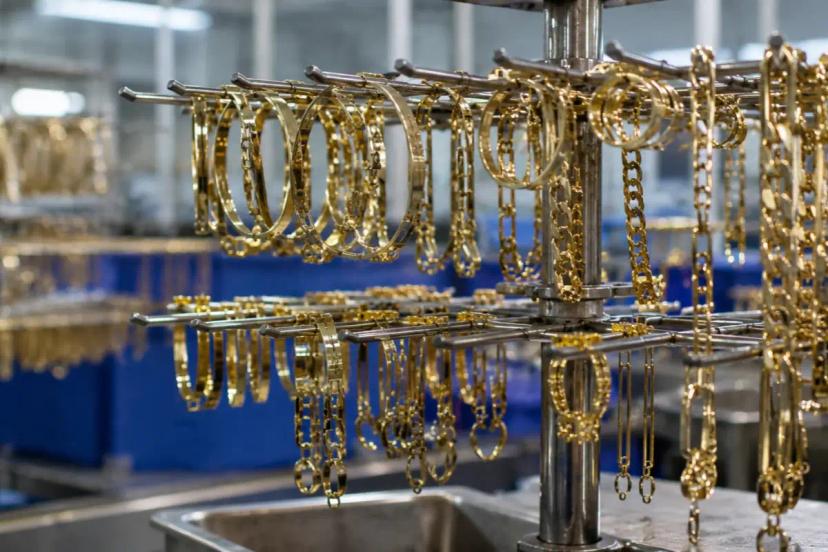
316L can be a suitable base for PVD gold stainless steel jewelry, but the base grade is only part of the picture. PVD durability depends on surface preparation, coating process, coating thickness, adhesion quality, wear conditions, and QC.
316L can be a suitable base for PVD gold stainless steel jewelry, and it's one of the more common substrates used for gold-tone, rose gold, and black PVD finishes in the jewelry trade. The base grade is only part of the picture, though.
PVD durability depends on several factors beyond the underlying steel: surface preparation, the coating process itself, coating thickness, adhesion quality, wear conditions, and ongoing QC during production. Independent technical resources onPVD coating durabilitypoint to the same set of variables, coating material, thickness, adhesion, substrate hardness, and environmental exposure all shape how long a finish holds up. A good base grade does not guarantee that a PVD gold jewelry finish will never fade or wear unevenly.
For brands sourcing PVD gold jewelry, the practical takeaway is to verify pre-production samples, check color consistency across a batch, confirm finish quality under realistic wear conditions, and request batch-to-batch stability checks rather than relying on the base grade name alone.
For more on how PVD coatings work on stainless steel, seePVD jewelry on stainless steel.
How Can Brands Verify 316L Stainless Steel Jewelry Before Bulk Orders?
A clear verification process before bulk orders reduces the risk of mismatched expectations, inconsistent batches, and unsupported claims reaching the market.
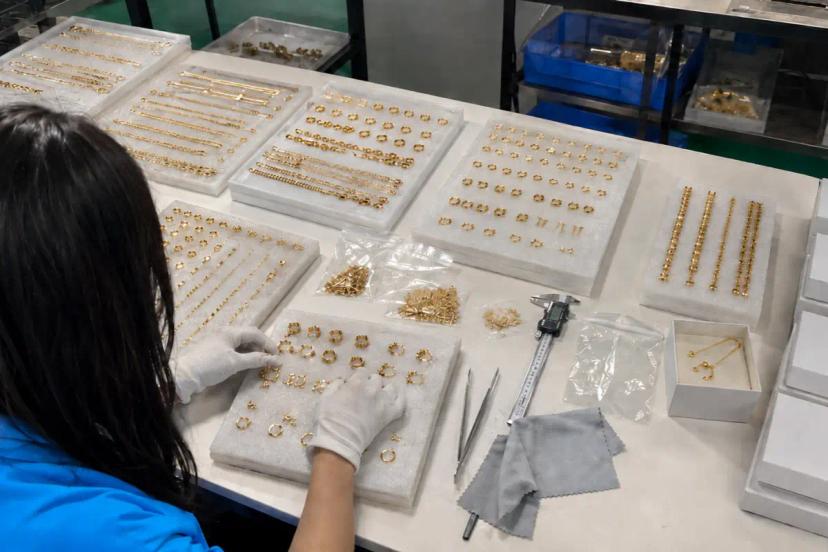
This is one of the most important steps in sourcing 316L stainless steel jewelry, and it's where a lot of avoidable problems happen. A clear verification process before bulk orders reduces the risk of mismatched expectations, inconsistent batches, and unsupported claims reaching the market. For EU-facing brands, restrictions on substances such as nickel, lead, and cadmium in jewelry sit within theREACH Annex XVII restricted substances list, which is one reason to ask suppliers for specifics rather than accepting a blanket compliance statement.
| What to Check | Why It Matters | What to Ask the Supplier |
|---|---|---|
| Material declaration or grade confirmation | Verbal claims of "316L" aren't always backed by documentation | Request a written material declaration or mill certificate where available |
| Chemical composition / grade verification | Confirms the alloy matches what was agreed, not a lower-cost substitute | Ask if composition testing is available or has been done |
| Nickel-release documentation | Relevant for sensitive-skin or hypoallergenic marketing claims | Ask whether nickel-release testing exists or can be arranged |
| Lead / cadmium testing | Relevant depending on target market and customer base | Confirm whether this applies to your specific market requirements |
| Sample approval before bulk order | Prevents sample-to-bulk inconsistency in finish, weight, or color | Always approve a physical sample before committing to bulk quantities |
| PVD finish / coating QC | Coating quality varies even on the same base grade | Ask how color consistency and adhesion are checked across batches |
| Batch consistency / incoming QC | Protects against quality drift across reorders | Ask what incoming QC checks are performed before shipment |
| Packaging and care-card wording | Care instructions affect both product life and claim consistency | Review proposed care-card language for overstated claims |
| Private-label claim wording | Brands are responsible for the claims on their own packaging | Confirm what claims the supplier can support with documentation |
This kind of checklist matters most for brands running private label stainless steel jewelry programs, where the brand, not the factory, is the one legally and reputationally responsible for the claims on the package.
For support with material verification and documentation, seematerial verification and certification support.
What Should Brands Avoid When Making 316L Jewelry Claims?
Overclaiming is one of the easiest ways for a brand to create returns, complaints, or compliance exposure. Cautious wording protects brands while still allowing an accurate case for the product.
Overclaiming is one of the easiest ways for a brand to create returns, complaints, or compliance exposure. RoHS is a common point of confusion: the European Commission'sRoHS directive pageexplains that the directive applies mainly to electrical and electronic equipment, which is why ordinary non-electronic jewelry generally should not be marketed as RoHS compliant without a specific scope review. The table below lists other common risky claims and safer alternatives.
| Risky Claim | Why It Is Risky | Safer Wording |
|---|---|---|
| 100% hypoallergenic | No material can guarantee zero reaction for every person | Commonly used for skin-contact jewelry, but sensitive-skin claims need documentation |
| Nickel-free | 316L normally contains nickel; this claim is factually inaccurate | 316L normally contains nickel; ask whether nickel-release documentation is available for the specific product or batch |
| Guaranteed safe for sensitive skin | Overstates what any single material can promise | May be suitable for many users, but individual reactions can still vary |
| Never tarnishes | No finish or grade is immune to every condition indefinitely | Tarnish-resistant under normal everyday wear conditions |
| Rust-proof | Implies an absolute that isn't accurate for any grade | Corrosion-resistant, including in humid or everyday-use conditions |
| 100% waterproof | Overstates water resistance and invites complaint risk | May handle incidental moisture in many normal use cases, but avoid selling it as waterproof unless product-specific testing supports that claim |
| REACH / EU compliant (without reports) | Compliance claims require supporting documentation, not assumption | Ask whether product-specific REACH-relevant reports are available for the target market and claim |
| RoHS compliant for ordinary jewelry (without scope review) | RoHS generally applies to electrical/electronic products; scope must be confirmed | Check scope; RoHS mainly applies to electrical and electronic equipment |
| PVD never fades | PVD performance depends on process, thickness, and wear, not just the base | PVD finish can be checked for color and wear consistency during sampling and QC; long-term durability depends on coating process, thickness, adhesion, wear, environment, and care |
Cautious wording protects brands from disputes with customers, marketplaces, and in some markets, regulators, while still allowing the brand to make a confident, accurate case for the product.
How Does Jewins Help Brands Source 316L Stainless Steel Jewelry?
Jewins helps brands source 316L stainless steel jewelry by turning material choice into a practical sample-to-bulk workflow: choose the right grade and finish, confirm claim boundaries, approve physical samples, check documentation needs, control QC points, and prepare private-label packaging before bulk production.
For many startup and growing brands, the problem is not only finding a factory that says it can make 316L jewelry. The harder part is making sure the material, finish, sample quality, care wording, and repeat-order standard all match the brand's product promise. Jewins supports this process from the early sourcing decision through bulk production, so the article's material advice can turn into a real production checklist.
| Brand Concern | What Can Go Wrong | How Jewins Supports It | Buyer Action |
|---|---|---|---|
| 304 vs 316L material decision | The product is described as 316L, but the target market, price point, or claim wording does not actually require that grade. | Helps compare 304 and 316L by product category, finish, customer use case, and brand positioning before sampling. | Share your target market, retail price range, product category, and expected claims. |
| Material declaration and documentation | A supplier's verbal grade claim is later used as a product claim without enough support. | Discusses material declarations, available documentation, and product-specific testing needs based on the market and claim. | List the claims you plan to use, such as hypoallergenic, tarnish-resistant, or REACH-related wording. |
| Low MOQ sampling | A brand moves to bulk order before verifying feel, weight, polish, finish, or packaging expectations. | Supports sample development and small-batch testing so brands can validate the product before scaling. | Approve a physical sample and keep it as the reference for bulk production. |
| PVD finish and color consistency | The sample looks acceptable, but the bulk order has a different gold tone, uneven coverage, or weak finish consistency. | Supports PVD gold, rose gold, black, and silver-tone options, with sample confirmation and batch QC focus. | Confirm the approved color tone, finish standard, and care wording before bulk order. |
| Category-specific QC | Rings, bracelets, clasps, edges, and moving parts reveal coating or polishing issues faster than low-friction products. | Checks the product details that matter for each category, such as polishing, edges, clasps, stone setting, coating coverage, and overall finish. | Mark high-friction products and request stricter QC focus for those areas. |
| Private label packaging and care wording | Packaging, care cards, or product pages make claims that the material and testing cannot support. | Can support private-label packaging and helps keep care-card wording aligned with the product's actual material and finish. | Review product-page claims, packaging text, and care instructions before production. |
| Repeat-order consistency | A style sells well, but the reorder does not match the original sample in color, finish, weight, or details. | Aligns sample approval, QC standards, packaging details, and production notes before repeatable bulk production. | Keep approved samples, SKU specs, color standards, and reorder notes organized. |
- Share the product brief:target market, product category, finish, expected claims, packaging needs, MOQ target, and launch timing.
- Confirm material and finish direction:decide whether 304 or 316L fits the line, and whether PVD or another finish is suitable.
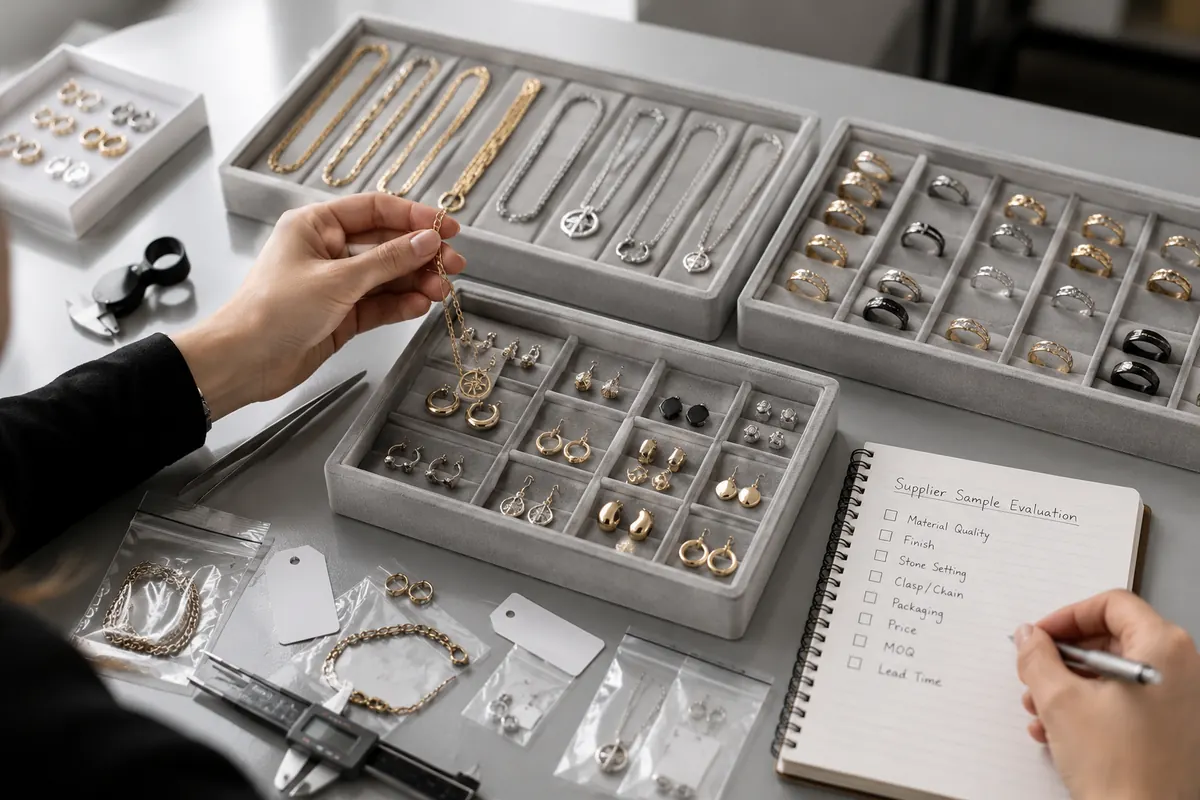
- Develop and approve samples:check feel, weight, polishing, finish color, clasp function, packaging, and care wording before bulk order.
- Review documentation needs:discuss material declaration, nickel-release, lead/cadmium, or other reports based on the target market and claims.
- Lock QC and production notes:align category-specific inspection points, color standard, batch consistency checks, and packaging details.
- Scale and reorder with records:use the approved sample and production notes as the reference for future repeat orders.
Jewins does not treat 316L as a magic label. A 316L jewelry project still needs the right finish, realistic product claims, approved samples, and project-specific documentation where the target market requires it.
For support with material verification and documentation, seematerial verification and certification support. If the product needs branded presentation, reviewprivate label packaging support. Brands evaluating 316L stainless steel jewelry for an upcoming line canrequest 316L stainless steel jewelry samplesto compare finish, weight, and quality before committing to a bulk order.
Frequently Asked Questions
What is 316L stainless steel jewelry?
316L stainless steel jewelry is made from the low-carbon version of 316 stainless steel, an alloy that contains molybdenum and normally contains nickel. It's commonly used for everyday-wear jewelry due to its corrosion resistance and finish quality.
Is 316L stainless steel good for jewelry brands?
Generally yes, for brands wanting durable, everyday-wear pieces with a reasonably strong material story. It's not a substitute for proper documentation, sample approval, and QC.
What is the difference between 304 and 316L stainless steel jewelry?
316L generally offers better corrosion resistance in more demanding conditions due to its molybdenum content, while 304 is more cost-effective and still suitable for many fashion jewelry applications. The right choice depends on product positioning and target market.
Is 316L stainless steel jewelry hypoallergenic?
Not automatically. 316L normally contains nickel, so "hypoallergenic" or "nickel-free" claims should not be used without supporting documentation or testing, where relevant.
Does 316L stainless steel jewelry tarnish or rust?
316L is generally corrosion- and tarnish-resistant under normal wear conditions, but it's not immune to harsh exposure like prolonged moisture, salt water, or chemicals. Absolute claims like "never tarnishes" or "rust-proof" should be avoided.
How can brands verify 316L stainless steel jewelry before bulk orders?
By requesting material declarations, relevant testing documentation, approving physical samples first, and confirming batch QC processes with the supplier before committing to bulk quantities.
Source 316L Stainless Steel Jewelry With Jewins
Jewins works with startup, DTC, marketplace, and private-label brands on 316L stainless steel jewelry sourcing, from early material decisions through sample development, low MOQ testing, PVD finish support, QC, private label packaging, and bulk production. Documentation and testing needs are discussed per project, based on the brand's target market and the claims it intends to make.
Contact Us →