
What Is PVD Jewelry? A Complete B2B Guide
When a jewelry brand adds a tarnish-resistant collection to its line, PVD-coated stainless steel is often the manufacturing option that comes up first. This guide covers what PVD coating is, how it compares to other finishes, what sourcing teams should evaluate for bulk orders, and how to communicate PVD jewelry's properties accurately to end customers.
PVD jewelry is jewelry coated through Physical Vapor Deposition — a vacuum-based process that bonds a thin metal layer to the surface of stainless steel or other base metals. The result is a dense, tightly adhered finish that is generally more durable and moisture-resistant than conventional electroplating.
What Is PVD Jewelry?
PVD jewelry refers to any jewelry piece finished using the Physical Vapor Deposition process — applied in a vacuum environment to produce a thin, even layer that adheres tightly to the base metal surface. In simple terms, PVD plated jewelry means jewelry finished with a PVD coating instead of traditional electroplating.
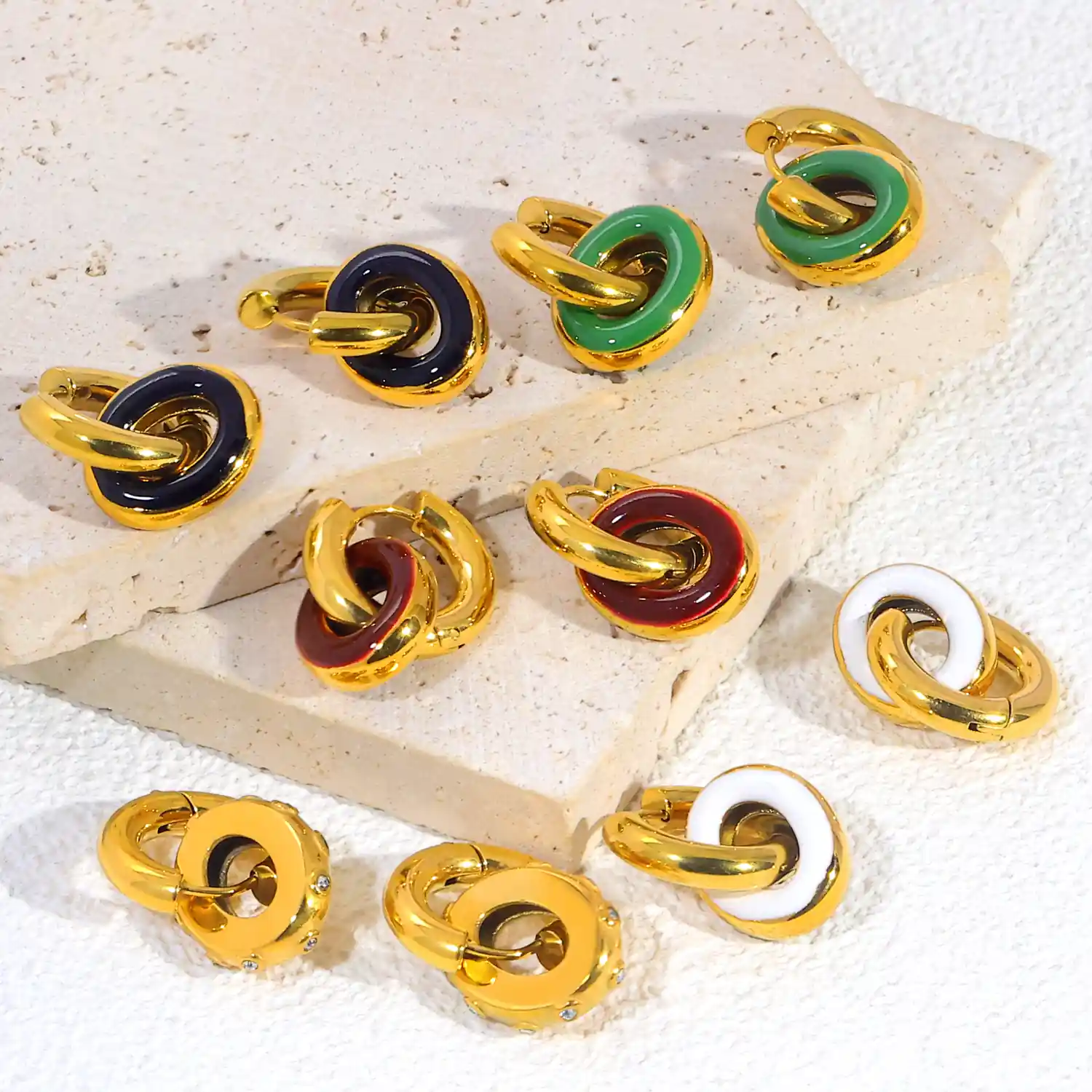
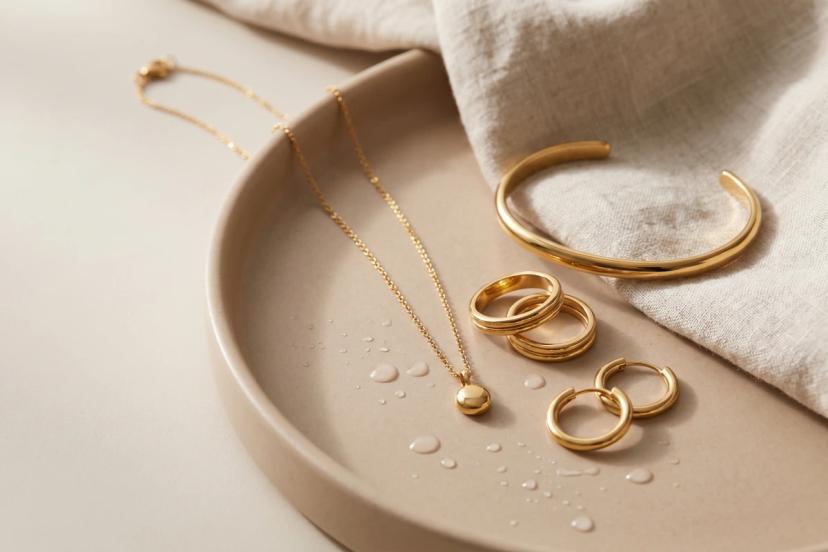
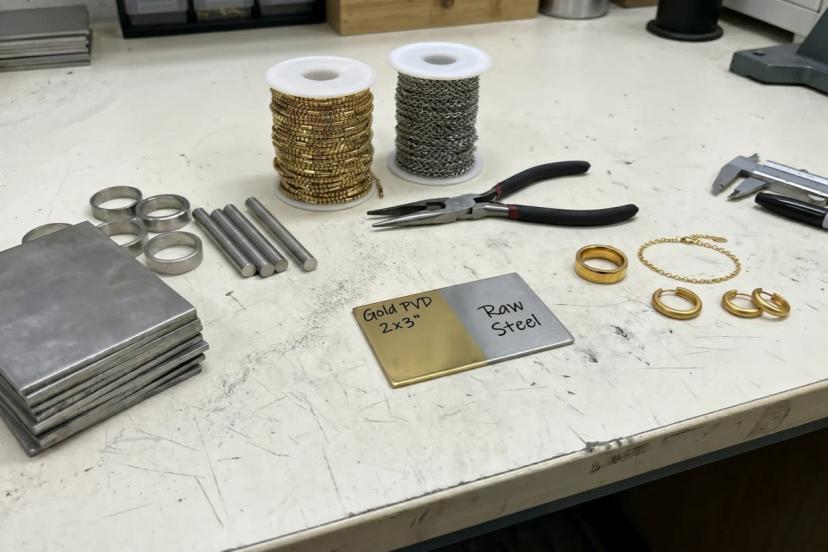
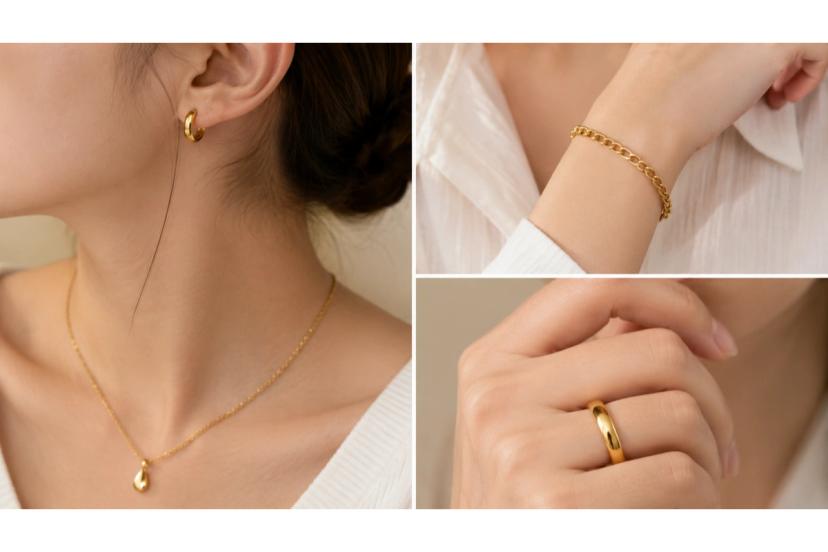
The most common finish is gold-tone — specifically 18K gold PVD — which gives pieces a warm yellow-gold appearance. Other standard PVD colors include rose gold, black, silver, and gunmetal. This range makes PVD plated jewelry a practical choice for building cohesive collections across rings, necklaces, bracelets, chains, earrings, and pendants.
PVD gold plated stainless steel jewelry works particularly well for everyday-wear and active lifestyle collections. It is generally regarded as holding its finish longer under daily wear conditions than traditionally electroplated pieces — making it a strong candidate for brands positioning around durability, water resistance, or value retention.
What Does PVD Mean in Jewelry?
PVD stands for Physical Vapor Deposition — a surface coating process, not a type of metal. Understanding this distinction matters when briefing sourcing teams or writing product descriptions.
In the PVD process, a metal target material — typically titanium nitride, zirconium nitride, or other metal compounds — is vaporized inside a vacuum chamber and deposited onto the substrate. The result is a thin, dense coating layer with stronger adhesion than traditional electroplating. Knowing what PVD plated jewelry is — as distinct from electroplated or gold-filled — helps sourcing teams write accurate briefs and avoid consumer confusion.
When a product is labeled 18K gold PVD, it means the piece carries a gold-tone coating that approximates the color of 18K gold. It does not mean the piece contains 18-karat solid gold. This designation is a widely used convention in the stainless steel jewelry trade, and suppliers and buyers should communicate it clearly to avoid consumer misunderstanding.
How Does PVD Coating Work on Jewelry?
The PVD coating process follows a controlled sequence. Understanding it helps buyers assess production capability and identify where quality variation originates.
Basic Process Steps:
Surface Cleaning — Raw pieces are cleaned to remove oils, oxides, and contaminants. Surface quality here directly affects coating adhesion.
Pre-Treatment — Parts may undergo polishing or electropolishing depending on the intended finish and base metal.
Vacuum Chamber Loading — Pieces are placed inside a vacuum chamber where atmospheric pressure is removed.
Metal Vapor Deposition — The target coating material is vaporized through ion bombardment or arc discharge and condenses onto the jewelry surface.
Bonding and Layer Formation — The coating builds up in a controlled, even layer; thickness and color are determined by process parameters.
Cooling and Final Inspection — Parts are gradually cooled, then inspected for color consistency, adhesion, and surface defects.
Coating quality depends on multiple variables — base metal grade, surface preparation, coating parameter control, and post-process inspection. Buyers sourcing at volume should request process parameter documentation and coating thickness specifications, not just finished samples.
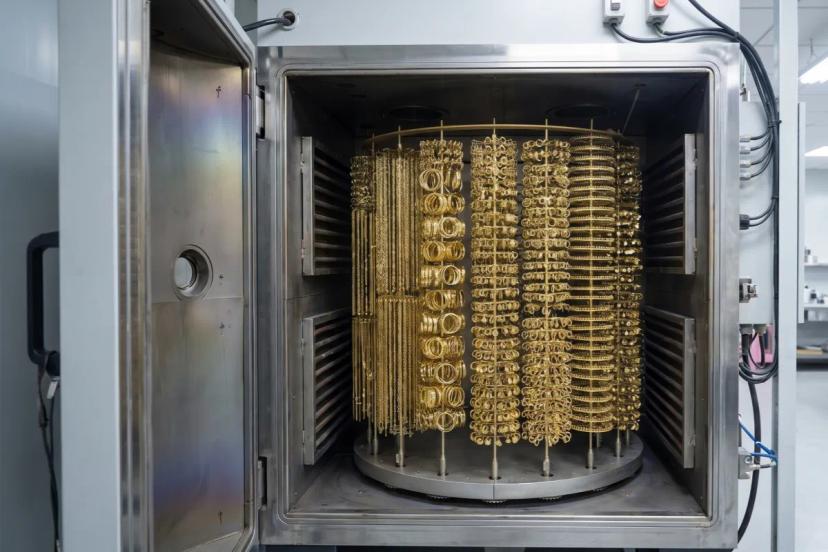
For a broader technical explanation of the physical vapor deposition process, buyers can review this technical overview from TWI.
PVD Jewelry vs Gold Plated Jewelry vs Gold Filled Jewelry
These three finish types are frequently compared by sourcing teams. They differ in process, durability, base metal compatibility, and cost profile.
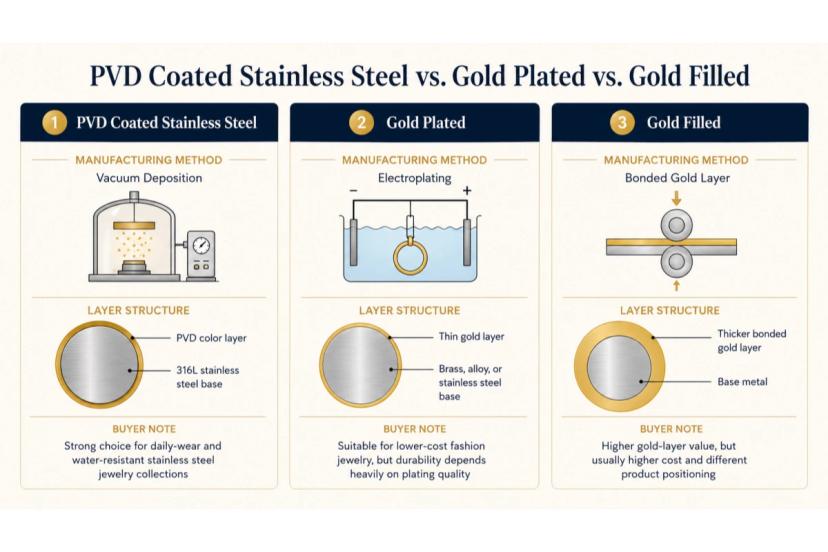
| Attribute | PVD Coated | Gold Plated | Gold Filled |
|---|---|---|---|
| Process | Vacuum deposition (dry process) | Electroplating (wet process) | Mechanical bonding of gold layer |
| Common Base Metal | 316L stainless steel | Brass, copper, zinc alloy | Brass |
| Durability | Higher — denser coating layer with stronger adhesion than standard plating | Moderate — depends on plating thickness | High — thicker gold layer than plating |
| Water Resistance | Generally good — resists tarnish and oxidation under everyday conditions | Lower — susceptible to oxidation over time | Moderate |
| Cost | Moderate | Lower | Higher |
| Best For | Everyday-wear, active lifestyle, volume production | Fashion jewelry, trend-driven pieces | Premium positioning, US market compliance |
| B2B Note | Scales well for OEM/ODM production | Low MOQ, flexible tooling | Niche segment, higher per-unit cost |
For brands building collections with a durability and value-for-money proposition, PVD coated stainless steel is typically the strongest option among these three.
For U.S. market terminology, buyers can also review the FTC Jewelry Guides when describing gold plated, gold filled, or precious-metal-look jewelry products.
Why 316L Stainless Steel Is a Strong Base for PVD Jewelry
Base metal selection matters as much as the coating process. A PVD finish applied to a low-grade substrate will underperform in durability, corrosion resistance, and skin safety. Confirming base metal grade is a non-negotiable sourcing step.
| Base Metal | Corrosion Resistance | Skin Safety | PVD Adhesion | Cost | Notes |
|---|---|---|---|---|---|
| 316L Stainless Steel | Excellent | Generally low nickel ion release | Excellent | Moderate | Widely preferred for quality PVD jewelry production |
| 304 Stainless Steel | Good | Higher nickel content; verify with Nickel Release test reports for EU markets | Good | Lower | Suitable for certain categories; less ideal for sensitive-skin positioning |
| Brass | Moderate | Lower — copper/zinc content | Moderate | Low–Moderate | Common in plated jewelry; less corrosion-resistant |
| Zinc Alloy | Low | Lower — may contain lead or cadmium | Lower | Lowest | Not recommended for quality-tier PVD sourcing |
316L is generally preferred for its strong corrosion resistance, relatively low nickel ion release, and stable surface for PVD adhesion — typically resulting in a more consistent finish and better long-term performance. Confirm the base metal grade in writing before production. Browse custom stainless steel jewelry or view a production example such as this 18K PVD 316L stainless steel necklace to understand the finish standard.
For general background on stainless steel corrosion resistance, buyers can refer to the British Stainless Steel Association's technical guidance.
Does PVD Gold Fade or Tarnish?
PVD gold jewelry tends to be more resistant to fading and tarnishing than traditionally electroplated jewelry, but it is still a surface coating and not permanent. While PVD outperforms standard plating in durability, how quickly the finish shows wear depends on product category, coating process quality, and end-customer care.
Factors that affect PVD coating durability:
- Base metal quality — 316L stainless steel tends to provide a more stable foundation than lower-grade alloys
- Coating thickness and process control — Controlled deposition typically produces denser, more durable results
- Friction exposure — High-friction categories wear faster than low-contact pieces
- Chemical exposure — Perfumes, chlorine, and harsh cleaners can degrade coatings over time
- Care habits — Proper storage and handling can extend coating life meaningfully
Product Category Friction Reference:
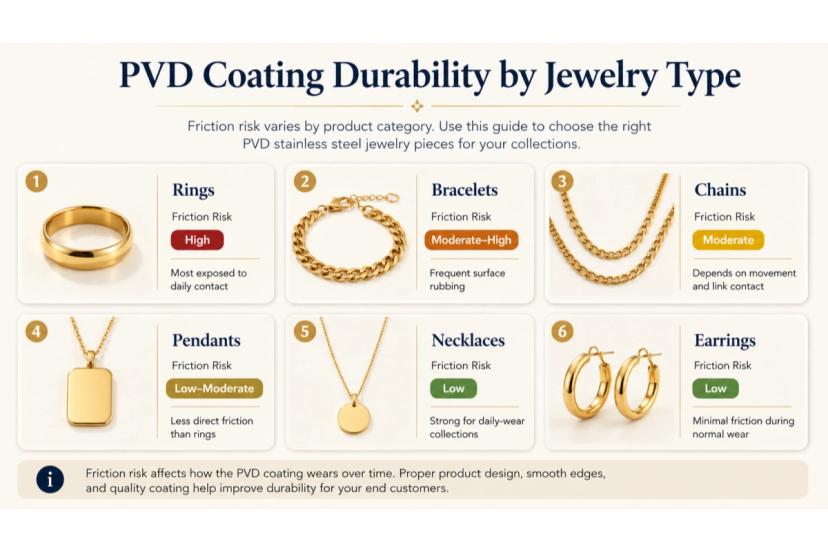
| Category | Friction Level | Notes for Buyers |
|---|---|---|
| Necklaces | Low | Minimal contact; tends toward longer coating life |
| Earrings | Low | Limited wear surface; good durability in daily use |
| Pendants | Low–Moderate | Depends on mounting and backing design |
| Bracelets | Moderate–High | Regular contact with skin, sleeves, and hard surfaces |
| Chains | Moderate | Link-to-link movement creates internal friction |
| Rings | High | Constant friction; most demanding category for coating retention |
For brands building marketing language around tarnish resistance, avoid absolute statements. PVD extends coating life compared to standard plating, but the coating is not permanent. See our article on gold stainless steel tarnish for a full breakdown of how stainless steel finishes age under different conditions.
Is PVD Jewelry Waterproof or Water-Resistant?
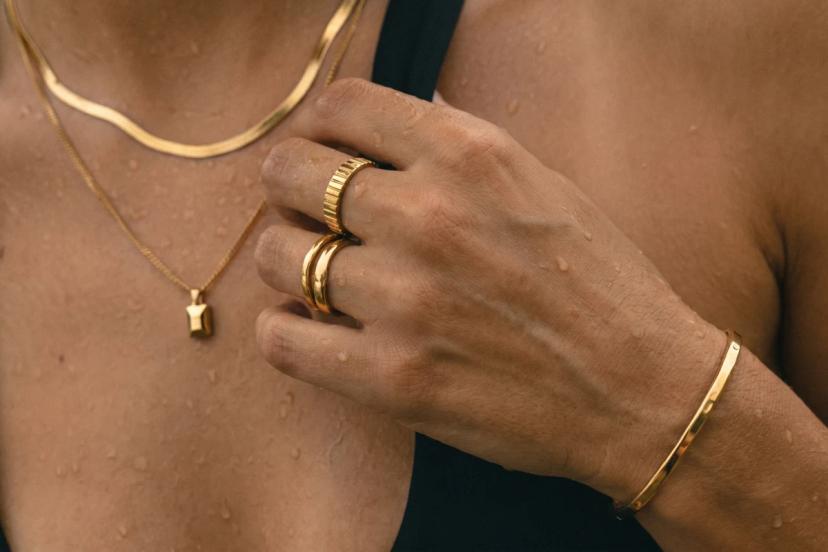
PVD coated stainless steel jewelry offers good resistance to everyday moisture — a key selling point for everyday-wear and lifestyle collections. "Water-resistant" is the more accurate descriptor; it indicates meaningful tolerance for normal moisture exposure, not immunity to all water environments.
| Exposure Type | PVD Jewelry Performance | Notes |
|---|---|---|
| Hand Washing | Good | Brief, low-chemical water exposure is generally well tolerated |
| Sweat | Good | 316L base handles perspiration reasonably well |
| Rain | Good | Incidental rain exposure causes minimal impact |
| Shower | Moderate | Acceptable occasionally; soaps and shampoos may accelerate wear over time |
| Swimming Pool | Lower | Chlorine is aggressive — extended pool exposure not recommended |
| Saltwater | Lower | Repeated long-term exposure can degrade coating integrity |
| Perfume and Chemicals | Avoid | Chemical contact should be avoided regardless of coating type |
For sourcing teams building water-resistant jewelry collections, PVD stainless steel is a strong manufacturing choice. See our article on waterproof stainless steel jewelry wholesale for a full sourcing and positioning guide.
Is PVD Jewelry Suitable for Sensitive Skin?
Skin compatibility depends primarily on the base metal. When the substrate is 316L stainless steel, PVD jewelry is often considered a suitable option for sensitive-skin collections. 316L has relatively low nickel ion release, and the PVD coating layer adds a further barrier between metal and skin that may help reduce direct metal contact for many wearers.
Buyers building collections marketed as hypoallergenic should approach the term carefully — no coating or alloy can guarantee zero reaction for all individuals. Confirm the base metal grade and coating compounds with the manufacturer, and request Nickel Release test reports for markets such as the EU (EN 1811).
For EU-market sensitive-skin positioning, buyers may refer to the EN 1811 nickel release test as a reference method for nickel release evaluation.
For more detail on building low-sensitivity collections with stainless steel, see our guide on hypoallergenic stainless steel jewelry.
PVD Coating Quality Checklist for Bulk Orders
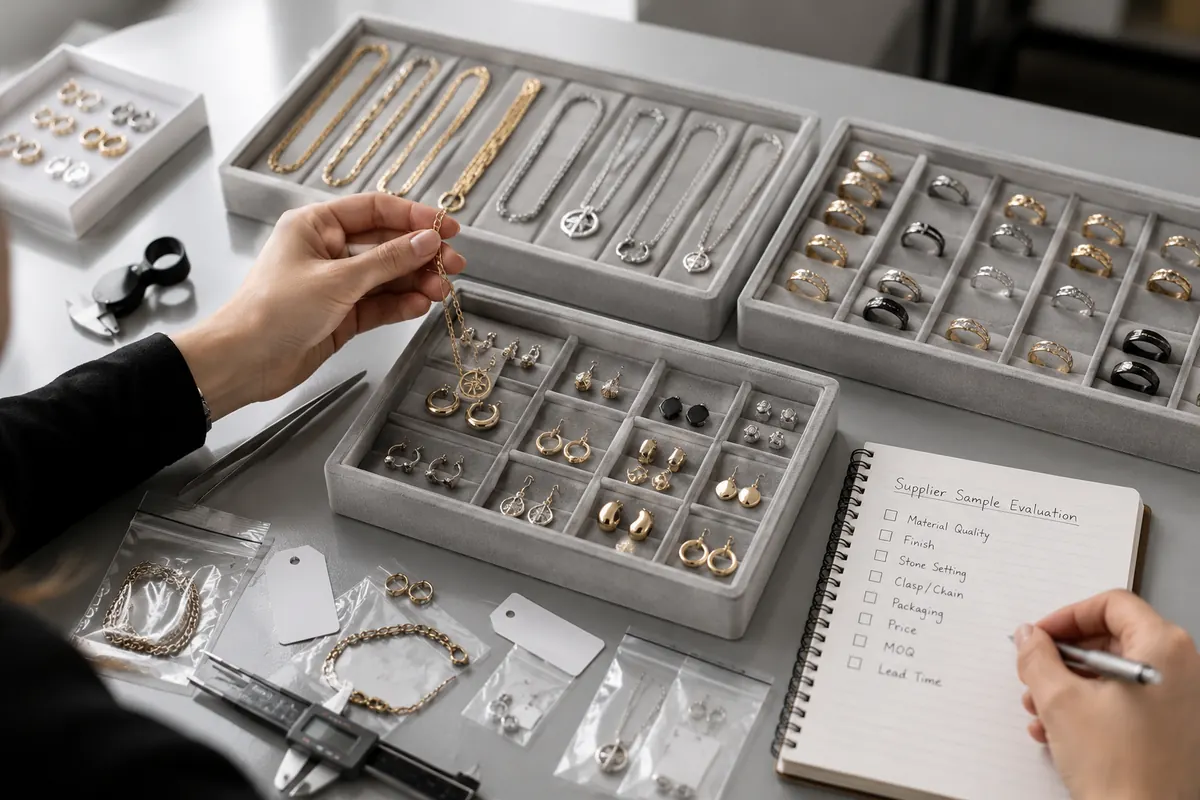
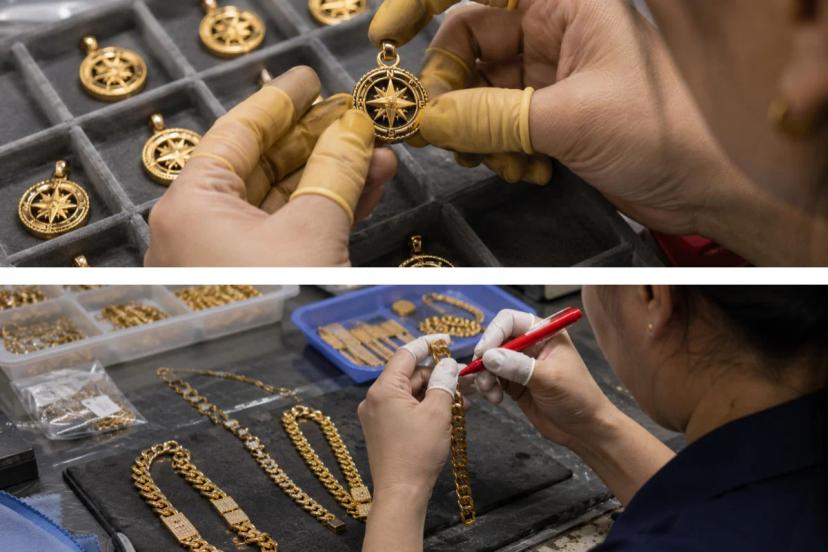
Sourcing teams should evaluate the following parameters when qualifying a PVD jewelry manufacturer for volume production. Process documentation and QC transparency are as important as finished appearance.
| Checklist Item | What to Verify |
|---|---|
| Base Metal | Grade specification (316L preferred); request material certification in writing |
| Coating Thickness | Request documented specification in microns; thicker coatings generally offer better wear resistance |
| Adhesion Testing | Ask for adhesion test results; coating that peels under basic testing is not production-ready |
| Coating Method | Confirm PVD process (not electroplating); ask about chamber type and coating parameter controls |
| Color Consistency | Request color-matched samples across batch sizes; specify Pantone or color code references |
| Product Category Fit | Confirm the PVD jewelry manufacturer has experience with your specific product type (rings, chains, bracelets, etc.) |
| Sample Testing | Request production samples before committing to full order; evaluate under realistic wear conditions |
| QC Documents | Ask for inspection reports, rejection rate data, and available test certifications |
| Packaging Support | Confirm whether private label packaging, poly bags, or custom boxes are included or available |
Buyers can review Jewins' jewelry certification and quality standards and explore custom jewelry solutions to understand the available production and quality support frameworks.
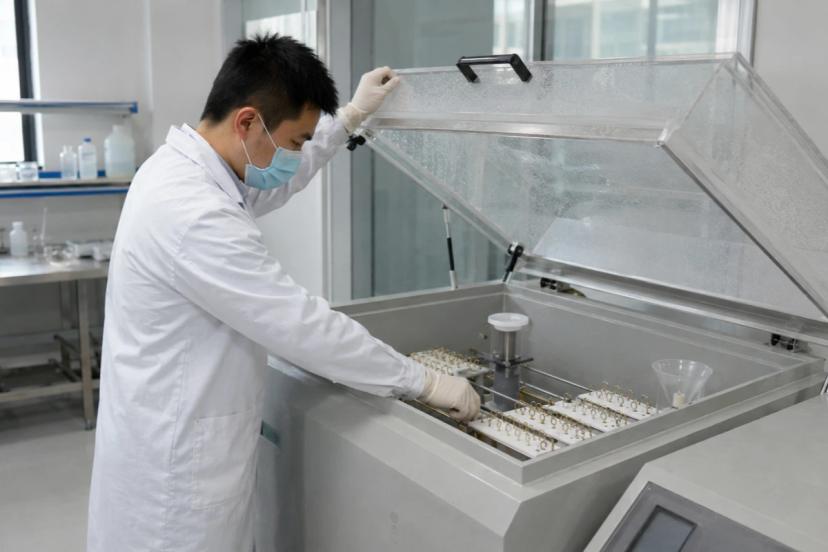
When corrosion resistance is a key claim, buyers may request salt spray testing according to standards such as the ISO 9227 salt spray test.
Want to review PVD coating quality before bulk production? Contact Jewins to discuss samples, color options, and quality control requirements. Request a custom jewelry quote →
How Jewelry Brands Should Source PVD Stainless Steel Jewelry
Sourcing strategy for PVD gold jewelry wholesale depends on business type, order volume, and brand positioning.
| Buyer Type | Key Priorities | Recommended Approach |
|---|---|---|
| Startup Jewelry Brand | Low MOQ, design flexibility, brand differentiation | Start with a small sample run; prioritize custom PVD jewelry options and packaging customization |
| Wholesale Buyer | Consistent supply, competitive unit pricing, reliable lead times | Negotiate tiered pricing for PVD coated jewelry wholesale orders; confirm production capacity and delivery schedules |
| Private Label Brand | Brand identity, packaging exclusivity, ODM flexibility | Specify product and packaging in detail upfront; request private label PVD jewelry capabilities and available ODM options |
| Growing DTC Brand | Batch-to-batch consistency, scalability, accurate marketing claims | Establish approved color and spec standards early; request QC documentation for every production batch |
For all buyer types, color consistency across repeat orders is one of the most common pain points in PVD sourcing. Coating color can drift between batches without tightly controlled process parameters. Confirm that the manufacturer has documented color management procedures before committing to a product line.
Jewins supports OEM PVD jewelry production and wholesale sourcing through OEM jewelry services, custom jewelry packaging, and a full range of wholesale stainless steel jewelry.
PVD Jewelry Care Guide for Your Customers
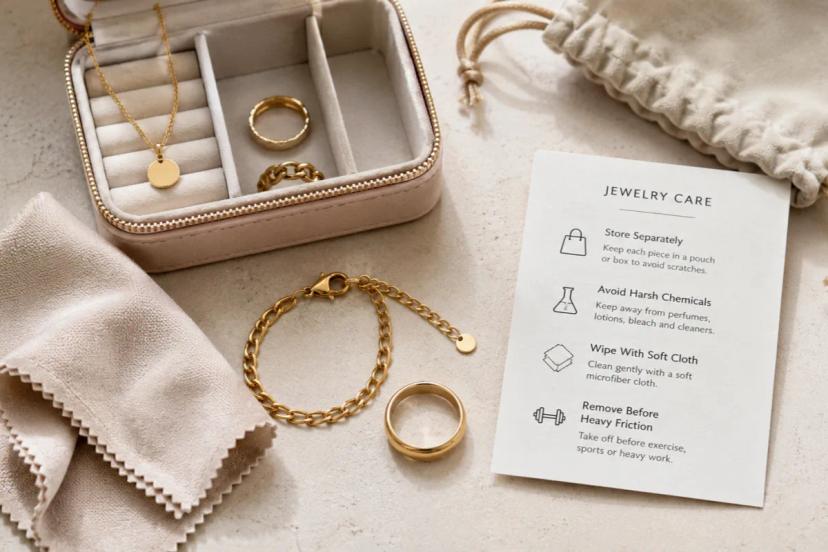
The following care guidance can be adapted for packaging inserts, product pages, and FAQ sections. Accurate care information at the point of sale reduces returns and builds customer trust.
- Apply perfume before putting on jewelry. Alcohol and chemical compounds in fragrances can accelerate coating wear. Jewelry should go on last.
- Dry after water exposure. After hand washing or incidental water contact, pat dry with a soft cloth rather than leaving pieces wet.
- Store pieces separately. Keep PVD jewelry in individual pouches or compartmentalized boxes to prevent scratching.
- Clean with a soft cloth. Use a dry or lightly damp microfiber cloth. Avoid abrasive cloths, brushes, or chemical jewelry cleaners.
- Remove during high-friction activity. For rings and bracelets especially, advise customers to remove jewelry during exercise, manual labor, or contact with rough surfaces.
Brands in markets with consumer disclosure requirements may also include a materials disclosure line — base metal grade and coating type — alongside these care instructions.
Frequently Asked Questions
What does PVD mean in jewelry, and what is PVD coating on jewelry?
PVD stands for Physical Vapor Deposition — a vacuum-based process that deposits a thin metal layer onto a base metal substrate such as stainless steel. PVD coating on jewelry is that deposited layer: typically a gold, rose gold, black, or silver tone applied to 316L stainless steel. The coating forms a tightly bonded surface layer, generally offering better adhesion and durability than conventional electroplating. PVD is a manufacturing process, not a type of metal.
Is PVD gold the same as gold plated?
No. Gold plating uses an electrochemical wet process; PVD uses a vacuum-based dry process that typically produces a denser, more tightly bonded coating. PVD tends to offer better durability and moisture resistance than standard electroplating, though performance still depends on coating quality and base metal grade.
Does PVD gold fade?
PVD gold is generally more resistant to fading than traditionally plated jewelry, but it is still a surface coating and is not permanent. How quickly the finish shows wear depends on the product category, base metal quality, coating process controls, and customer care habits. Brands should avoid making unconditional claims about fade resistance.
Is PVD jewelry waterproof?
PVD stainless steel jewelry handles everyday moisture exposure — hand washing, sweat, and rain — reasonably well. Prolonged exposure to chlorinated water, saltwater, and harsh chemicals is not recommended. "Water-resistant" is a more accurate product claim than "waterproof."
How long does PVD jewelry last?
Coating life depends on base metal quality, coating process controls, product category, and customer care. Rings and bracelets face more friction and may show wear sooner than necklaces or earrings. Request wear test samples and QC documentation before committing to bulk production.
Is PVD jewelry safe for sensitive skin?
PVD jewelry on a 316L stainless steel base is often considered a suitable option for sensitive-skin collections. 316L has relatively low nickel ion release, and the PVD coating adds a further barrier that may reduce direct metal contact for many wearers. No alloy or coating can guarantee zero reaction for all individuals, so buyers should request material certifications and, where required, Nickel Release test reports.
What is 18K gold PVD jewelry?
18K gold PVD refers to a gold-tone PVD coating that replicates the color of 18-karat gold. It does not mean the piece contains solid 18-karat gold. The "18K" designation describes the color finish — this is a widely used convention in the stainless steel jewelry trade and should be communicated clearly to end customers.
Source PVD Stainless Steel Jewelry with Jewins
Jewins supports OEM and ODM production, custom PVD colors, private label PVD jewelry packaging, and wholesale stainless steel jewelry sourcing for jewelry brands, wholesalers, and retailers worldwide. Send us your design, sample, or product idea to get a custom quote.