
Black PVD finishes are harder to quality-control than gold or rose gold because dark tones don't visually mask minor coating defects the way reflective finishes do.
Durability comes less from raw coating thickness and more from adhesion quality, the transition layer between base metal and coating, and how dense the coating structure is — which is why thickness alone is not a reliable spec to source against.
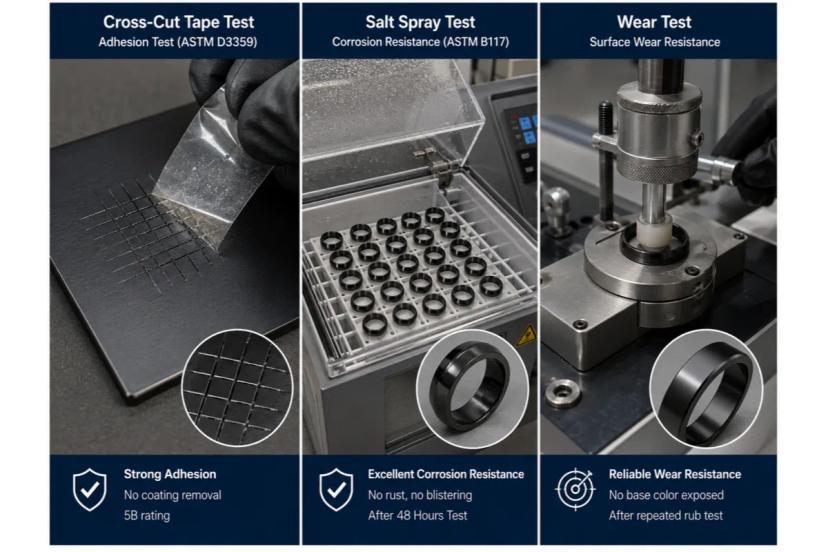
The practical takeaway: ask your manufacturer for specific adhesion (ISO 2409 / ASTM D3359), salt spray (ASTM B117), and wear test results — not just a thickness number — before placing a bulk order.
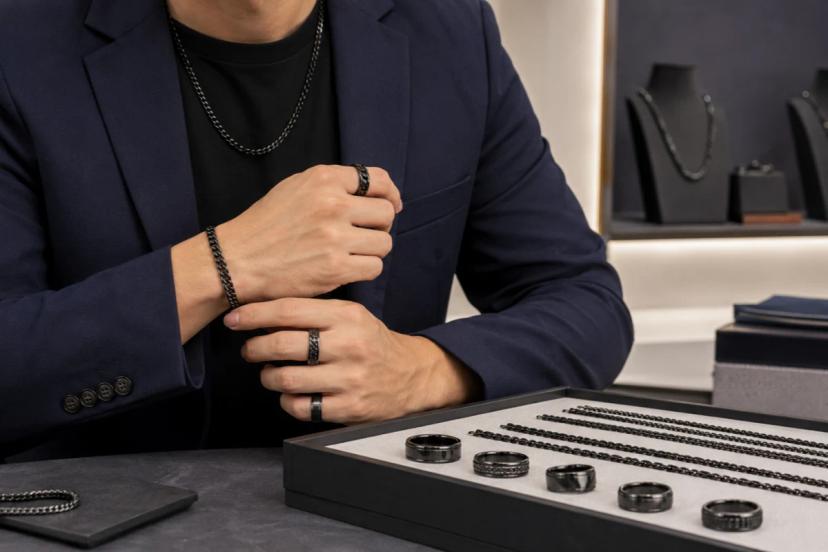
If you've already read our overview of what PVD jewelry is and how it compares to gold plating and gold filled finishes, this guide goes one level deeper. It focuses specifically on black PVD — the finish that has become a defining look for hip hop jewelry, iced out pieces, and minimalist unisex collections, and also the finish that exposes quality problems faster than any other color.
This is not a product pitch. It's a breakdown of what actually determines whether a black PVD piece holds up after six months of daily wear, and what a growing jewelry brand should confirm with a manufacturer before committing to a bulk order.
Why Black PVD Is Harder to Quality-Control Than Gold or Rose Gold
Gold and rose gold PVD finishes have a built-in advantage: their reflective, warm tone tends to visually mask minor surface inconsistencies, light scratching, and small variations in coating thickness. Black does the opposite. A matte or deep black surface shows every fingerprint, hairline scratch, and uneven patch of gloss far more clearly.
Part of this comes down to the materials involved. Gold-tone PVD coatings are typically based on titanium nitride (TiN). Black and dark-tone PVD finishes are usually produced with different compound systems — titanium carbonitride (TiCN), titanium aluminum nitride (TiAlN), zirconium carbide (ZrC), or in premium applications, diamond-like carbon (DLC). These black-tone compounds generally measure harder than TiN on standard hardness scales, which is one reason black PVD has a reputation for being a durable, premium finish.
| Coating System | Typical Color | Relative Hardness |
|---|---|---|
| TiN (Titanium Nitride) | Bright gold | Baseline |
| TiCN (Titanium Carbonitride) | Grey-black to dark anthracite | Higher than TiN |
| TiAlN (Titanium Aluminum Nitride) | Matte black / gunmetal | Higher than TiCN |
| ZrC (Zirconium Carbide) | Deep black with metallic sheen | High, premium decorative use |
| DLC (Diamond-Like Carbon) | Ultra-deep black | Very high, high-end applications |
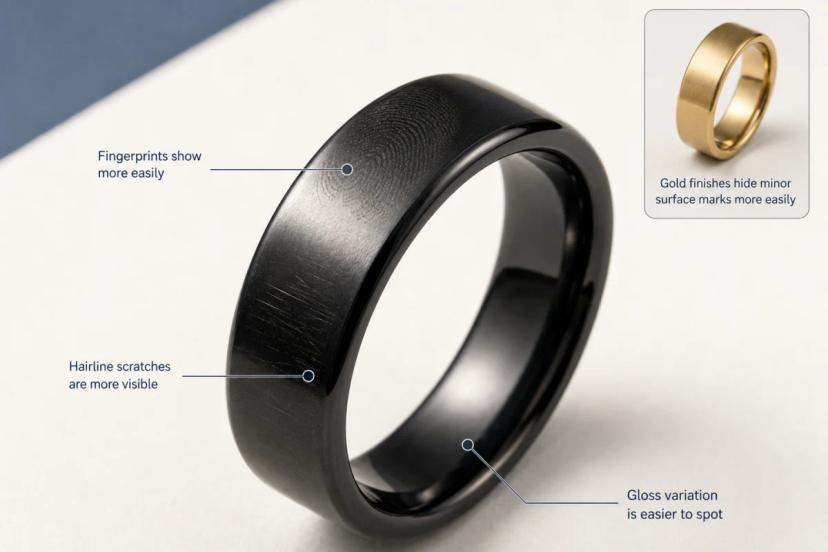
The takeaway for a sourcing manager isn't that black PVD is automatically “better” — it's that black PVD has less room for error. A coating defect that would be barely visible in gold becomes an obvious flaw in black. This is exactly why color and finish should be one of the first things a brand defines in its quality standard, not something left to “the factory's best judgment.”
Why Coating Thickness Alone Doesn't Determine Durability
If you research PVD coating online, you'll find a wide range of thickness figures, and some industry sources suggest thicker coatings — in the range of 0.3–0.5 micron — as a practical minimum for daily-wear pieces like rings and bracelets. This creates a common misconception: that a thinner coating is automatically a weaker one.
In practice, durability depends less on raw thickness and more on three other factors: how well the coating bonds to the base metal, how it prevents corrosion from working its way out from underneath, and how dense the coating structure is at a microscopic level.
Surface activation before coating. Traditional electroplating deposits metal somewhat like a layer of paint — over time, that layer can lift and flake at the edges. A more advanced approach uses high-energy plasma to activate the substrate surface at an atomic level before coating begins, allowing the coating to form a much stronger bond with the base metal rather than simply sitting on top of it. This directly reduces the risk of peeling or flaking.
A transition layer between base metal and coating. Stainless steel or brass and a PVD finish don't naturally bond well on their own, and underlying metal ions can migrate outward over time, causing discoloration from the inside out. A dense interlayer — commonly nickel-chromium or titanium-based — sits between the base metal and the finish coat. It anchors to the substrate on one side and locks in the coating on the other, while also acting as a barrier that helps keep sweat and moisture from reaching the base metal, and keeps base-metal ions from migrating outward and causing discoloration over time.
Coating density from the deposition process itself. Conventional wet electroplating can leave a microscopically porous structure, even at greater thickness — small gaps that moisture can eventually work into. PVD deposition (particularly magnetron sputtering) propels metal atoms at the substrate at high velocity, producing a denser coating structure with fewer microscopic voids. This is one of the reasons a well-executed PVD coating can outperform a thicker electroplated layer in corrosion resistance, even at a fraction of the thickness.
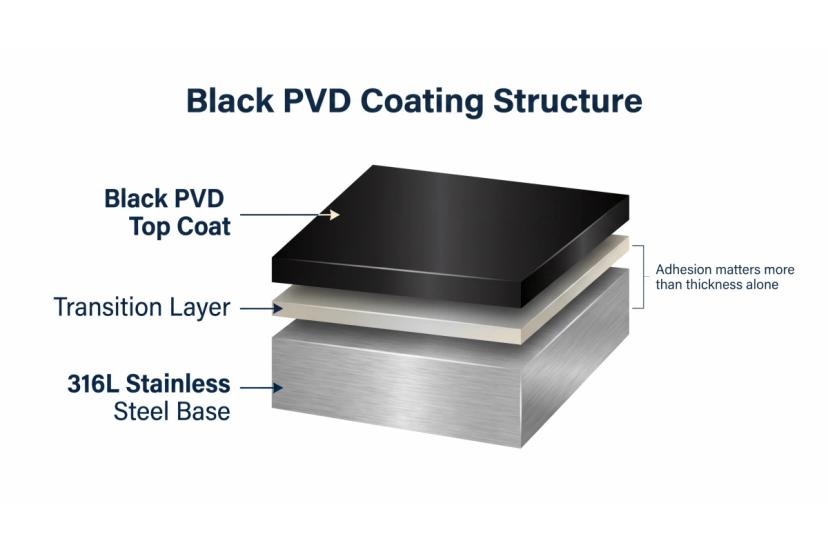
The detail that matters most for a buyer: ask your manufacturer how they control adhesion and coating density, not just what number they quote for thickness. A factory that can only answer with a micron figure, and nothing about surface preparation or interlayer structure, hasn't told you very much about how the coating will actually perform.
How to Test Black PVD Durability Before You Place a Bulk Order
Specifications on paper mean little without a way to verify them. These are the three checks worth requesting before — not after — a bulk order ships.
Adhesion testing
Adhesion is typically evaluated with a cross-cut tape test. There are two standards in use internationally, and they are not directly equivalent, so it's worth knowing which one a factory is actually using:
- ISO 2409 — the cross-cut test more commonly referenced in decorative PVD coating contexts internationally, rated on a 0 (best) to 5 (worst) scale.
- ASTM D3359 — a tape-adhesion standard more familiar to buyers in the US market, rated on a 5B (best) to 0B (worst) scale.
As a reference point, Jewins' black PVD finishes are cross-cut through to the base metal and tested with high-tack tape (3M-grade), targeting the top 5B rating on the ASTM D3359 scale — meaning no peeling or lifting at the cut edges when the tape is pulled away.
If a supplier reports an adhesion result, ask which standard and rating scale was used. “It passed the tape test” is not a specification — “ISO 2409, rated 0” or “ASTM D3359, rated 5B” is.
Corrosion and oxidation resistance
Salt spray testing, run under the ASTM B117 framework (or the internationally equivalent ISO 9227), is the standard method for evaluating how a coating resists corrosion under accelerated conditions. ASTM B117 itself doesn't define a pass/fail duration — that threshold is set by the manufacturer or by the specific product standard being applied.
As a reference point, Jewins runs black PVD finishes through a 48-hour salt spray test, judged against three pass/fail criteria:
- No red rust — no visible pinpoint red rust or patches on the base metal or coating within the test window, even on a 316L stainless steel substrate.
- No peeling or flaking — the coating shouldn't lift, blister, or come away when tested with adhesive tape after salt spray exposure.
- No significant discoloration — minor, very subtle dulling is acceptable, but the coating should not show large-area greening, blackening, or visible base-metal show-through.
When you're comparing suppliers, ask for the specific duration and the pass/fail criteria they test against — “we do salt spray testing” without those two details isn't a verifiable specification.
Wear and hardness testing
Because black PVD is used heavily on pieces with frequent skin and fabric contact — rings, bracelets, chains — abrasion and hardness testing under realistic wear conditions matters more than it does for pieces that see less contact, like pendants.
It's worth noting that hardness figures for PVD finishes can mean different things depending on how they're measured. The material-science figures cited earlier in this guide (for TiCN, TiAlN, and similar compounds) generally come from specialized nanoindentation testing of the coating material itself. Standard Vickers hardness testing on a finished piece, by contrast, measures the coating and base metal together as a system — since a coating only 0.03–0.05 micron thick is far thinner than a standard hardness indenter's penetration depth. As a finished-piece reference point, Jewins' black PVD jewelry measures above 300 HV on standard Vickers testing — roughly three times harder than typical water-electroplated finishes — and is tested to withstand several hundred reciprocating rubs under 500g of pressure without exposing the base color underneath.
A manufacturer that runs this kind of testing as a routine QC step, rather than only when a customer asks, is a meaningfully different kind of partner than one that doesn't.
Color Consistency — The QC Checkpoint Most Brands Skip
A black PVD finish that looks identical under one set of factory lights can look noticeably different in batch two, or under different store or photography lighting. This is the checkpoint that's easiest to overlook during sampling, because a single approved sample can't reveal batch-to-batch drift on its own.
The areas worth defining in a quality standard before bulk production starts:
| QC Checkpoint | What It Controls For |
|---|---|
| Color tolerance (spectrophotometer or color card reference) | Whether batch 2, 3, and beyond match the approved sample within an agreed tolerance |
| Gloss level (matte vs. semi-gloss vs. high gloss) | Whether finish sheen stays consistent across production runs |
| Plating/PVD finish inspection | Catching uneven coverage or patchiness before it reaches packaging |
| Pre-shipment inspection | Final check against the approved “golden sample” before the order ships |
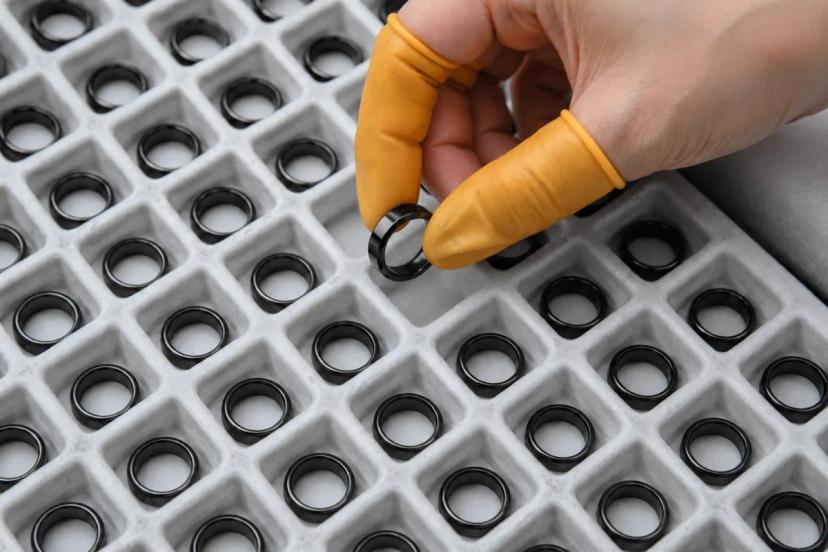
The “golden sample” concept is worth specifically asking about: does the factory retain a physical reference sample from your approved batch, and does every subsequent production run get checked against it — or only against a general internal standard? The difference matters more than it sounds, especially for brands running multiple reorders of the same SKU over a year.
A Buyer's Framework for Sourcing Black PVD Jewelry by Brand Stage
What to prioritize when evaluating a black PVD supplier shifts depending on where your brand is in its growth:
Early-stage / testing the market. Prioritize sampling speed and the manufacturer's willingness to support small-batch testing. At this stage, you're validating whether a specific black PVD design resonates with your audience before committing to volume — production-line-level color consistency matters less than getting a representative sample into market quickly.
Growing brand / repeat orders. Once a black PVD SKU is selling and you're reordering, batch-to-batch color and gloss consistency becomes the priority, along with how quickly the supplier can turn around a repeat order without you running out of stock on a bestseller.
Scaling brand / multi-SKU operations. At this stage, what matters most is whether the supplier's QC system is auditable and documented — can they show you inspection records and test data across SKUs, not just tell you verbally that “quality is good” — along with pricing and lead-time stability across larger volumes.
None of these stages are about finding the cheapest quote. They're about matching what you ask a supplier to verify with what you're actually exposed to at that point in your brand's growth.
What to Ask a Black PVD Stainless Steel Jewelry Manufacturer Before You Order
A short, practical checklist to work through during supplier evaluation or sample approval:
- Can the coating thickness be specified and confirmed in writing, rather than described only in general terms?
- Does the factory provide adhesion test results, and do they specify which standard (ISO 2409 or ASTM D3359) and rating was used?
- Does the factory run salt spray testing, and what duration and pass/fail criteria do they test against?
- Does the factory run wear/hardness testing on finished pieces, and can they share the test conditions (pressure, cycle count) behind their results?
- Is there a documented color and gloss tolerance, ideally checked against a physical reference sample or color card — not just “by eye”?
- Does the factory retain a golden sample from your approved batch, and is every subsequent production run checked against it?
- What inspection checkpoints exist between raw material and pre-shipment — and can they walk you through what happens at each one?
A manufacturer that can answer these specifically, rather than with general reassurances, is signaling that quality control is built into their process — not something they're describing after the fact.
Sourcing now? If you want a concrete starting point, ask a potential supplier for two things in writing: an adhesion test rating (ISO 2409 or ASTM D3359) and a salt spray test report for the actual black PVD finish you plan to sell. You can request both from Jewins as part of a sample request.
How Jewins Helps Brands Avoid These Risks
Every checkpoint covered above maps to a problem brands actually run into when sourcing black PVD jewelry — usually after the first bulk order has already shipped.
| What Brands Run Into | How It Shows Up | How Jewins Addresses It |
|---|---|---|
| Sample looks great, bulk order doesn't match | Batch 2 has a slightly different black tone or gloss level than the approved sample, but no one defined a tolerance upfront | Jewins' Brand Quality Standard Program turns the approved sample into a written standard — color tolerance, gloss level, and plating finish are documented before mass production starts |
| No way to verify quality claims before shipment | A factory says “we tested it” with no test method, duration, or rating attached | Jewins runs adhesion, salt spray, and wear/hardness testing as part of a Traceable Quality Control System, with checkpoints from raw material through pre-shipment inspection |
| Best-selling SKU goes out of stock | A black PVD piece takes off, but replenishment is slow because no one planned for it | Jewins' Inventory Protection Program supports raw material preparation and faster reorder turnaround for SKUs that are already selling |
| Communication breaks down between sampling and bulk production | Questions about coating spec or QC results take days to get answered, with no single point of contact | Jewins' Strategic Brand Support Program provides dedicated coordination and progress updates through sampling, production, and QC |
This isn't a claim that quality problems disappear — it's a description of where the structure exists to catch them before they reach your customers, rather than after.
Need Help With Black PVD Sourcing and QC Standards?
If you're developing a black PVD stainless steel jewelry collection and want to lock down coating thickness, adhesion standards, and color tolerance before bulk production, contact Jewins to set up a quality standard and QC checkpoint plan for your next production run.
Contact Us →FAQ
How thick should a black PVD coating be on stainless steel jewelry?
Thickness alone isn't the determining factor for durability — surface preparation, interlayer bonding, and coating density matter as much or more. Ask your manufacturer to explain their full process rather than relying on a single thickness figure.
What's the difference between ISO 2409 and ASTM D3359 adhesion testing?
Both are cross-cut/tape adhesion tests, but they use different cutting angles, application methods, and rating scales, and are not directly equivalent. ASTM officially states they are similar in content but not technically equivalent. Ask your supplier which one they use and request the specific rating.
Why does black PVD show quality issues more easily than gold PVD?
Black and dark tones don't have the light-reflecting effect that helps mask minor surface inconsistencies the way gold and rose gold finishes do, so scratches, uneven gloss, and coating defects are simply more visible.
Is PVD coating more durable than electroplating?
PVD coatings are generally denser and more corrosion-resistant than traditional electroplated layers, even at a fraction of the thickness, because of how the coating is deposited and how it bonds to the substrate.
About Jewins
Jewins supports growing jewelry brands through a structured Growing Brand Success Program. Instead of only completing one production order, Jewins helps brands define quality standards, control key production checkpoints, prepare for repeat orders, develop new products, and review supply chain performance over time. For stainless steel and moissanite jewelry brands, this creates a more stable foundation for scaling collections, reducing sourcing risk, and building stronger customer trust.
Technical references in this guide: ISO 2409 (cross-cut adhesion test) and ASTM D3359 (tape adhesion test), ASTM B117 (salt spray / fog testing), and published PVD material hardness data from industry coating sources. Jewins-specific figures (coating thickness, adhesion rating, salt spray duration, finished-piece hardness) reflect Jewins' internal process standards and are noted as such throughout. This article is general sourcing guidance. Last reviewed: June 2026.
Related reading: What Is PVD Jewelry?, 316L Stainless Steel Jewelry Guide, Jewins Certification Support. For sourcing, samples, or wholesale questions, contact Jewins.