
What Is Custom Jewelry Manufacturing? The Complete Guide for Jewelry Brands, Retailers & Importers
This guide helps jewelry brands, wholesalers, and private label buyers understand custom jewelry manufacturing from a practical factory and sourcing perspective. Jewins focuses on realistic material advice, sample support, quality checks, and stable OEM/ODM production — so buyers can make sourcing decisions with more confidence.
Custom jewelry manufacturing means working with a jewelry factory to produce pieces according to your design brief, material requirements, quality standard, and private-label or OEM/ODM production needs. For jewelry brands and wholesale buyers, the key is not only understanding the definition, but also checking the material, process, supplier capability, sample quality, and bulk-order consistency before production.
Introduction
Whether you are launching a DTC jewelry brand on Shopify, building an exclusive collection for your boutique, or sourcing private-label designs as a wholesale importer — the ability to offer custom-manufactured jewelry is what separates you from everyone selling the same generic catalog.
Custom jewelry manufacturing gives brands, retailers, and distributors full control over design, materials, and production quality — without running their own workshop. This guide walks you through exactly how the process works, what it costs, and what to look for in a factory partner, so you can make informed decisions that protect your margins and build a product line your customers cannot find anywhere else.
What Does "Custom Jewelry Manufacturing" Actually Mean?
Custom jewelry manufacturing means working directly with a factory to produce pieces built entirely to your specifications — not selected from a pre-made catalog shared with thousands of other buyers.
Depending on your business needs, this can mean:
- Developing an original product line from your own sketches or design briefs
- Producing private-label versions of trending styles exclusive to your brand or store
- Updating or re-designing existing inventory to match your current customer aesthetic
- Consolidating your sourcing into one reliable, accountable factory relationship
The result is a product your competitors cannot copy directly, because it is yours.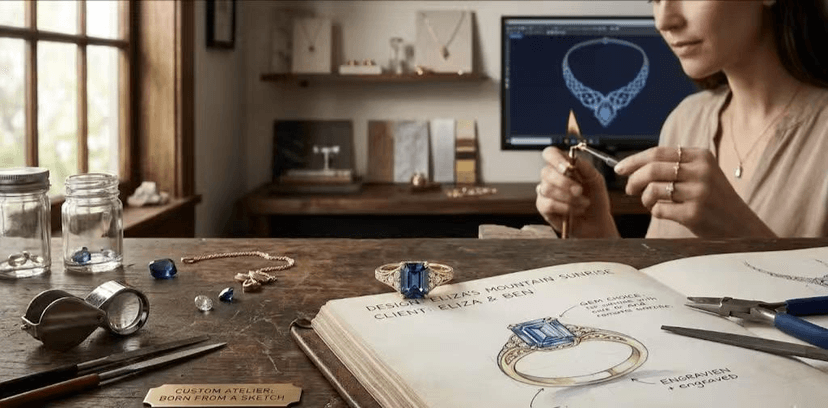
Custom Jewelry vs. Personalized Jewelry: Why the Distinction Matters for Your Business
These two terms are often confused — but for anyone building a brand or retail business, the difference has real commercial consequences.
| Factor | Personalized (Add-On) | Custom / OEM / ODM |
|---|---|---|
| Scope | Minor changes to stock items, such as engraving or birthstones | Full design control from concept to finished product |
| Who owns the design | The factory | Your brand |
| Competitive moat | None — competitors stock the same base item | High — your design is exclusive to your catalog |
| Scalability | Limited | Fully scalable with production planning |
| Best suited for | Adding a personal touch to gift items | Building a proprietary, sellable product line |
For DTC brands, Shopify stores, and independent retailers who want a defensible product offering, custom OEM or ODM manufacturing is the only path to genuine differentiation.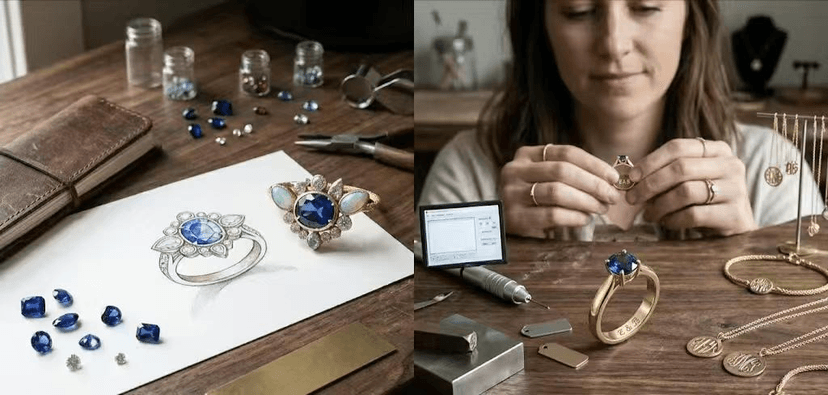
Why Brands, Retailers & Importers Choose Custom Manufacturing
Protect Your Margins With Exclusive Designs
When you sell the same mass-produced pieces as every other seller on Amazon, Instagram, or in the next boutique down the street, price becomes your only lever. Custom-manufactured jewelry — designed to your brief — cannot be undercut by a competitor selling the same item, because no one else has it.
Factory-Direct Pricing Means Better Gross Margins
Working directly with a source factory like Jewins removes agents, trading companies, and intermediaries from your cost structure. The savings go directly into your margin — or into a more competitive retail price that wins customers.
You Define the Quality Standard
You specify the alloy, plating thickness, stone grade, and finishing detail. There are no vague catalog descriptions to interpret. You set the standard; the factory is accountable to it. This matters especially for DTC and Instagram brands where product photography and unboxing experience directly drive reviews and repeat purchases.
Scale When You Need To
Test a new design with 50–100 units, validate sell-through, then scale to thousands for a key season. A factory partner that understands your business rhythm gives you the production flexibility to grow without over-committing capital.
Build Assets, Not Just Inventory
A proprietary product line is a business asset. Your custom designs, owned by your brand and protected under NDA, increase the long-term value of what you are building — whether you are a startup jewelry brand or an established importer expanding into private label.
Who Is Custom Manufacturing Built For?
DTC & Online Brands (Shopify, Amazon, Instagram)
You need a product that photographs beautifully, ships reliably, and cannot be found on a competitor's page. Custom manufacturing gives you exclusive SKUs and full control over the quality that drives your reviews and repeat rates.
Media Influencers & Creator Brands
Launching a jewelry collection tied to your personal brand requires pieces that feel authentic and unique — not repackaged catalog items. Custom manufacturing lets you bring your aesthetic to life with production-grade quality and consistent supply.
Jewelry Importers & Distributors
If you are sourcing for multiple buyers or building a private-label catalog, working directly with a source factory gives you better pricing, faster lead times, and the ability to offer your own buyers something they cannot source elsewhere.
Independent Jewelry Stores & Boutique Retailers
An exclusive collection built around your store's identity gives you a reason for customers to come back — and a story to tell that no chain retailer can replicate.
Startup Jewelry Brands & Emerging Designers
Custom manufacturing lets you bring your original designs to market without investing in your own production equipment. A good factory partner is effectively your production team, without the overhead.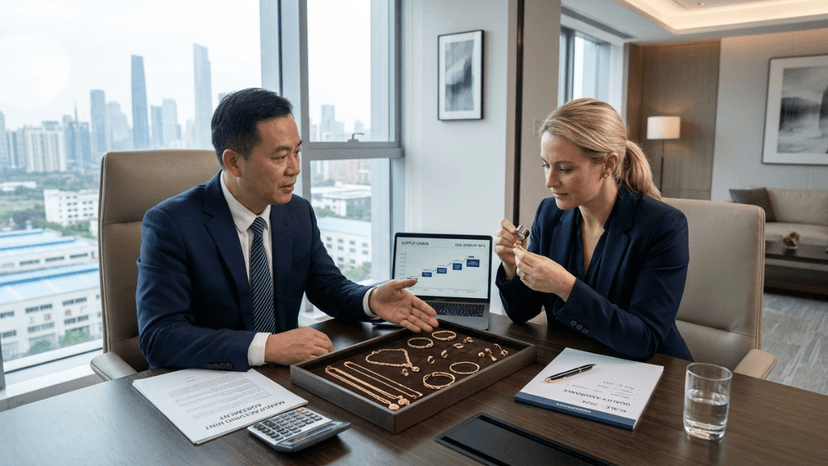
Most Popular Custom Jewelry Categories
- Engagement & Bridal — High-value, high-repeat-referral category; custom settings and stone grades create real differentiation in a crowded market.
- Private-Label Fine Jewelry Lines — Signature collections produced exclusively for your brand or store.
- Trend-Driven Seasonal Collections — Fast-turnaround ODM development for Q4 holiday, Valentine's Day, and Mother's Day.
- Heirloom & Redesign Services — Offered by jewelers and retailers providing white-glove client services, backed by factory production.
- Creator & Influencer Collections — Limited-edition drops tied to a personal brand or campaign.
How the Manufacturing Process Works
A professional factory partner like Jewins follows a clear, stage-gated workflow, so you always know where your order stands.
Step 1 — Design Brief & Specification
Submit your design concept via sketch, reference image, CAD file, or mood board. A dedicated account manager translates this into a precise production specification.
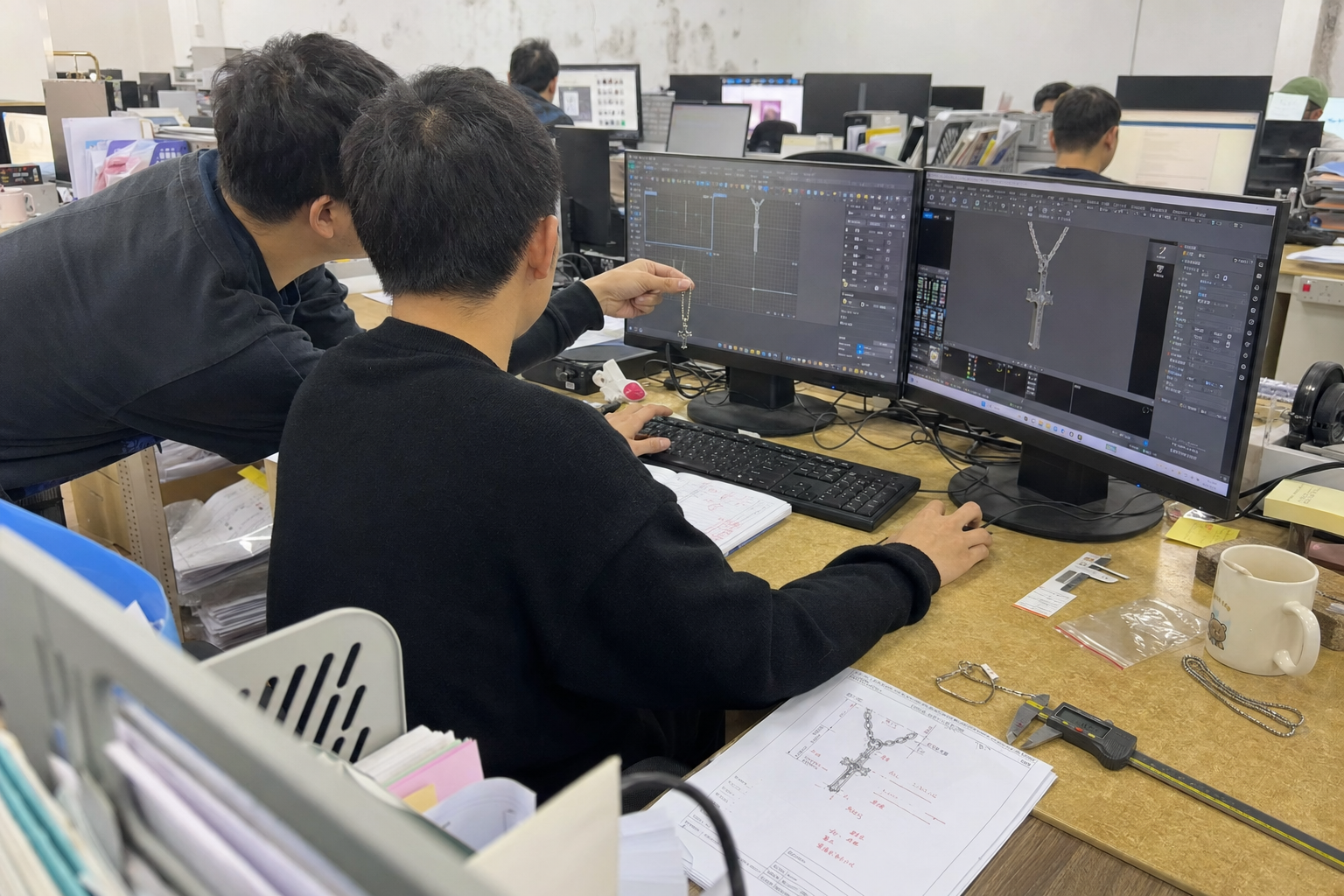
Step 2 — CAD Modeling & Digital Approval
The engineering team builds a 3D CAD render of your piece. You review and approve digitally before any physical production begins — eliminating costly rework downstream.
Step 3 — Physical Sample
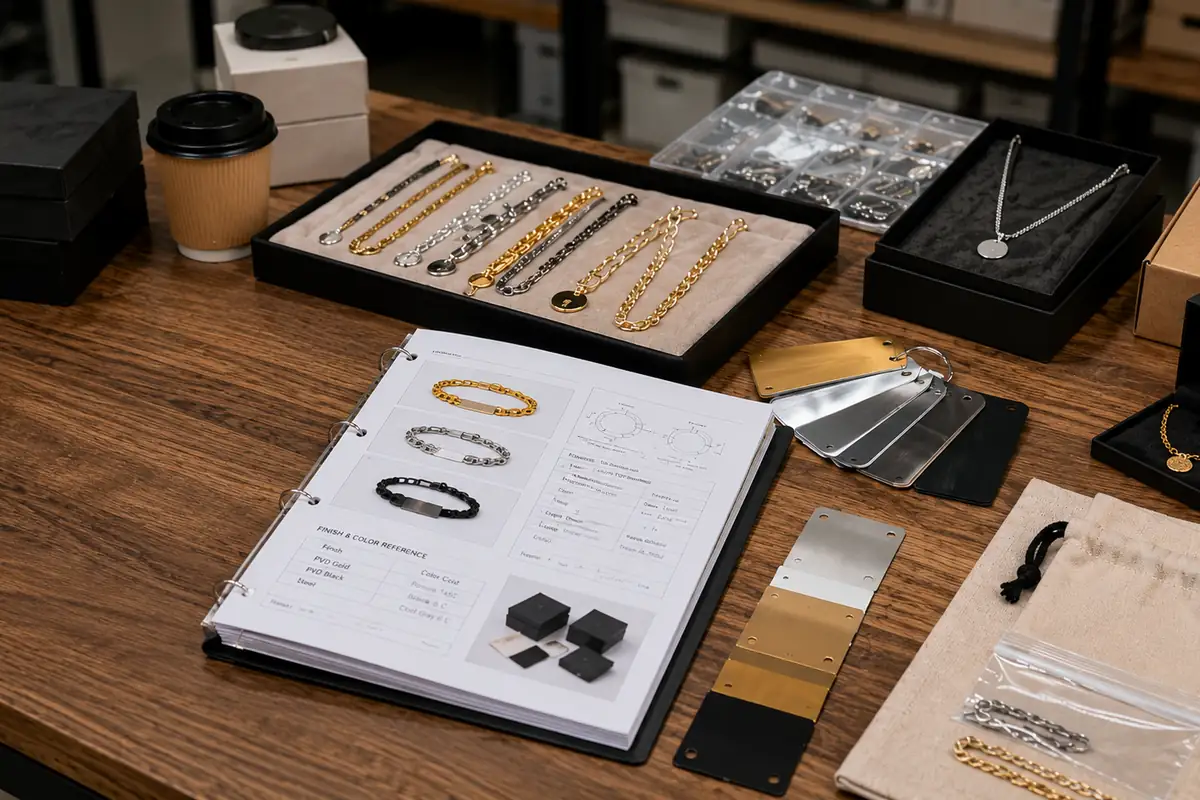
A prototype is produced in metal and shipped to you for hands-on review. Evaluate the weight, finish, stone setting quality, and proportions against your standard.
Step 4 — Revision & Sample Sign-Off
Adjustments are made until the sample meets your specification. Once signed off, it becomes the locked quality benchmark for all production units.
Step 5 — Bulk Production & In-Line QC
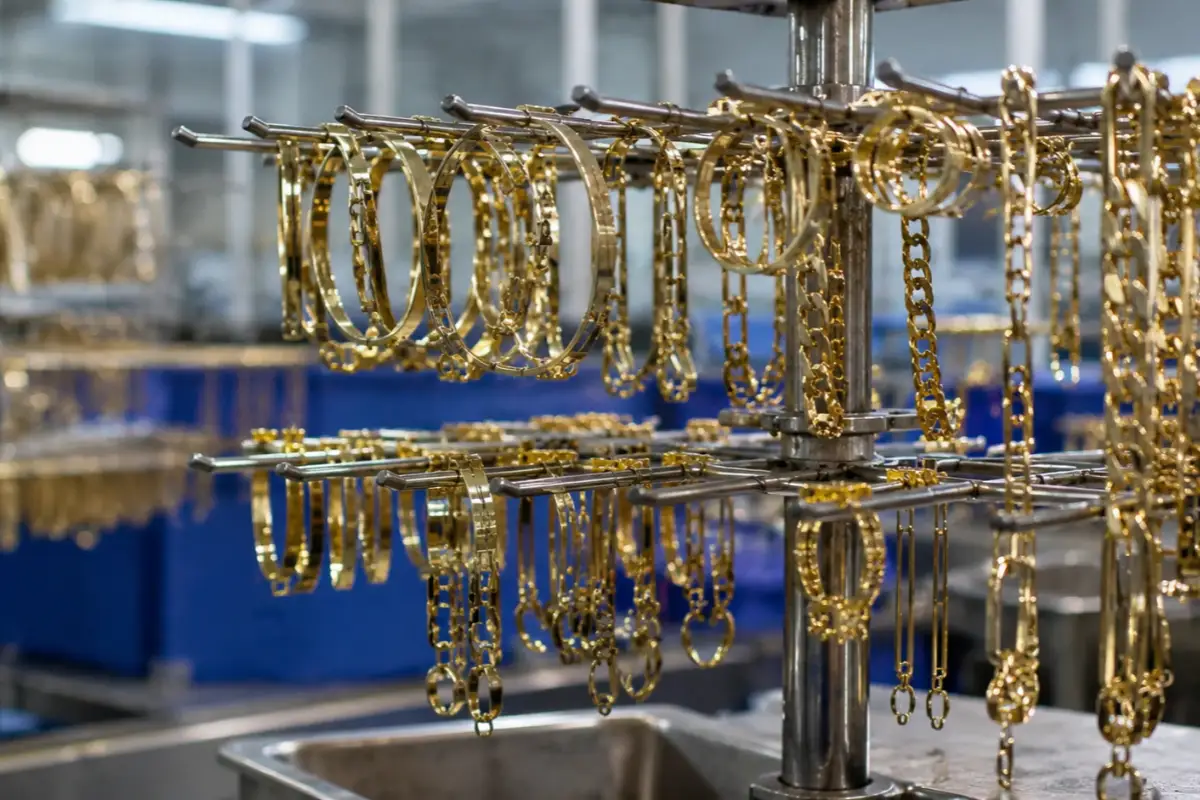
Full production runs against your approved sample, with quality checks at each production stage before final inspection and packaging.
Step 6 — Shipment & After-Sales Support
Goods are shipped to your warehouse or freight forwarder. Jewins provides ongoing support for any production or quality concerns after delivery.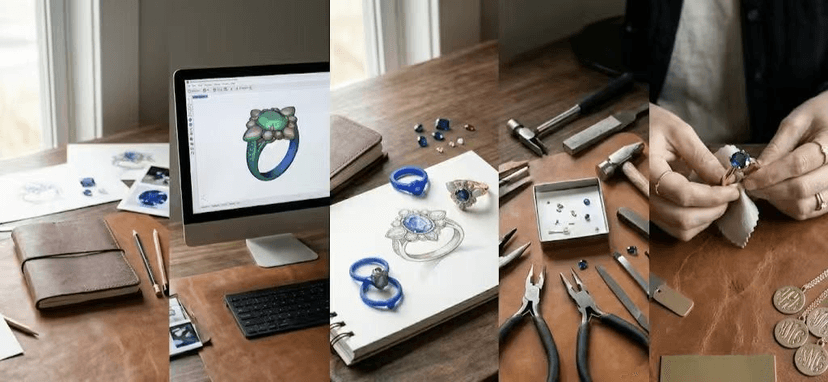
Production Timelines: How to Plan Your Buying Calendar
Repeat orders using an approved sample run significantly faster — typically 2–4 weeks for bulk production.
Buying calendar tip: Build custom production timelines into your plan 3–4 months ahead of key sales seasons — Q4 holiday, Valentine's Day, and Mother's Day — to avoid rush fees and stockouts.
Materials: What You Can Specify
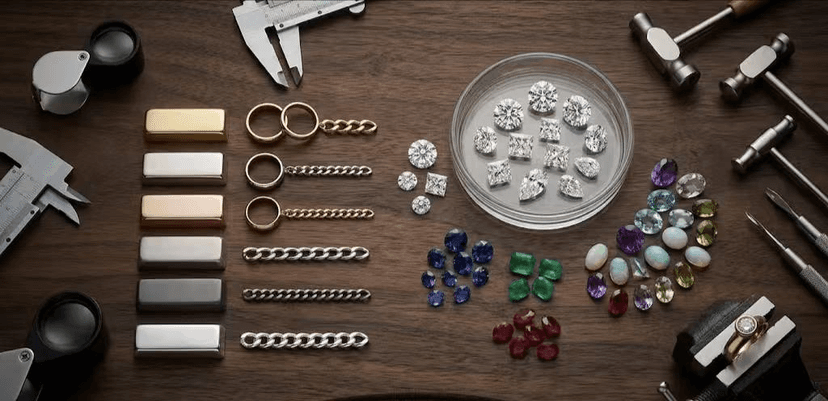
Jewins works with the full range of fine and fashion jewelry materials, giving you complete specification control over every order.
Base Metals
- 925 sterling silver
- 10K / 14K / 18K yellow, white & rose gold
- Platinum, palladium, titanium
- Brass & copper with precision plating, including gold vermeil, rhodium, and PVD coating
Gemstones
- Natural diamonds (GIA / IGI certified)
- Lab-grown diamonds (IGI certified)
- Precious stones: sapphire, ruby, emerald
- Moissanite, white topaz, cubic zirconia, birthstones
Finishes
- High polish
- Brushed / matte
- Hammered texture
- Sandblast
- Enamel fill
Understanding the Cost Structure
Custom jewelry pricing is driven by three variables you control:
| Cost Driver | Lower Cost | Higher Cost |
|---|---|---|
| Metal | Sterling silver, brass + plating | 18K gold, platinum |
| Stones | Lab-grown diamonds, CZ, moissanite | Natural certified diamonds, precious gems |
| Complexity | Clean geometric designs, minimal setting | Pavé, micro-setting, hand engraving, filigree |
Indicative Price Ranges (FOB factory):
- Fashion / sterling silver pieces: $8–$60 per unit (varies by MOQ and design)
- Fine gold jewelry (10K–18K): $80–$500+ per unit
- Diamond fine jewelry: quoted individually based on stone specification
Total landed cost includes tooling fees, sample freight, import duties, and shipping. Always calculate these before comparing factory quotes.
What to Look for in a Factory Partner
Choosing your manufacturing partner is a critical decision. Before committing, verify:
- Vertically integrated production — casting, setting, finishing, and QC all under one roof, not outsourced across multiple workshops.
- CAD and 3D printing capability — a sign of modern technical standards and precise prototyping.
- Physical sample process — you must approve a real sample before bulk production begins.
- Documented QC process — ask for their inspection checklist and how defects are handled.
- Clear NDA and IP protection — your designs should never be shared or re-sold to other buyers.
- Responsive, dedicated account management — delays happen; how a factory communicates during them defines the relationship.
- Track record with international buyers — ask for references or examples of past work at your volume level.
Common Mistakes to Avoid
Skipping the sample to save time
The sample is your quality benchmark and your legal reference if a dispute arises. Bypassing it to accelerate timelines is the single most common cause of unusable bulk production.
Underspecifying your brief
Vague instructions produce inconsistent output. Specify metal weight, plating micron thickness, stone dimensions and grade, and finishing detail in writing before production begins.
Ignoring total landed cost
A lower factory price does not mean lower total cost. Factor in tooling, sample freight, import duties, third-party inspection, and payment fees when comparing suppliers.
Over-ordering on an untested design
Always validate a new SKU with a small batch (50–200 units) before committing to high-volume production. Sell-through data is worth more than a bulk discount on a product your customers do not respond to.
No written specification document
Every order should be backed by a signed specification sheet. This protects both parties and eliminates ambiguity about what was agreed.
Is Custom Manufacturing Right for Your Business?
Strong fit if you are:
- A DTC or e-commerce brand building a proprietary product catalog
- A boutique retailer wanting an exclusive collection your competitors cannot stock
- An importer or distributor moving into private-label sourcing
- A startup brand bringing original designs to market without in-house production
- An emerging designer ready to scale beyond handmade production
Less suited if:
- You need inventory shipped within 1–2 weeks
- You have no defined design direction or brief
- Your order volume falls significantly below factory MOQ thresholds
Why Jewins?
Jewins is a vertically integrated fine jewelry source factory with in-house design, CAD engineering, casting, stone setting, quality control, and finishing — all under one roof. We work directly with jewelry brands, online retailers, importers, distributors, and emerging designers who need a manufacturing partner they can trust at every stage of growth.
What Jewins brings to your business:
- No middlemen — direct factory access at every stage of production
- Full OEM and ODM capability — produce from your designs, or let our team develop designs from your brief
- Strict NDA and IP protection — your designs are never shared, re-sold, or reproduced for other buyers
- Consistent quality — every order is held to your approved sample as the binding standard
- Reliable communication — dedicated account management with proactive production updates
- Flexible MOQ — scalable from startup volumes to high-quantity wholesale orders
Conclusion
Custom jewelry manufacturing is not just about creating something unique. For brands, retailers, and importers, it is a strategic sourcing decision that directly affects your product margins, your brand identity, and your ability to build customer loyalty in a competitive market.
The businesses that win are the ones that own their product, control their supply chain, and work with a factory partner who understands what is at stake commercially.
Jewins is built to be that partner — reliable, professional, and ready to scale with your business.
Contact Jewins to discuss your custom jewelry manufacturing requirements.
Frequently Asked Questions
What is the minimum order quantity for a custom design?
MOQ varies depending on design complexity and material. Reach out with your design brief and Jewins will confirm the MOQ and quote based on your requirements.
Can you produce directly from our design files?
Yes. We accept CAD files, technical drawings, reference images, or physical samples. Our engineering team will review and confirm producibility before quoting.
Do you sign NDAs to protect our designs?
Yes. We sign an NDA before reviewing any proprietary design files or concepts. Your intellectual property is fully protected.
How do you handle quality control across production runs?
Every bulk order is produced against your approved physical sample. We conduct in-line QC checks throughout production and a final inspection before shipment.
Can we supply our own stones or specify certified diamonds?
Yes. You can specify stone grades for us to source, or supply your own stones for setting. We work with both natural and lab-grown diamonds, with GIA and IGI certification options.
What is the difference between OEM and ODM at Jewins?
OEM means you provide the design and we manufacture to your specifications. ODM means our design team develops the design based on your brief, with full ownership transferred to your brand upon completion. We offer both services.
Build Your Jewelry Collection with a Reliable OEM/ODM Supplier
Jewins helps jewelry brands, wholesalers, and private label buyers develop jewelry collections with practical sample support, stable production, quality checks, and packaging options. From material selection to bulk-order delivery, we focus on clear communication, realistic claims, and consistent quality.