
A jewelry tech pack helps translate a product idea into clear manufacturing specifications. It gives a jewelry manufacturer the information needed to evaluate materials, dimensions, construction, finishes, and sampling requirements before production begins.
A jewelry tech pack helps translate a product idea into clear manufacturing specifications. It gives a jewelry manufacturer the information needed to evaluate materials, dimensions, construction, finishes, and sampling requirements before production begins.
You do not need a complete jewelry tech pack to contact Jewins for an initial quote. A reference image, product style, basic dimensions, target material, and estimated order quantity are generally enough to begin. More detailed specifications can be developed with the manufacturer before sampling and production.
What Is a Jewelry Tech Pack?
A jewelry tech pack is a technical specification document or set of documents that defines how a piece should look, measure, assemble, and perform. Across the custom jewelry manufacturing process, it serves as the shared reference between a brand and a factory's engineering and sampling teams.
What Information Does a Jewelry Tech Pack Communicate?
Beyond visual inspiration, a tech pack records or identifies technical details: product design and visual references, dimensions and construction, base materials and surface finishes, gemstones and setting methods, weight and components, and quality requirements.
Jewelry Tech Pack vs. Design Brief vs. RFQ
Buyers often blend creative, technical, and commercial files, yet each serves a distinct purpose:
Document | Primary Role |
|---|---|
Design Brief | Describes the product idea, style inspiration, and creative direction |
Jewelry Tech Pack | Organizes technical product specifications for engineering and sampling |
RFQ (Request for Quotation) | Submits order quantities, pricing scope, and commercial requirements |
A preliminary jewelry tech pack also differs from a final approved production specification, which reflects the specifications agreed for production after the relevant technical reviews and sample approval.
What Do You Need Before Requesting a Jewelry Manufacturing Quote?
Whether you are comparing OEM vs ODM jewelry manufacturing or developing an original piece, you can often begin with simpler inputs.
The Five Basic Details Manufacturers Need
At Jewins, five basic details generally allow the sales team to prepare an initial quote:
- Product reference images or sketches showing the silhouette and key features.
- Product style and category, such as a signet ring, hoop earring, bracelet, or pendant necklace.
- Basic dimensions, including approximate length, width, thickness, or ring size.
- Preferred material and finish, such as 316L stainless steel with gold-color PVD or a polished silver finish.
- Estimated order quantity, broken down by style and color variant.
When Do You Need to Provide a Shipping ZIP Code?
If you want preliminary shipping costs estimated alongside unit pricing, include your destination country and shipping ZIP code to help estimate freight costs. A final shipping quote may require package dimensions, weight and delivery terms.
Can You Request a Quote Without CAD Drawings?
Yes. You can request an initial quote without CAD drawings. At Jewins, buyers can start discussions with reference images and basic dimensions; when custom drawings are needed, Jewins arranges drawing creation after the customer pays the design fee.
What Should a Jewelry Tech Pack Include?
As your project develops, use one specification record per style or SKU. The template below distinguishes information needed for an initial inquiry from details to agree during development.
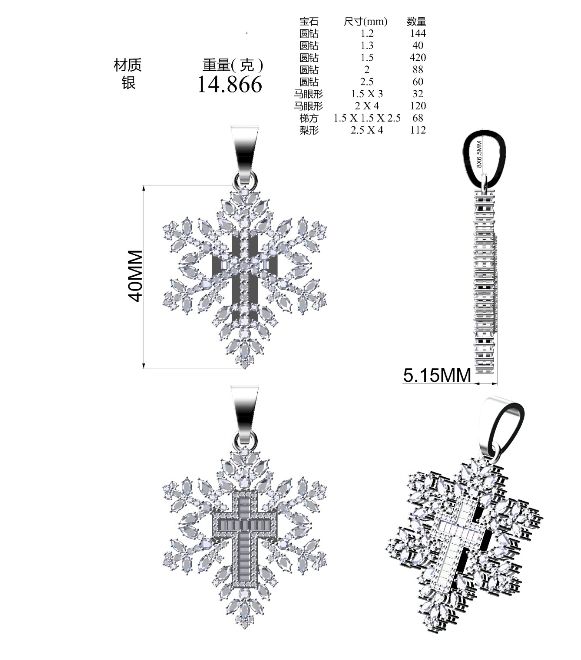
Copyable Jewelry Tech Pack Template
Copy the table into your own document or spreadsheet. Record known values and mark unresolved items as TBC (to be confirmed), rather than guessing. Update the revision date as specifications change.
Field | Your specification / attachment | When to clarify |
|---|---|---|
Project / style / SKU / category | __________ | Initial inquiry |
Reference images or sketches | __________ | Initial inquiry |
Target dimensions (include units) | __________ | Initial inquiry |
Base metal and preferred finish | __________ | Initial inquiry |
Estimated order quantity by variant | __________ | Initial inquiry |
Drawing/CAD reference and revision | __________ | Development, if needed |
Final dimensions, tolerances, target weight | __________ | Development and approval |
Coating process, color reference, thickness | __________ | Development |
Stone type, size, count, setting | __________ | If applicable |
Chain, clasp, ear post, connector details | __________ | If applicable |
Logo, engraving and packaging | __________ | Development, if applicable |
Intended use, target market and test requirements | __________ | Flag early; agree before relevant testing |
Approved sample reference, deviations, approval/date | __________ | Before production |
This is a general buyer-side template developed from customer requirements and specification fields. It is not an official Jewins internal form or a production authorization. Quantities are included for quotation purposes.
1. Project Information
List the project name, style number or SKU, product category, document version, and revision date at the top of every sheet so teams can identify the current revision. Mark superseded files and record changes with the buyer.
2. Design References
Include reference images, hand-drawn sketches, existing product links, and CAD or 3D files if available. Show front, side, and back views—front photos alone may not show profile thickness or back-surface construction.
3. Product Dimensions and Weight
Record dimensions with explicit units, such as millimeters, and weight in grams. Distinguish target dimensions from agreed tolerances; for rings, identify the sizing system. Category guides like stainless steel ring specifications help clarify band profiles and sizing before sampling.
4. Material Specifications
State the exact base metal—such as 316L stainless steel, 925 sterling silver, brass, or another specified alloy—and require buyer approval for any material alternatives. Confirm material availability with the supplier. Jewins focuses on stainless steel jewelry, including 316L, and moissanite jewelry development.
5. Plating and Surface Finish
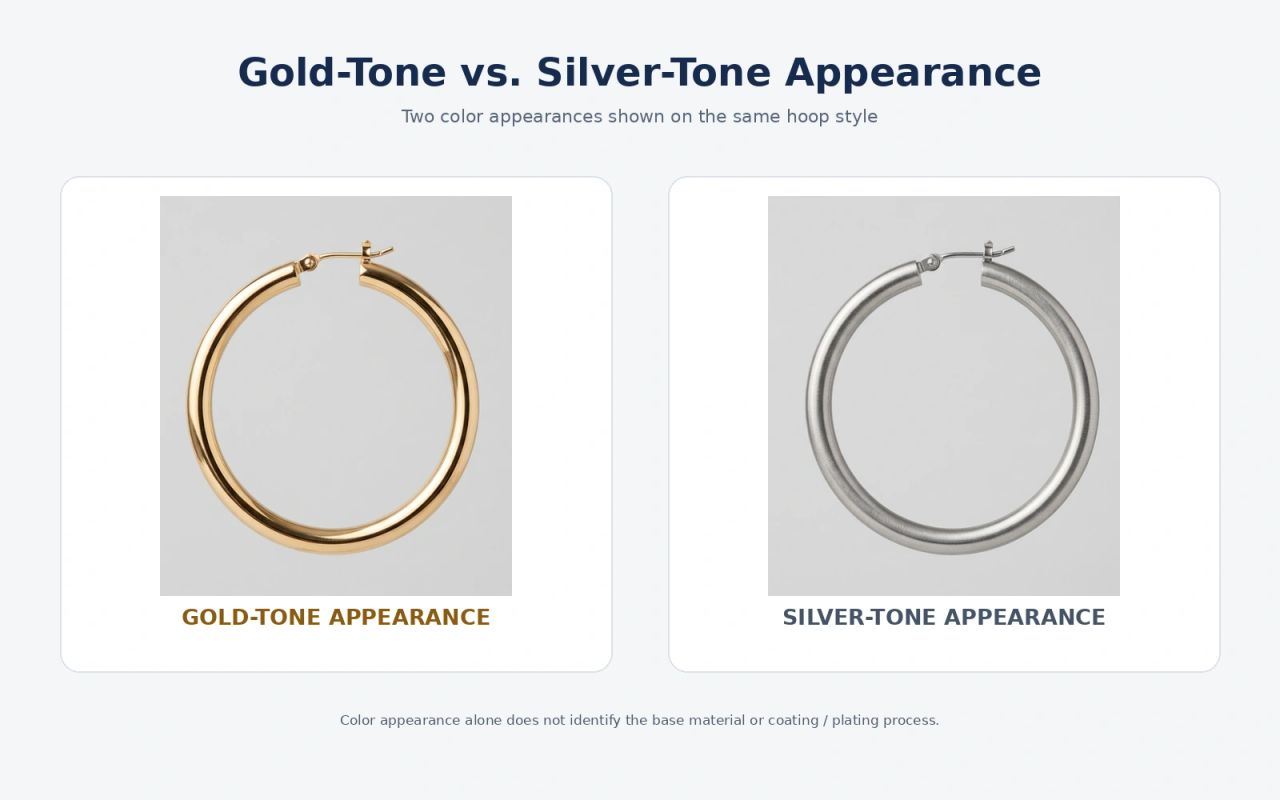
Specify the base metal, coating process (if any), color reference, surface texture and coating thickness where agreed. For example, gold-color PVD over 316L stainless steel is different from an uncoated, polished stainless steel surface. A gold color alone does not specify the coating composition.
6. Gemstones and Setting Methods
Specify stone type, millimeter dimensions, stone quantity, and setting method—including prong, bezel, or other construction details—so the manufacturer can assess the setting design. For moissanite, specify the stone size, shape and setting requirements.
7. Components and Construction
Document chain type and length, clasp style, ear posts, jump rings (welded or open), connectors, and extender chains.
8. Branding and Packaging
Provide vector logo artwork, engraving method, and logo placement alongside jewelry cards, pouches, or retail boxes. Aligning piece sizes with jewelry packaging specifications helps the manufacturer assess insert fit.
9. Quality and Testing Requirements
State the intended use, target market, applicable compliance requirements, color and finish expectations, and functional checks. Agree test methods and acceptance criteria with the manufacturer rather than assuming that a material name establishes finished-product performance.
How to Turn a Design Concept into Manufacturing Specifications
Custom designs usually begin as preliminary concepts and become manufacturable specifications through collaborative review between buyer and factory.
Start with Preliminary Product Specifications
Early files work best when they define clear goals without locking unverified geometry. In one anonymized customer inquiry, the buyer specified 316L stainless steel, a gold-color PVD option, target dimensions and intended daily-wear conditions, while allowing dimensions to be adjusted for manufacturing feasibility. These were buyer requirements, not verified performance results.
Let the Manufacturer Review Technical Feasibility
Ask the manufacturer to review five practical areas: overall product structure, whether target dimensions are achievable, compatibility between material and surface finish, how components connect, and which missing technical details require confirmation.
Develop Drawings and Confirm Specifications
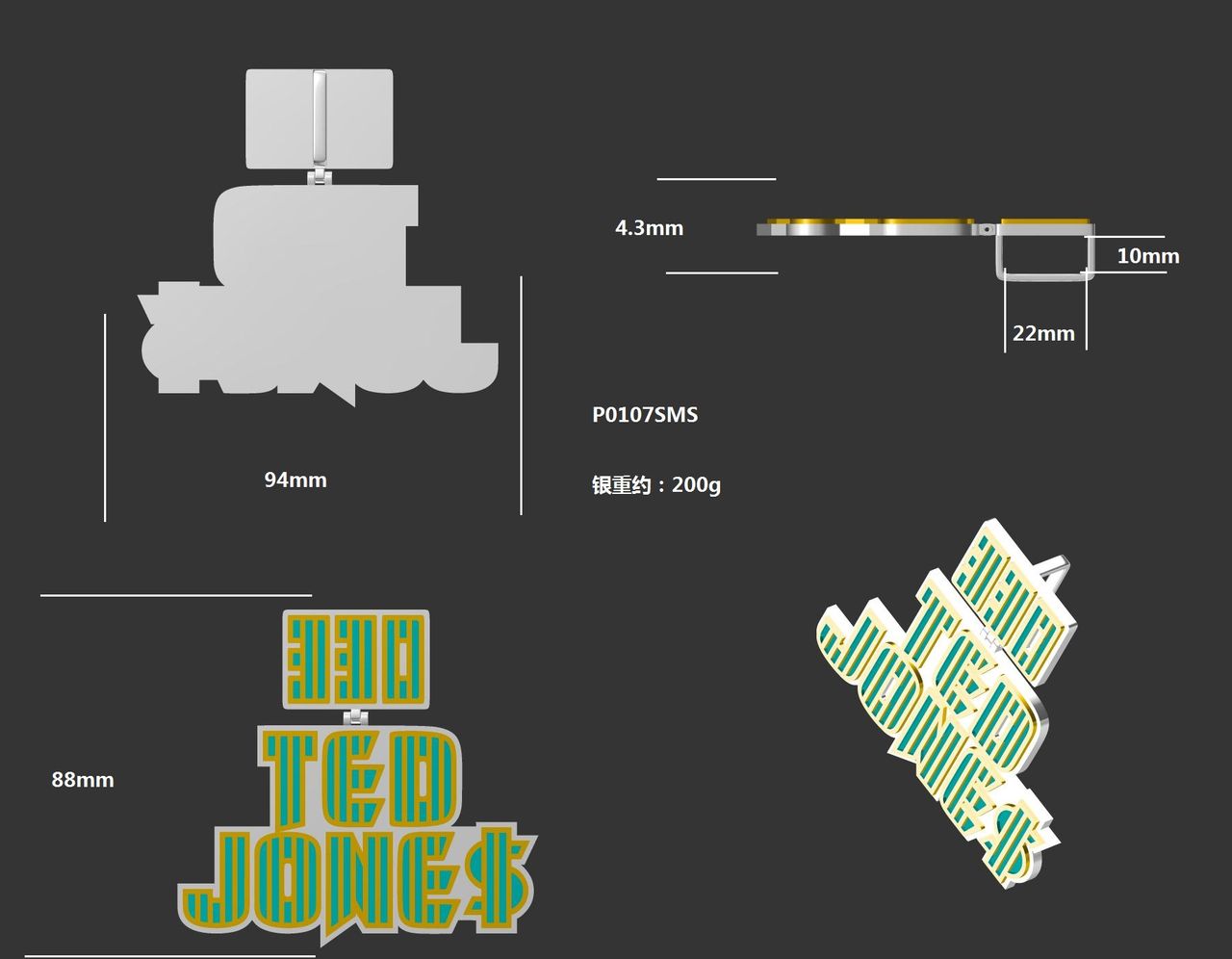
At Jewins, when custom drawings are needed, drawing work is arranged after the customer pays the relevant fee. Agree the drawing deliverables and revision scope before paying. In another customer RFQ, the buyer explicitly reserved detailed drawings and final dimensions for a later development stage, after both parties agreed to proceed. This illustrates a buyer-specific approach to phased disclosure; it is not a universal Jewins policy.
From Initial Quote to Production Approval
Knowing how specifications progress from first contact to production helps brands supply the right level of detail at each gate. The following is a simplified illustration of a custom jewelry development path. Individual projects may omit, repeat or combine development steps:
Initial Inquiry → Quotation → Design Development → Sample Production → Sample Approval → Bulk Production
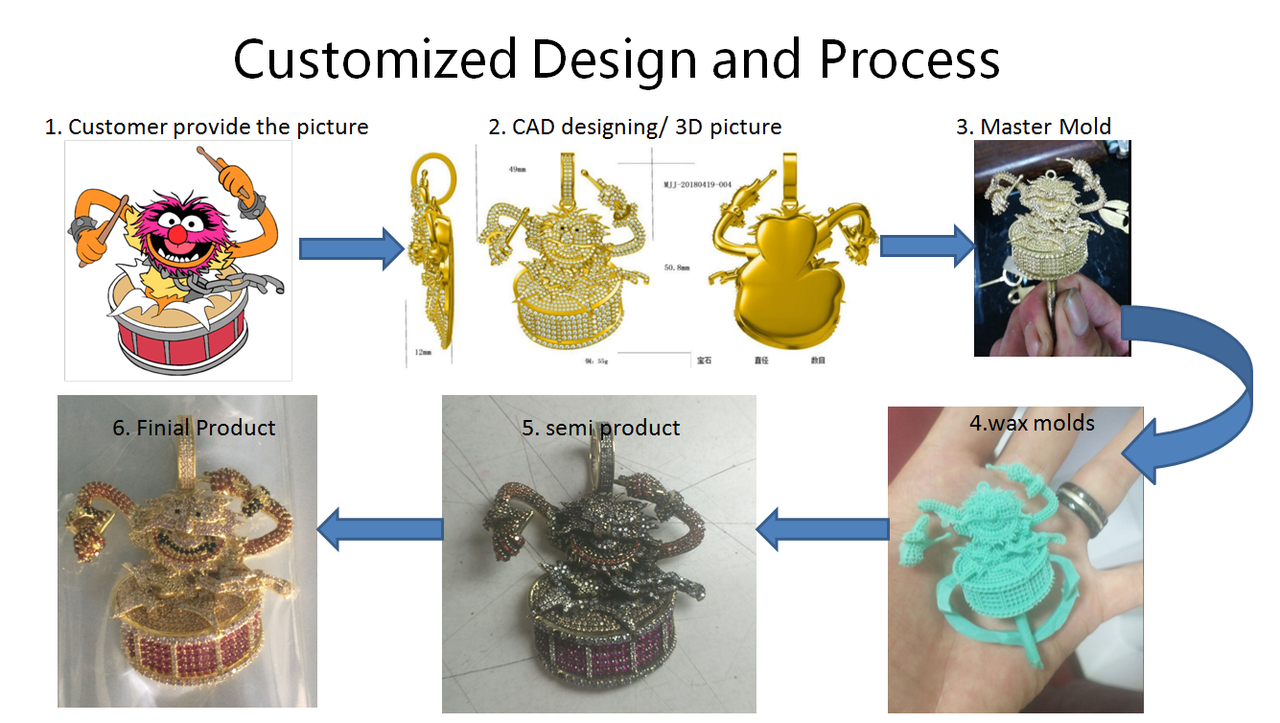
- Initial Inquiry: The buyer submits reference images or sketches, product style, basic dimensions, target material and finish, and estimated order quantity.
- Quotation: Jewins reviews the submitted details for an initial quote; further clarification may be needed.
- Design Development: Where technical drawings are needed, the customer pays the design fee and Jewins arranges drawing creation for confirmation.
- Sample Production: Prepare physical samples using the agreed development details and review the relevant specifications.
- Sample Approval: Review the sample against the relevant drawing version and agreed specifications.
- Bulk Production: Obtain customer approval before releasing the order to bulk production.
Each checkpoint builds directly on the previous record, keeping quoting assumptions, drawing revisions, and sample measurements aligned before volume manufacturing begins.
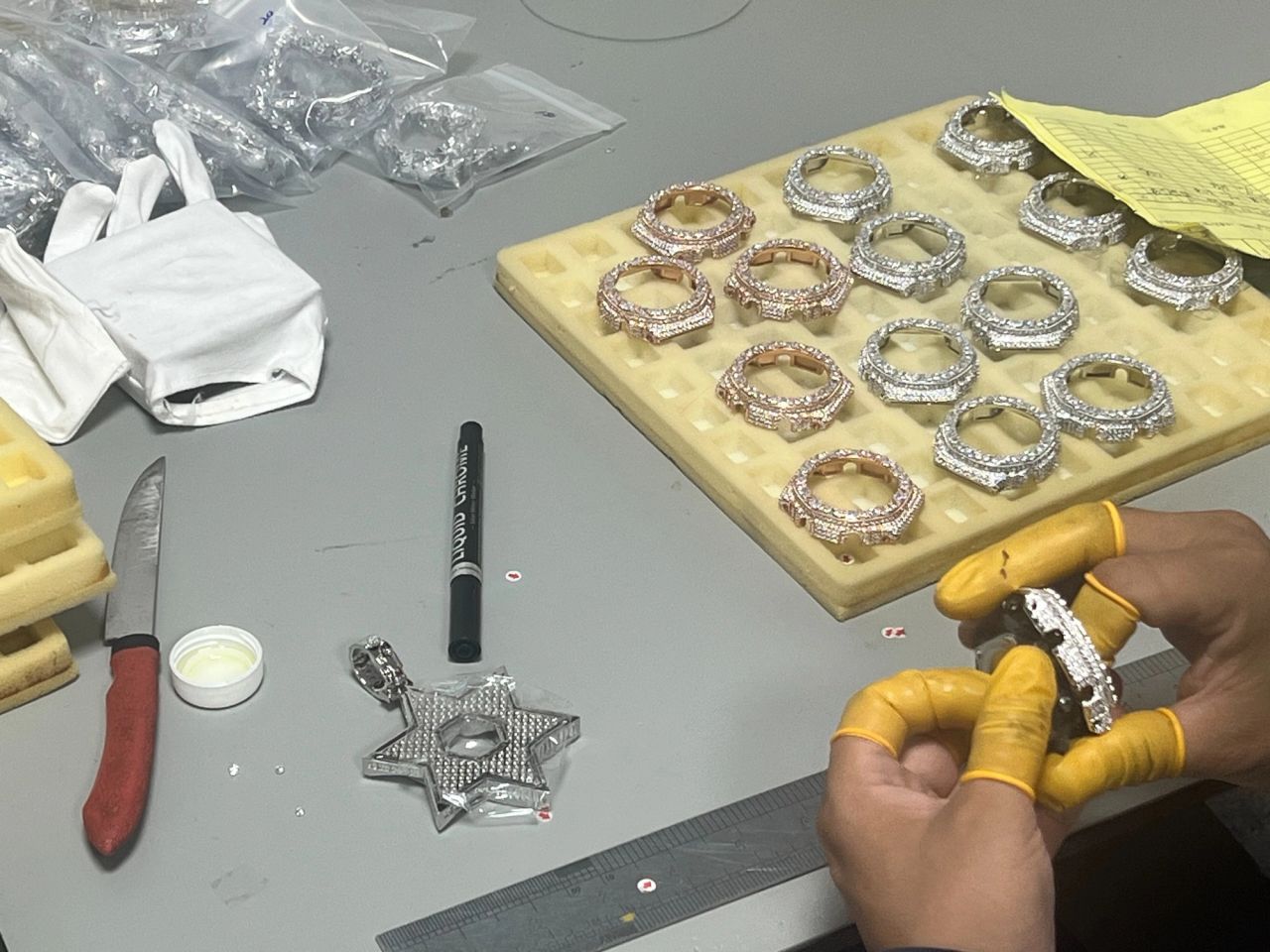
How to Approve a Jewelry Sample Before Bulk Production
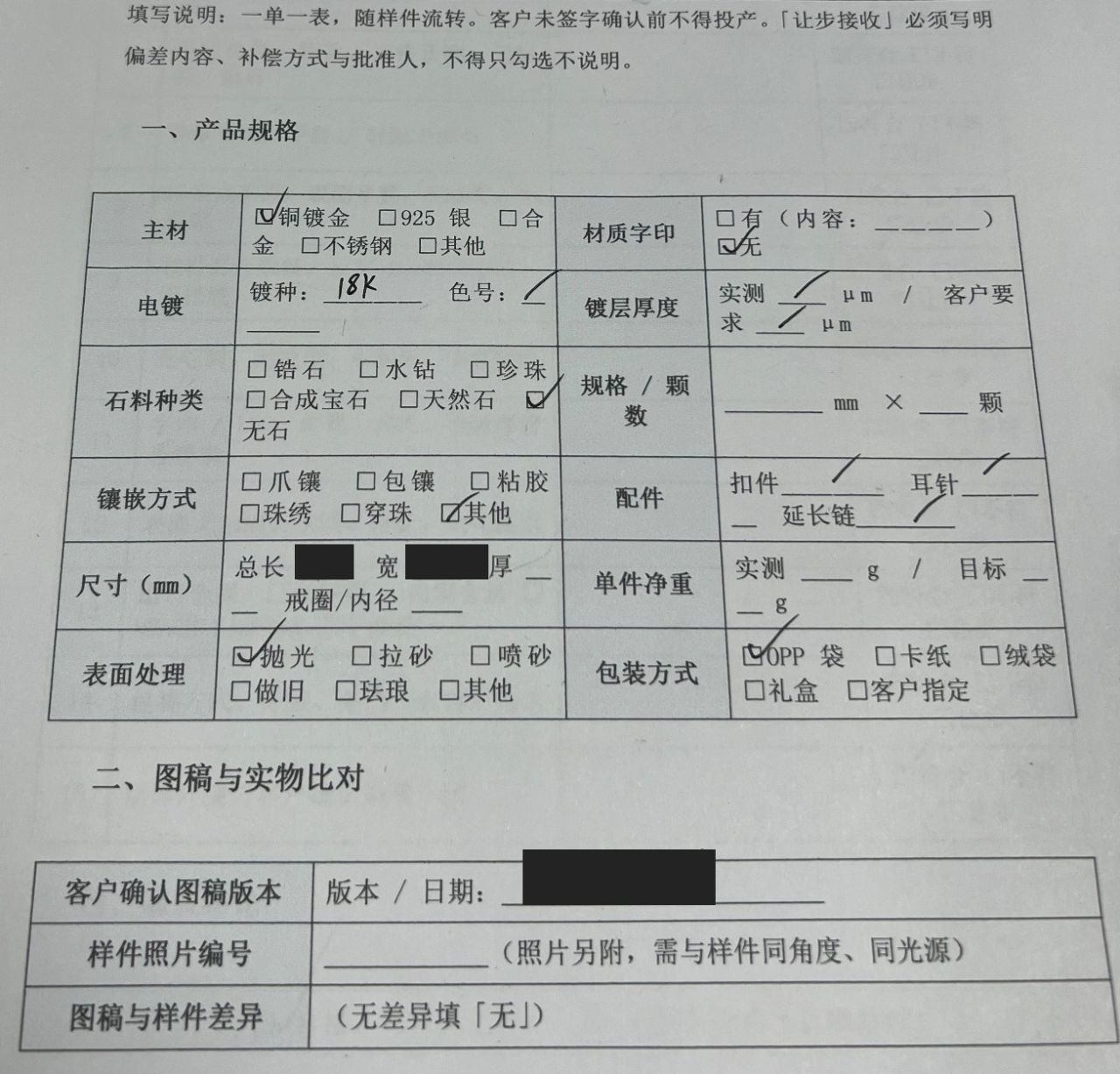
The tech pack and the approved sample should refer to the same version of the product. Jewins uses a Production Sample Confirmation Form with fields for material, plating, stones and settings, accessories, dimensions, weight, surface finish and packaging.
Compare the Drawing with the Physical Sample
The form includes the customer-approved drawing version and date, a sample photo reference, and a field for differences between the drawing and the sample. Its instructions call for sample photos taken at consistent angles and under consistent lighting. If a deviation is accepted, the form requires a description of the deviation, compensation arrangements and the approver.
Record the Approved Version
At Jewins, customers can confirm samples through email, electronic documents or an in-person review, depending on their preference. Customer confirmation is required before production. As a buyer, record which specification revision and sample you approved, including any accepted changes. For the full inspection procedure, see our jewelry sample approval checklist.
Common Jewelry Tech Pack Mistakes That Cause Production Problems
Before submitting your specifications, check for these six potential sources of misunderstanding:
Common Mistake | Potential Production Impact |
|---|---|
Sending reference photos without basic dimensions | Factory may need further details to assess weight, structure or price |
Writing "Gold" without specifying base metal and finish | Unclear base metal, coating process or color expectation |
Omitting stone sizes and setting methods | Repeated questions over seat depth, wall thickness, and setting structure |
Leaving order quantity and color split unclear | Vague quotation scope and inaccurate variant pricing |
Failing to update drawing version numbers | Sampling or production teams may use an outdated revision |
Leaving sample-to-drawing differences unrecorded | Quality disputes during bulk inspection over which standard applies |
Check these points before submitting a revised file or authorizing a change.
How Jewins Supports Custom Jewelry Development
Jewins supports brands developing stainless steel and moissanite jewelry through OEM/ODM projects. You can begin with a reference image and basic specifications, then discuss the design work and sampling needed for your project. For paid drawing work, Jewins arranges drawing development after payment of the relevant fee. Its sample confirmation form provides a record for reviewing product specifications and comparing the sample with the approved drawing.
Frequently Asked Questions
Can I use a jewelry tech pack template without CAD files?
Yes. Start with your reference images, target measurements and material preferences. Mark drawings, exact tolerances and other unresolved details as TBC. Discuss these with your manufacturer during development.
Do I need CAD drawings to request a jewelry manufacturing quote?
No. Sharing reference images or sketches, product style, basic dimensions, preferred material and finish, and estimated order quantity is generally enough to start initial quote discussions with Jewins.
What information should I include in a jewelry tech pack?
Include project info and revision dates, multi-view design references, millimeter dimensions and target weight, exact base metal grades, plating or PVD finishes, stone sizes and setting methods, chain or clasp components, logo and packaging specs, and quality requirements.
Can a jewelry manufacturer help create CAD drawings?
Many manufacturers can help develop drawings. At Jewins, drawing work is arranged after payment of the relevant fee when required. Confirm the scope, deliverable format and revision terms for your project.
What should I do if a specification changes after sampling?
Update the revision, identify the changed fields and ask the manufacturer whether the change affects pricing, tooling or the sample. Agree whether a revised sample is needed before approving the updated specifications for production.
Can I approve a jewelry sample through email?
Yes. Jewins supports sample approval via email confirmation, electronic document confirmation, or in-person sample review. Identify the approved drawing version and sample, and document any agreed deviations. These details help clarify what you are authorizing.
Ready to Turn Your Jewelry Design into a Manufacturable Product?
Have a custom piece in mind? Share your reference images or sketches, basic dimensions, material and finish preferences, and estimated order quantity—and Jewins can review your requirements and start an initial quote discussion.
Planning Your Next Jewelry Collection?
Share your product references, material, finish, quantity, branding and packaging requirements.