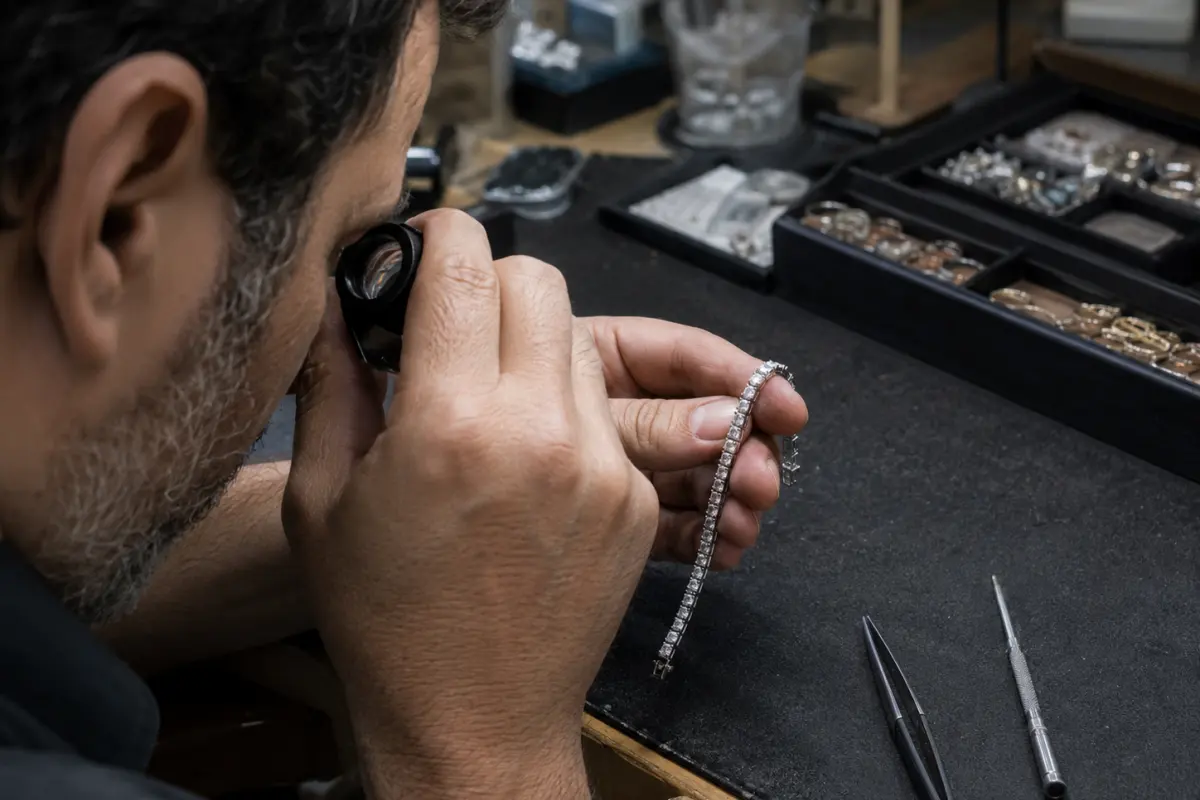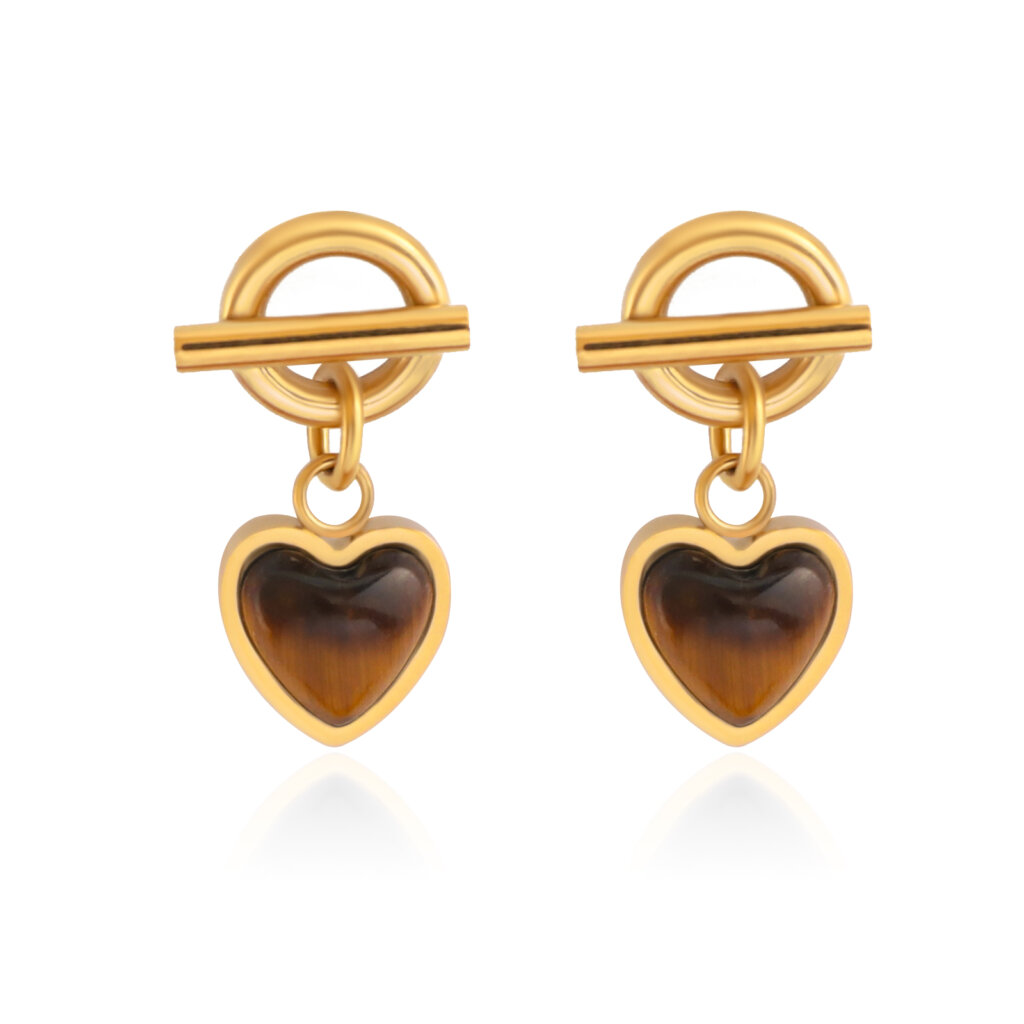

Start Small, Confirm Quality, Scale With Confidence
A practical B2B sourcing guide for jewelry brands moving from low MOQ testing to sample approval, PVD gold finishes, QC, private label packaging, and repeatable bulk orders.
Stainless steel gold jewelry is a practical choice for brands moving from low MOQ testing to repeatable bulk orders. It is not solid gold; it is usually stainless steel jewelry with a gold-tone surface finish such as PVD coating or gold plating. For startup and growing brands, the key is to verify base metal, coating method, sample quality, color consistency, QC, packaging, and supplier capability before scaling production.
How Can Brands Source Stainless Steel Gold Jewelry From Low MOQ to Bulk Orders?
Brands can start with low MOQ testing, approve physical samples, confirm PVD gold tone and QC standards, then scale stainless steel gold jewelry into repeatable bulk orders.
It is not solid gold. It is usually stainless steel finished with PVD coating or gold plating, which makes process control and clear product descriptions important.
For B2B buyers, the real decision is whether the supplier can support sample approval, color consistency, packaging, and bulk-order QC as the brand grows.
Why Brands Are Choosing Stainless Steel Gold Jewelry
Stainless steel gold jewelry gives startup and growing brands a practical path from low MOQ testing to repeatable bulk orders, while keeping gold-tone designs accessible for daily-wear collections.
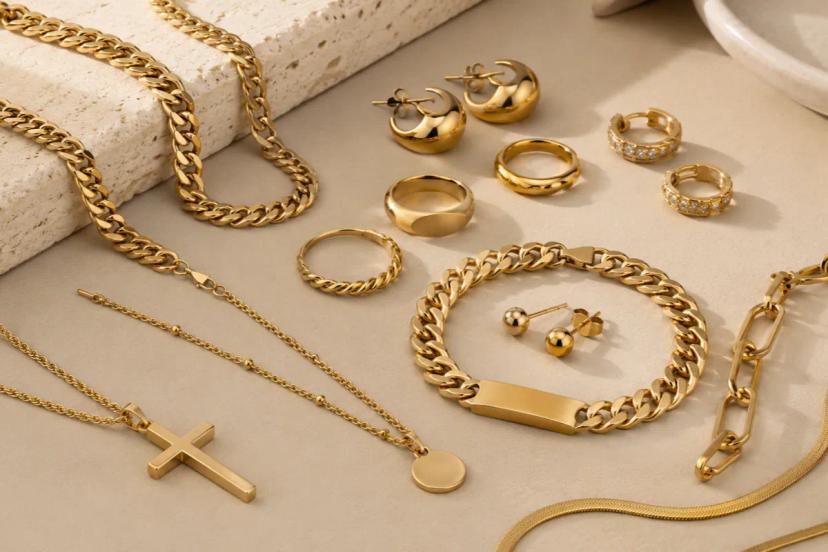
This matters most for brands that need to move quickly without locking up capital in precious metal. A startup brand can test a small collection without material risk. A growing DTC brand can build repeatable daily-wear lines. Private label sellers can pair gold-tone designs with their own packaging, and wholesale buyers can scale the same look across chains, rings, earrings, and bracelets.
Stainless steel gold jewelry is not a replacement for fine gold. It is a flexible, scalable way for brands to offer gold-tone collections that customers actually wear every day.
What Is Stainless Steel Gold Jewelry?
Stainless steel gold jewelry is stainless steel jewelry with a gold-tone surface finish, usually created through PVD coating or electroplating. It is not solid gold, so brands should describe the material and finish clearly.
A few clarifications that matter for product descriptions and sourcing:
- It is not solid gold, gold filled, or gold vermeil.
- The gold appearance comes from the surface finish, not the core material.
- Both the base material grade and the coating method affect finished product quality.
For sourcing teams, this means two things must be confirmed: the stainless steel base specification and the gold-tone finish process.
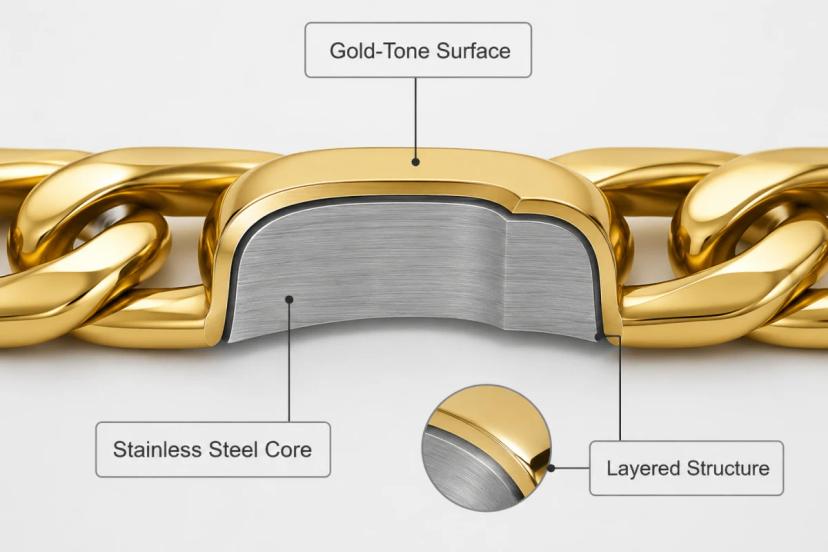
For sourcing teams, the base material and surface finish should be checked together. A strong stainless steel base does not automatically make a weak coating suitable for daily-wear positioning.
Is Stainless Steel Gold Jewelry Real Gold?
Usually, stainless steel gold jewelry is not solid gold. The gold appearance normally comes from a surface finish, and brands should confirm whether the finish contains real gold or is simply a gold-tone coating.
This does not make gold-tone stainless steel jewelry illegitimate. It is a recognized product category in fashion and daily-wear retail. The real issue is accurate description. As long as product pages clearly explain the material and finish, gold-tone stainless steel is an honest and commercially viable option for most jewelry collections.
What Brands Should Know About Tarnish and Fading
Gold stainless steel jewelry is more resistant to tarnish than many brass-based plated pieces, but the gold-tone surface can still wear depending on coating quality, friction, chemicals, sweat, and care.
Key points for sourcing teams:
- The stainless steel base is more corrosion-resistant than many low-cost base metals.
- Rings and bracelets face more daily friction than earrings or necklaces, so coating quality matters more for those categories.
- PVD quality, surface preparation, and polishing all affect long-term appearance.
- Brands should not claim the finish will never fade; claims should reflect realistic wear performance.
For a deeper explanation of how and why fading happens, see does gold stainless steel tarnish.
Is Stainless Steel Gold Jewelry Waterproof?
Gold stainless steel jewelry can handle daily wear and occasional water contact when properly finished, but brands should avoid broad waterproof claims unless they have testing and defined product standards.
For brands, the practical guidance is:
- Daily water contact is different from sustained exposure to pool chemicals or saltwater.
- PVD finishes may perform better than basic electroplating, but they still require proper care.
- Do not market products as "100% waterproof" unless you have testing data and defined product standards to support that claim.
- Request samples and run wear tests before making any water-resistance claims in listings or marketing.
For more on positioning water-resistant collections, see the waterproof stainless steel jewelry wholesale guide.
Which Gold Finish Fits Your Brand Stage?
For low MOQ trend testing, basic gold plating may be enough if claims are cautious. For daily-wear collections, repeat orders, and private label lines, PVD gold stainless steel is usually the safer sourcing direction when samples, color tone, and QC standards are confirmed.
Instead of treating PVD and gold plating as a purely technical comparison, brands should match the finish to their current stage. The right choice depends on whether you are testing demand, building a repeatable core collection, or preparing a private label product line.
| Brand Stage | Recommended Finish Logic | What to Check |
|---|---|---|
| Low MOQ trend testing | Gold plating can work for short-term or lower-cost testing if the brand avoids exaggerated wear claims. | Plating method, sample appearance, care limits, and realistic product descriptions. |
| Daily-wear collection | PVD gold stainless steel is usually more suitable when the collection is positioned for regular wear. | Gold tone, coating coverage, category wear risk, and sample wear performance. |
| Repeat orders | PVD plus an approved color standard helps brands reduce batch-to-batch mismatch. | Approved physical sample, color standard, batch QC, and reorder communication. |
| Private label line | PVD gold stainless steel is often better for a branded everyday collection that needs consistent presentation. | Gold tone, care card wording, packaging, SKU consistency, and supplier QC process. |
In factory sourcing, the most common issue is not whether the sample looks gold in a product photo. The real issue is whether the same gold tone can be repeated across bulk orders, especially when brands reorder the same style months later.
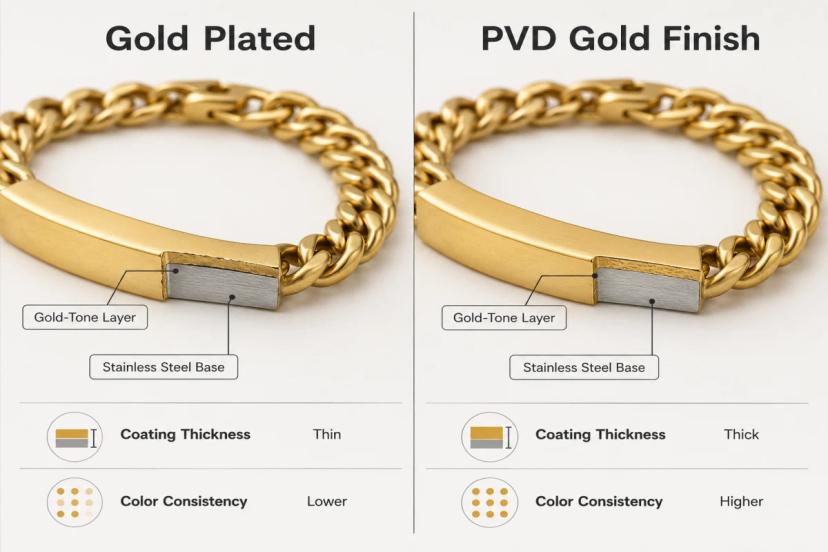
For a deeper technical explanation of PVD coatings, see what is PVD jewelry. For help matching the right finish to a product line, review Jewins' OEM jewelry solutions.
When Stainless Steel Gold Jewelry Is the Right Fit
Stainless steel gold jewelry is the right fit when a brand needs gold-tone daily-wear styles, low MOQ testing, private label presentation, and scalable repeat orders—not when the brand is positioning the product as fine jewelry or solid gold.
This article focuses on sourcing decisions, not a full material encyclopedia. In most brand launch situations, stainless steel gold jewelry works best when the product line needs practical wearability and cost control before the brand commits to larger inventory.
| Best Fit | Why It Works |
|---|---|
| Low MOQ product testing | Brands can test gold-tone styles with less inventory pressure before scaling. |
| Daily-wear gold-tone collections | The material and finish can support accessible everyday styles when the process and care claims are realistic. |
| Private label and wholesale lines | The same gold-tone direction can extend across chains, rings, earrings, bracelets, necklaces, and packaging. |
| Not ideal for fine-jewelry positioning | If the brand needs solid gold, heirloom value, or precious-metal positioning, stainless steel gold jewelry should not be described as a substitute. |
For a broader material comparison, see our guide to the pros and cons of stainless steel jewelry. To start building a gold-tone stainless steel line, see custom stainless steel jewelry.
Best Stainless Steel Gold Jewelry Categories for Brands
The best stainless steel gold jewelry categories for brands are usually chains, rings, earrings, bracelets, necklaces, and pendants because they match daily-wear demand and support repeatable product development.
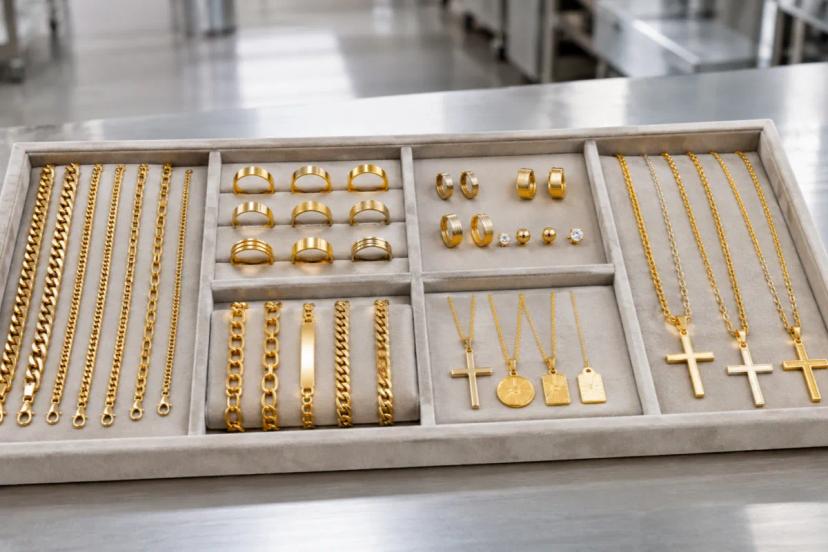
Stainless Steel Gold Chains
Chains are versatile, easy to merchandise, and a common anchor for pendant collections and layered looks.
- Confirm chain type, width, length options, clasp style, and gold tone before sampling.
- Clasp strength and link finishing are the main quality checkpoints for bulk orders.
- This category also pairs well with pendant development for brands building coordinated collections.
Explore custom stainless steel necklaces for chain-based line development.
Stainless Steel Gold Rings
Rings face more friction than most other jewelry types, making coating quality and edge finishing critical.
- Check coating method, edge polishing, sizing accuracy, and sample wear performance before bulk production.
- PVD gold stainless steel rings suit fashion collections well, but brands should set realistic care expectations in product descriptions.
- Rings are the highest-friction category; QC on polishing and plating coverage should be stricter here than for lower-contact pieces.
For ring development, see custom stainless steel rings.
Stainless Steel Gold Earrings
Earrings are strong entry-point products for daily-wear collections because of their lower wear risk compared to rings and bracelets.
- Check surface smoothness, post quality, polishing finish, and nickel release requirements for target markets.
- Do not describe earrings as completely hypoallergenic unless verified through testing; use accurate material descriptions instead.
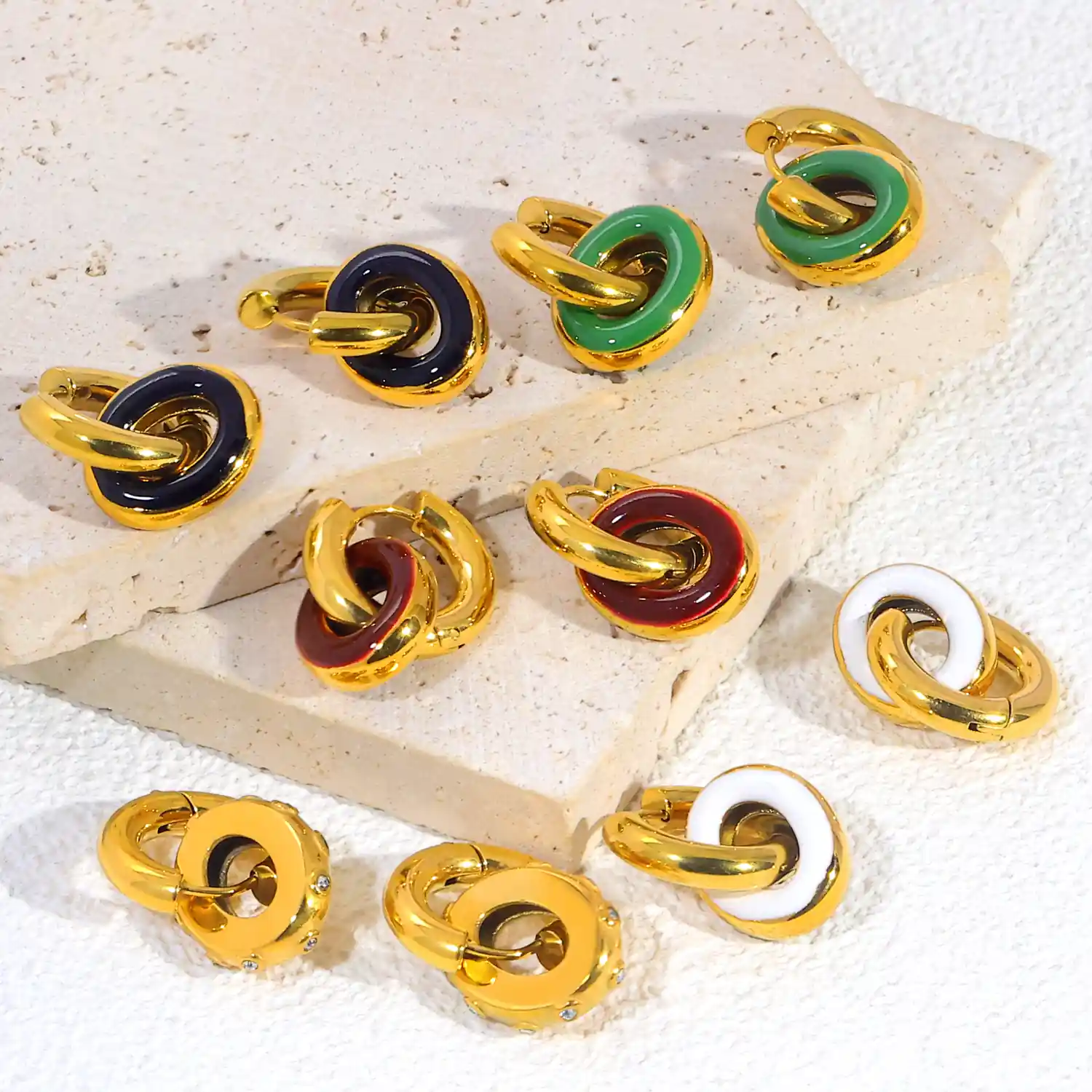
- Hoops, studs, and huggies in gold-tone stainless steel appeal to broad daily-wear and gifting audiences.
For earring development, see custom stainless steel earrings.
Stainless Steel Gold Bracelets
Bracelets are exposed to frequent movement and contact, which puts the finish under real daily stress.
- Check clasp strength, plating coverage around moving parts, and surface finishing before confirming bulk production.
- This category works well for stackable collections, seasonal launches, and bundled sets.
- Buyers should confirm that sample wear testing covers extended daily use, not just visual inspection.
For rings and bracelets, ask the supplier to check coating coverage around edges, moving parts, clasp areas, and other high-friction zones. These areas usually reveal coating and polishing problems earlier than flat, low-contact surfaces.
Stainless Steel Gold Necklaces
Necklaces anchor many gold-tone collections and are a reliable starting category for new brands.
- Confirm chain style, length options, pendant compatibility, and clasp before sampling.
- Suitable for minimalist chains, charm necklaces, and coordinated pendant lines.
- Private label brands building everyday gold-tone collections can pair necklaces with branded presentation and care cards.
Stainless Steel Gold Cross Pendants
Cross pendants serve a recognizable niche in religious jewelry, gifting, and pendant collections.
- Check engraving depth, edge finishing, polishing inside detailed areas, and plating coverage in recessed zones.
- This is a good fit for brands that want a focused pendant category with customization options that extend an existing gold-tone pendant range.
Why Stainless Steel Gold Jewelry Suits Startup and Growing Brands
Stainless steel gold jewelry suits startup and growing brands because it reduces material pressure, supports low MOQ testing, and can scale into repeat orders once a design proves demand.
| Buyer Type | Why It Fits |
|---|---|
| Startup jewelry brands | Lower inventory pressure and easier sample testing before committing to volume |
| Growing DTC brands | Supports repeatable daily-wear collections with stable production costs |
| Boutique buyers | Gold-tone styles at accessible pricing with flexible MOQ |
| Wholesale buyers | Scalable across chains, rings, earrings, and bracelets |
| Private label brands | Combines product development, custom packaging, and brand presentation |
The practical advantages include lower material cost than solid gold, easier low MOQ testing, strong suitability for seasonal and trend-based collections, and clear scalability for repeat orders once a style proves itself.
To move from concept to product, Jewins offers sample development and design support.
What to Check Before Bulk Ordering Stainless Steel Gold Jewelry
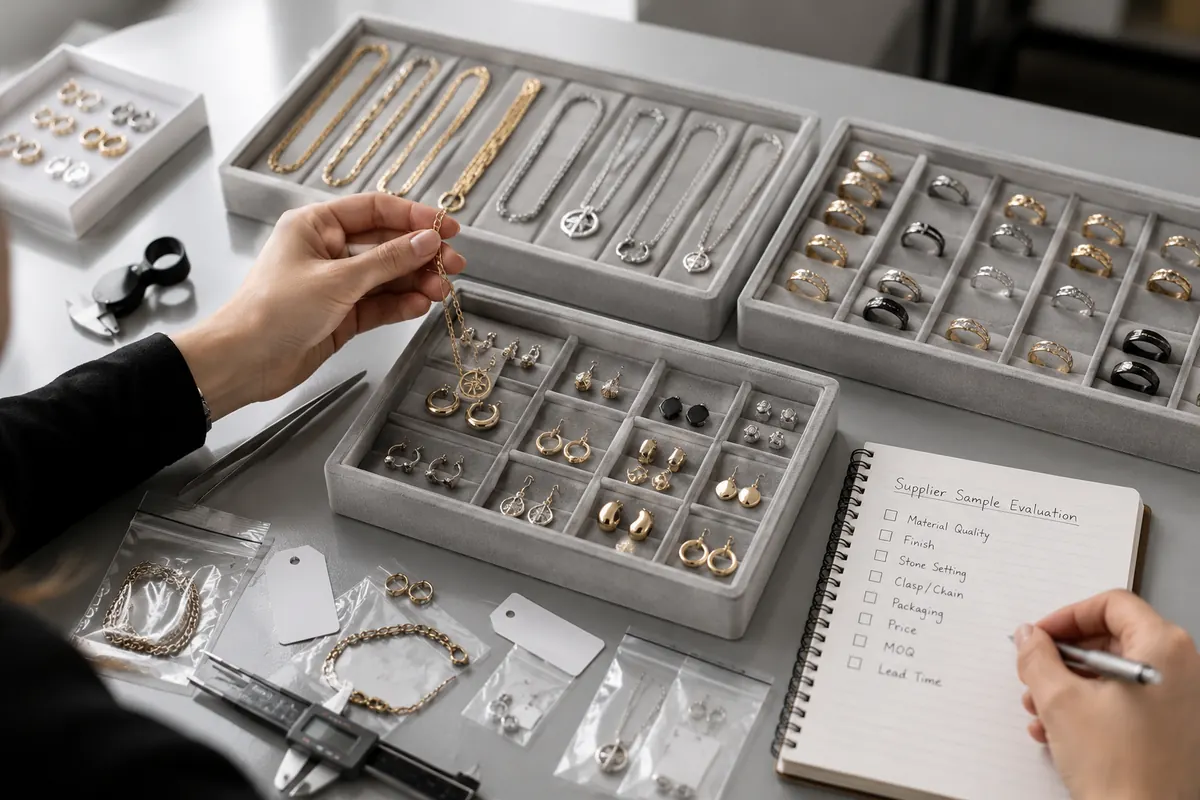
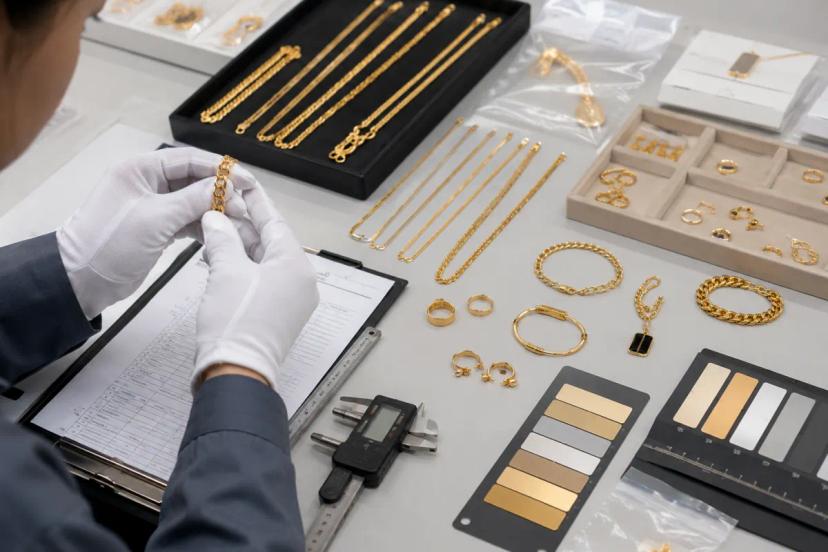
Before bulk ordering stainless steel gold jewelry, brands should confirm base material, coating method, gold tone, sample approval, QC process, testing needs, packaging, MOQ, and lead time.
| Check Item | Why It Matters | Buyer Question |
|---|---|---|
| Base Material | Affects corrosion resistance and skin-contact positioning | Is it 304 or 316L stainless steel? |
| Coating Method | Affects durability and color performance | Is it PVD, electroplating, or another process? |
| Gold Tone | Affects brand consistency across repeat orders | Is the color 14K, 18K, rose gold, or custom? |
| Sample Approval | Reduces bulk order mismatch | Can I approve samples before production begins? |
| Product Category Wear Risk | Different items face different daily stress | Are rings and bracelets tested more carefully? |
| QC Process | Reduces defects and customer returns | Do you check polishing, edges, plating coverage, clasps, and stones? |
| Testing Support | Required for regulated markets | Can you provide testing or certification documentation? |
| Packaging | Supports private label and care instruction needs | Can you supply branded packaging or care cards? |
| Lead Time | Affects launch planning | What are the sampling and production timelines? |
Do not approve a gold-tone collection based only on catalog photos or renderings. Confirm physical samples under natural light, compare them with your approved color standard, and keep the approved sample as the reference for bulk production.
Working through this checklist helps brands avoid the most common bulk-order problems: receiving the wrong gold tone, discovering uneven plating after production, or launching wear claims the product cannot support.
For brand-ready launches, also review private label jewelry packaging. When you are ready to confirm quality, request a sample.
How to Evaluate a Gold Stainless Steel Jewelry Supplier
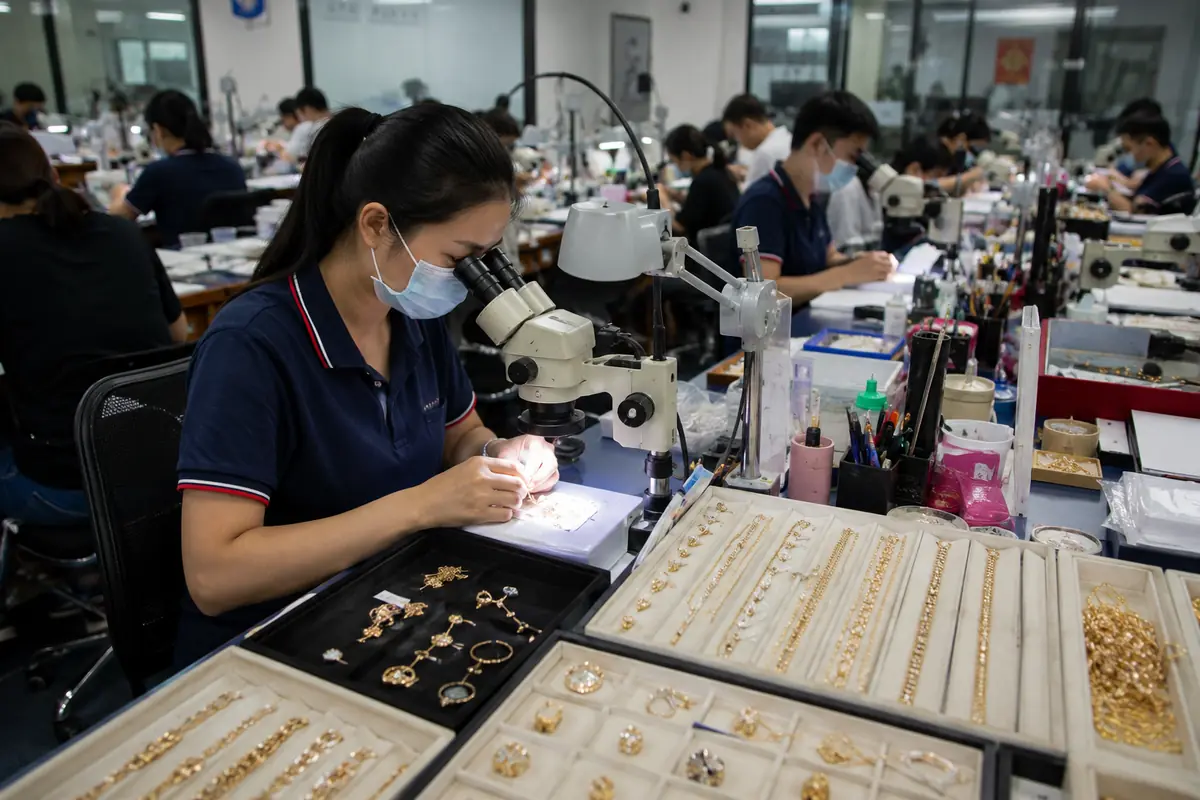
A good gold stainless steel jewelry supplier should help brands control material, finish, color consistency, sampling, QC, packaging, and repeat-order risk—not only take the order.
- Can the supplier clearly explain the base material grade and coating process?
- Can they support PVD gold-tone finishes with color tone samples?
- Can they provide samples before bulk production and approve against a confirmed standard?
- Can they maintain color consistency across repeat orders and different batch sizes?
- Do they inspect polishing, edge smoothness, clasp strength, stone setting, and plating coverage?
- Can they support OEM and ODM customization, including low MOQ for new brands?
- Can they provide packaging, care cards, and private label support?
- Can they supply testing documentation for regulated markets?
A supplier that answers these clearly is easier to scale with over time. For product development and customization support, review Jewins' OEM jewelry solutions.
How Jewins Helps Brands Solve These Sourcing Problems
Jewins helps startup and growing jewelry brands move from low MOQ testing to repeatable bulk orders by supporting material selection, PVD gold-tone finishes, sample approval, QC checks, private label packaging, and OEM/ODM production planning.
For brands, the challenge is usually not one single problem. A gold-tone stainless steel collection can fail because the material is unclear, the gold tone is inconsistent, the sample is not properly approved, or the supplier cannot repeat the same quality during bulk production. Jewins supports the sourcing process in a more practical way: first clarify the product direction, then confirm samples, then control the key details before scaling.
| Brand Concern | How Jewins Supports It | Why It Helps Brands |
|---|---|---|
| Unclear material choice | Helps confirm whether stainless steel gold jewelry, PVD gold finishes, or another option better matches the product line. | Reduces the risk of choosing a material that does not match the brand's price point, wear scenario, or product description. |
| High MOQ pressure | Supports low MOQ sampling and small-batch testing when brands need to validate designs before scaling. | Helps startup brands test gold-tone collections without committing too much inventory too early. |
| Gold tone mismatch | Uses sample approval and color confirmation before bulk production, especially for 14K tone, 18K tone, rose gold, and custom gold-tone requests. | Helps growing brands keep product photos, repeat orders, and customer expectations more consistent. |
| Coating and wear risk | Checks category-specific risk points such as ring edges, bracelet clasps, moving parts, recessed pendant areas, polishing, and plating coverage. | Helps brands avoid common after-sales issues caused by high-friction areas or uneven finishing. |
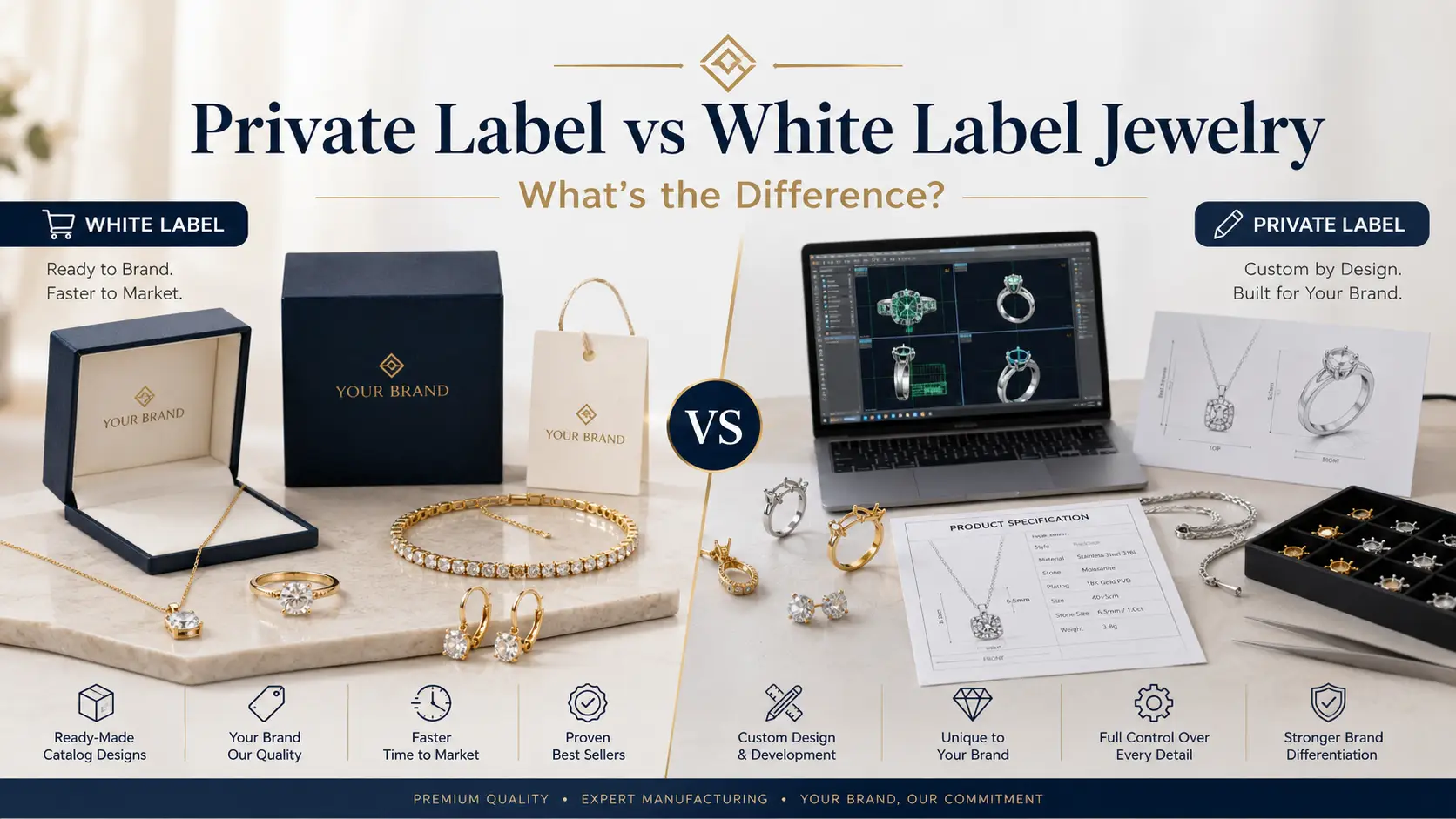
| Private label launch needs | Provides support for packaging options, care cards, branded presentation, and product-line coordination. | Helps private label brands present stainless steel gold jewelry as a more complete retail-ready collection. |
| Bulk order uncertainty | Helps align samples, QC standards, packaging details, and production requirements before repeatable bulk orders. | Helps growing brands scale with clearer expectations instead of relying only on catalog photos or one-time samples. |
If your brand is still testing demand, start with a small sample plan and clear gold-tone standards. If your brand is already scaling, focus more on repeat-order color consistency, category-specific QC, packaging details, and supplier communication before production.
To plan a gold-tone stainless steel collection with product development, packaging, and bulk production support, review Jewins' OEM jewelry solutions or contact us to discuss your sourcing needs.
B2B Sourcing Summary
For brands, stainless steel gold jewelry works best when sourcing decisions are based on base material, coating method, sample approval, QC, packaging capability, and supplier consistency—not appearance alone.
The goal is not only to make a gold-tone product look good in samples. The real sourcing goal is to make the same color, finish, and quality repeatable across bulk orders.
Frequently Asked Questions
These answers are written to address common buyer questions and keep the article easy for search engines and AI search systems to understand.
Is stainless steel gold jewelry real gold?
Usually no. It is stainless steel with a gold-tone surface finish, such as PVD coating or electroplating. Brands should confirm whether the finish contains real gold or is only a gold-tone coating before writing product descriptions.
Does gold stainless steel tarnish?
Gold stainless steel is more resistant to tarnish than many brass-based alternatives, but the gold-tone surface can fade or wear over time depending on coating quality, friction, chemicals, sweat, and care habits. For more detail, see our guide on does gold stainless steel tarnish.
Is gold plated stainless steel jewelry waterproof?
It can handle daily wear and occasional water contact when properly finished, but brands should avoid "100% waterproof" claims unless supported by testing and defined product standards.
Is PVD gold stainless steel better than standard gold plating?
PVD is often a better fit for daily-wear collections because it can offer more stable surface performance when properly processed. Buyers should still confirm coating quality, color tone, and sample approval before bulk production.
What stainless steel gold jewelry categories work best for brands?
Chains, rings, earrings, bracelets, necklaces, and pendants are the most common starting points. Category choice should reflect target customer, wear risk, MOQ requirements, and launch timeline.
Are gold stainless steel rings good for daily wear?
They can work well for fashion and daily-wear collections, but rings face frequent friction. Brands should pay close attention to coating method, edge polishing, sizing accuracy, and sample wear performance.
Is stainless steel a good base for gold earrings?
Yes, especially for hoops, studs, and huggies. For skin-contact products, brands should verify material grade, polishing quality, and any nickel release requirements for their target market.
What should brands check before ordering gold stainless steel jewelry in bulk?
Base material grade, coating method, gold tone, sample approval, QC process, category wear risk, testing requirements, packaging options, MOQ, and production lead time.
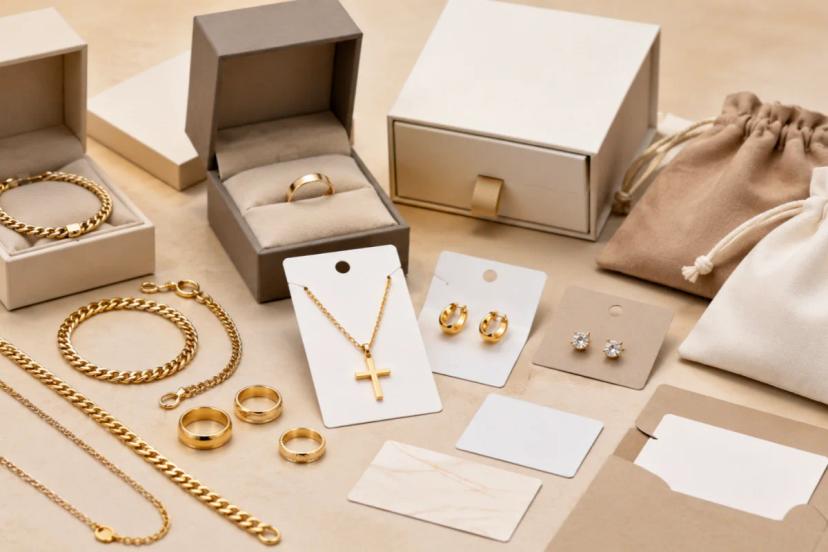
Develop Stainless Steel Gold Jewelry With Jewins
Jewins supports stainless steel gold jewelry development with PVD gold-tone finishes, low MOQ sampling, OEM/ODM customization, private label packaging, testing documentation support, and bulk production for jewelry brands at different growth stages.
Contact Us →